
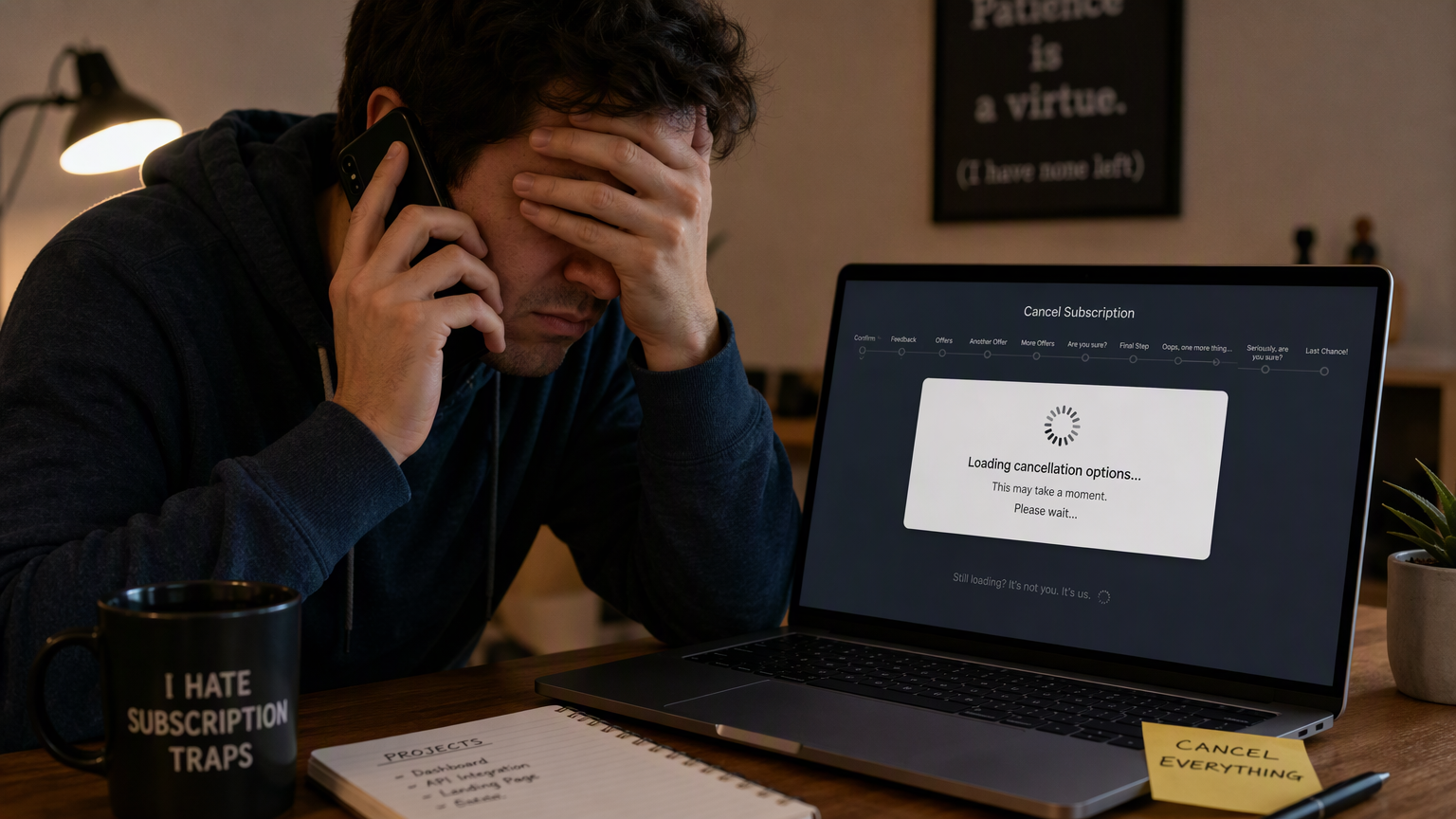
I canceled a gym membership once by showing up in person, filling out a form, getting that form notarized (I’m barely exaggerating), and then waiting 45 days for it to “process.” Forty-five days. For a cancellation. If you’ve ever tried to quit a subscription and felt like you were negotiating a hostage release, congratulations, you’re the exact person New York City just did a favor for.
As of Thursday, NYC’s click-to-cancel law is officially in effect, making it the first city in the entire country to legally require that canceling a subscription be just as easy as signing up for one. Not harder. Not three phone calls and a chat with “Brian” who keeps “transferring you.” Just… easy. Revolutionary concept, I know.
Okay, So What Does This Law Actually Do
Here’s the basic deal: if a company lets you sign up for something online with a few clicks, they now legally have to let you cancel online with a few clicks too. No forcing you to call a retention hotline. No making you dig through seventeen menus to find a “manage subscription” button that’s hidden like it’s the final boss of a video game. The law also requires companies to send reminders before auto-renewals kick in, so you’re not getting blindsided by a charge for a service you forgot existed since March.
And look, I know what you’re thinking. This sounds like common sense dressed up as legislation. But that’s kind of the point, isn’t it? We’ve reached a place in consumer life where “please don’t make canceling intentionally miserable” needed to become actual law. That’s not a knock on NYC lawmakers, that’s a knock on every company that turned cancellation into an endurance sport.
Why This Took So Long
The FTC tried to do this nationally. They passed their own “click-to-cancel” rule back in 2024, and it was supposed to roll out broadly. Then a federal appeals court tossed it earlier this year on procedural grounds, basically saying the FTC didn’t follow the right process when writing the rule. So the national version is dead, or at least on ice, while industry groups and regulators figure out what happens next.
Which is exactly why NYC stepping in matters so much. Cities don’t usually move faster than federal regulators. Usually it’s the opposite, right? Washington sets a baseline and everyone else follows. Here, NYC basically said “fine, we’ll do it ourselves” and just… did it.
Why Companies Fought This So Hard
Not gonna lie, the retention-call industry (yes, that’s basically a whole industry) is not thrilled right now. There’s real money in friction. Every extra click, every mandatory phone call, every “wait, before you go” discount offer exists because companies know a percentage of people will just give up and keep paying. It’s not an accident. It’s a business model.
“Dark patterns aren’t a bug, they’re the feature. Making cancellation hard is often more profitable than making the product good enough that people don’t want to leave.”
That quote captures something I’ve thought for a while now, honestly. Think about how many subscriptions you’ve kept active not because you love them but because dealing with the cancellation process felt like more trouble than it’s worth. Streaming services, meal kits, that one app that tracks your sleep for some reason. Multiply that friction across millions of people and millions of accounts and you start to understand why some companies are, let’s say, less than enthusiastic about this new rule.
This Isn’t Just About Streaming Services
The thing people keep missing is that this law covers way more than Netflix and Hulu. We’re talking gyms, meal kit services, software subscriptions, news sites, dating apps, basically anything that bills you on a recurring basis and operates in New York City. That’s a massive net.
And here’s where it gets interesting. Companies based outside NYC but doing business with NYC residents still have to comply. So this isn’t some quaint local ordinance that only affects a handful of bodegas and yoga studios. We’re talking real compliance headaches for companies with customers scattered across the five boroughs, which, let’s be honest, is basically every major subscription business in America.
I’ve seen this pattern before with privacy laws. California passes something strict, and suddenly companies nationwide start adjusting their practices because it’s easier to have one policy than fifty different ones. Don’t be shocked if “NYC rules” quietly become the default playbook for cancellation flows everywhere, even for people who’ve never set foot in Manhattan.
Enforcement Is the Real Question
Having a law on the books is one thing. Actually enforcing it is a totally different animal. The city’s Department of Consumer and Worker Protection is the one tasked with cracking down on violators, and from what I can tell, the penalties involve real fines, not just a strongly worded letter. But enforcement always comes down to resources and follow-through. Will there be enough investigators? Will companies quietly test how much they can get away with before anyone notices?
It’s not entirely clear yet how aggressive the city plans to be here. These things tend to start slow, with a few high-profile cases to set an example, before anyone really feels the weight of it.
What This Actually Means
Look, I’ll say it plainly: this is a win for anyone who’s ever felt trapped by a subscription they forgot about or just couldn’t be bothered to escape. It’s a small, specific fix, but it addresses something that genuinely annoys basically everyone, regardless of political leaning or income bracket. Rich or broke, we’ve all been stuck on hold trying to cancel something.
My honest prediction? Other cities and states start copying this within the next year or two, especially blue states that already lean toward aggressive consumer protection. And companies, rather than fighting fifty separate battles in fifty different jurisdictions, start just… making cancellation easier everywhere. Not because they suddenly care, but because managing different rules in different cities is a logistical nightmare nobody wants.
So is this the end of sneaky subscription traps? Probably not entirely. Companies are creative, and where there’s a loophole, someone will find it. But NYC just drew a pretty clear line in the sand, and for the first time in a long time, the burden shifted a little bit back toward the consumer. That alone feels worth paying attention to.