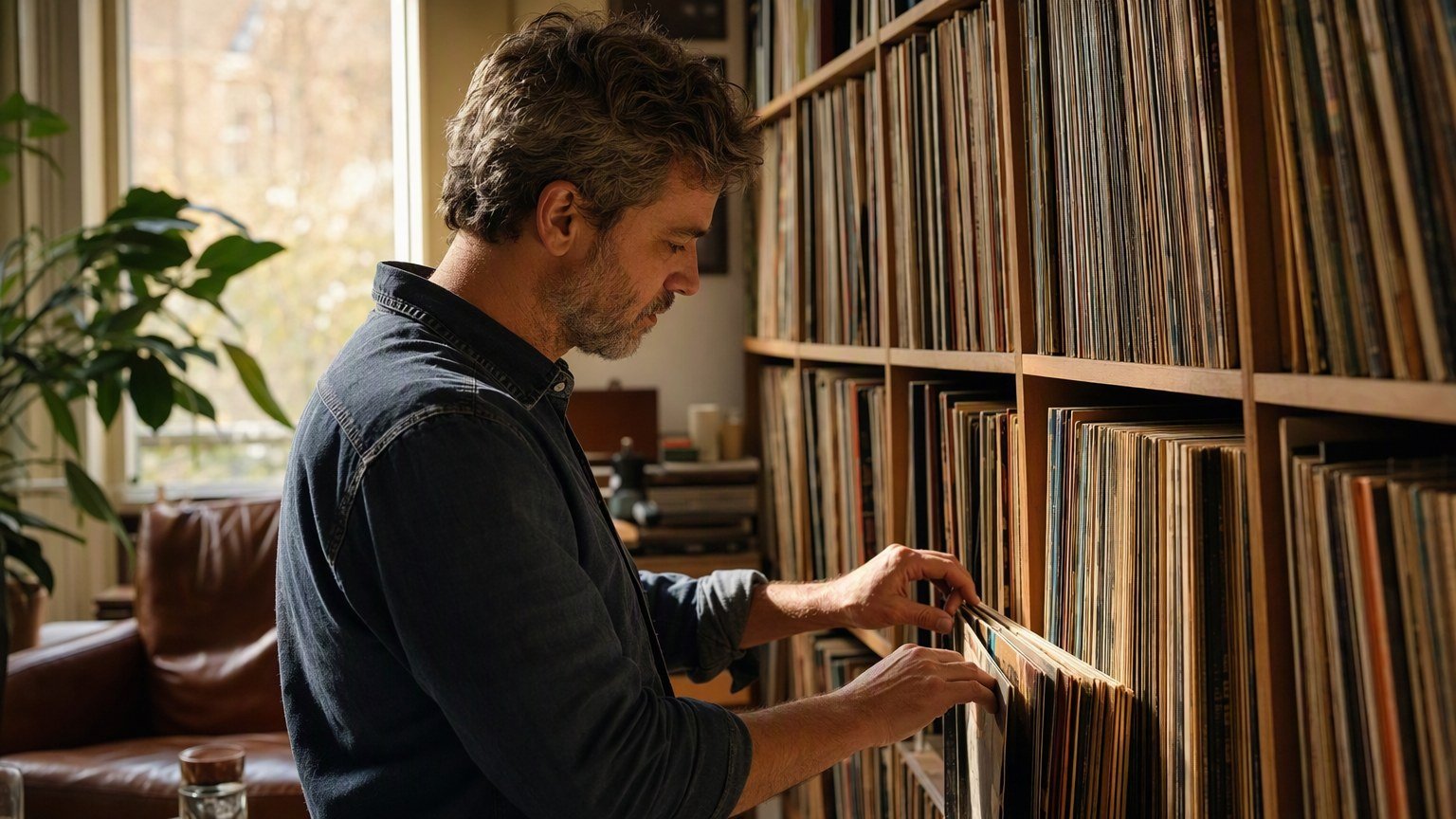
Ash is 52, teaches at a university in Cornwall, and owns more than 5,000 records and CDs. He stopped buying them for a while because, as he puts it, streaming felt “liberating for a person who has a deep and wide music collection and a bad back.” Then he came back. And honestly? That little…
Ash is 52, teaches at a university in Cornwall, and owns more than 5,000 records and CDs. He stopped buying them for a while because, as he puts it, streaming felt “liberating for a person who has a deep and wide music collection and a bad back.” Then he came back. And honestly? That little detail about the bad back is doing a lot of work here – it tells you this isn’t some nostalgic kid who just discovered vinyl exists. This is a guy who actually lived through the convenience of streaming, enjoyed it, and still walked away.
The Algorithm Problem Nobody Wants to Admit
Here’s the thing about algorithmic recommendations – they’re good. Like, genuinely good at what they do. Ash even says it himself: “Algorithms make great suggestions.” But then he adds the part that matters: “it feels like you catch a lot of small fish.” He’s talking about music discovery, comparing algorithm-fed suggestions to fishing with a net versus actually going out and hunting for the big catch yourself – reading music magazines, chasing down recommendations from actual humans, doing the legwork.
I get that. I really do. There’s a difference between finding a band because Spotify’s robot brain decided you’d like them based on forty other people who also liked that one song, and finding a band because your weird uncle handed you a mixtape in 2003 and said “trust me.” One of those stories you tell at parties. The other one you don’t even remember.
Why “Small Fish” Actually Means Something
What Ash is getting at – and I think this is the part a lot of people miss – is that algorithms optimize for engagement, not discovery. They want you to stay on the platform, not necessarily to find your new favorite band buried three labels deep on some obscure imprint from Belgium. The system rewards what’s already popular-ish, adjacent to what you already like. It rarely takes real risks on your behalf. Why would it? Risk means you might bounce.
So Why Physical Media, Specifically?
This is where it gets interesting. Because you could argue the fix for algorithm fatigue is just… better human curation online. Blogs, forums, whatever. But that’s not really what people are chasing. They want something they can hold. Something that doesn’t disappear when a licensing deal falls through or a company decides to “sunset” a feature nobody asked them to sunset.
If you can’t hold it, you don’t own it – that’s basically the whole argument in six words. And it’s not wrong. Streaming services pull songs, pull movies, pull entire catalogs overnight and there’s nothing you can do about it. You never actually bought anything. You rented access, and the landlord can change the locks whenever they feel like it. It's not just streaming catalogs either – Nvidia just raised prices on 7-year-old hardware, proof that even stuff you bought outright isn't safe from corporate whims.
“I spent more time maki…” – Ash, on realizing something was missing once he went all-in on streaming
(Yeah, that quote cuts off mid-thought, which is kind of fitting honestly – feels like exactly the moment where someone realizes streaming cost them something they didn’t notice losing until it was gone.)
It’s Not Just Nostalgia, Though Nostalgia’s Part of It
Let’s not pretend nostalgia isn’t a factor. The click of a cassette going into a deck, the hiss before the song starts, the ritual of flipping a record over halfway through an album – that stuff feels good. It’s tactile in a way that tapping a screen never will be. But I think it’s lazy to write this whole movement off as just boomers (or Gen X, in Ash’s case) missing their childhood. There’s a real, substantive critique buried in there about control. About ownership. About not wanting a corporation’s recommendation engine to be the only filter between you and new culture.
And look, I’m not saying everyone needs to go build a 5,000-piece collection like Ash did. Most of us don’t have the space, the money, or honestly the back for it (pun somewhat intended). But the instinct behind it – wanting something permanent in a world where everything digital feels rented, temporary, one terms-of-service update away from vanishing – that instinct makes a lot of sense to me. That kind of devotion is exactly what you see in a fan who sang his father's songs for 50 years.
What This Actually Means
I don’t think physical media is staging some massive comeback that’s going to kill streaming. That’s not realistic, and nobody’s actually claiming that. What’s happening is smaller and, I’d argue, more interesting: a growing chunk of people are deciding that convenience isn’t the only thing that matters. Sometimes you want friction. Sometimes you want to work a little for your music, flip through a crate, read liner notes, actually choose something instead of letting a playlist choose it for you.
Streaming didn’t ruin music discovery. But it did flatten it, smooth out the edges, made everything a little too easy and a little too similar. Ash’s “small fish” line is going to stick with me for a while. Because if everyone’s algorithm is quietly feeding them from the same pond, eventually we’re all just going to end up liking the same forty bands – and never even know what we missed.