The Pentagon just wrote a check for space lasers. Well, not exactly – but kind of? The Department of Defense inked a contract with Overview Energy to build a homing beacon that’ll help beam solar power from orbit down to Earth, and honestly, I can’t decide if this is the coolest thing I’ve…
The Pentagon just wrote a check for space lasers. Well, not exactly – but kind of? The Department of Defense inked a contract with Overview Energy to build a homing beacon that’ll help beam solar power from orbit down to Earth, and honestly, I can’t decide if this is the coolest thing I’ve covered this year or if we’re all living in a sci-fi novel now.
Space Solar Is Having a Moment
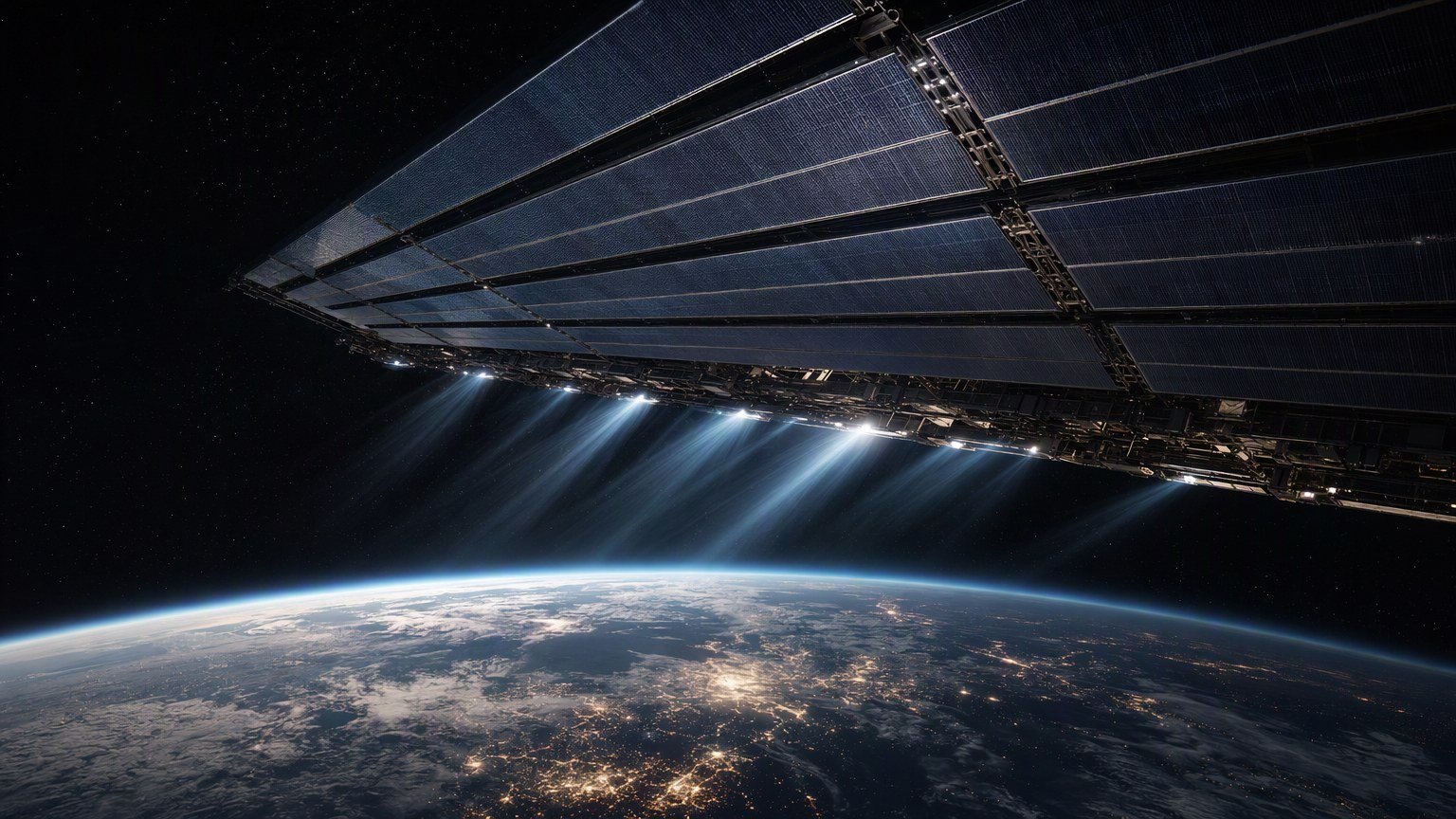
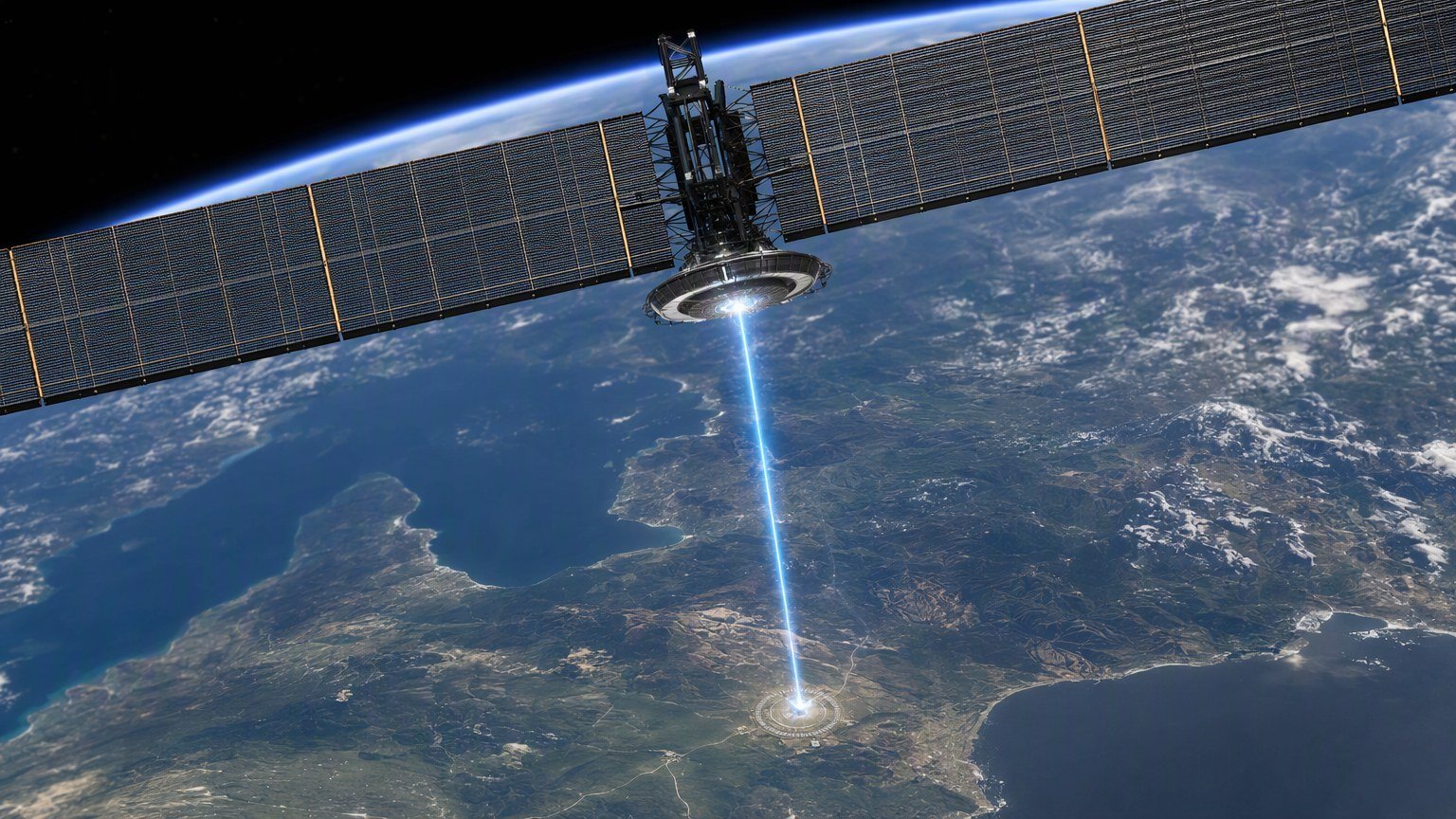
Here’s the basic idea, and it’s actually pretty elegant: stick solar panels in orbit where the sun never sets, let them soak up energy 24/7, then beam that power back down to Earth using either lasers or microwave beams. The homing beacon that Overview Energy is designing is basically the GPS system for all that energy – making sure the beam hits the receiving arrays on the ground and doesn’t, you know, accidentally zap something else.
And look, I’ve been writing about renewable energy for years now, and the intermittency problem is real. It’s the thing that keeps utility executives up at night. We’re building all these massive solar farms that pump out electricity during the day when everyone’s at work, then produce basically nothing at night when people are home running their air conditioners and watching Netflix. The mismatch is so bad that in some places, energy prices actually go negative during peak production hours. Negative! You’re literally paying to get rid of electricity.
Space-based solar would just… sidestep that entire mess. No clouds, no nighttime, no seasonal variations. Just constant, uninterrupted power generation.
But Wait, We’re Shooting Lasers From Space?
The elephant in the room – or I guess the laser beam in the sky – is that this sounds vaguely terrifying. We’re talking about beaming concentrated energy from orbit down to specific points on Earth’s surface. The military applications here aren’t exactly subtle.
Which is probably why the Pentagon is interested. They’re not funding this out of environmental altruism, let’s be real. The DoD has been looking for ways to get power to remote military bases without vulnerable supply lines for years. If you can beam energy anywhere on the planet from orbit, you’ve just solved a massive logistical headache. It's the same logic behind the Pentagon's robot tank experiments, betting on next-gen tech to solve old battlefield problems.
But here’s the thing – military funding has a way of accelerating civilian technology. GPS started as a military project. Same with the internet. If Pentagon money can push space-based solar from concept to reality, I’m not going to complain about their motives.
The Land Grab Problem
There’s another angle here that doesn’t get enough attention. Traditional solar farms are huge. I mean massive. We’re talking thousands of acres for utility-scale installations, and surprise surprise, people aren’t thrilled about handing over that much land. There’ve been legal challenges, community pushback, fights over agricultural land vs. energy infrastructure. It's the same land-use headache that comes with building the tallest wind turbine on Earth.
Space doesn’t have NIMBYs. (Yet. Give it time, we’ll probably find a way to complain about orbital solar farms blocking our view of the stars or something.)
The Catch (Because There’s Always a Catch)
Now, before we all get too excited – and I’m trying not to here, because I’ve seen too many “revolutionary” energy technologies fizzle out – we need to talk about the challenges. Getting anything into orbit is expensive. Really expensive. We’re talking about launching enough solar panels to make a meaningful dent in energy production, and right now, launch costs are still pretty steep even with SpaceX bringing prices down.
Then there’s the whole actually-making-this-work part. Beaming power from space isn’t exactly proven technology. There’ve been small-scale demonstrations, sure, but going from proof-of-concept to a functioning power grid is a different beast entirely. The engineering challenges are, not to put too fine a point on it, kind of insane.
And we haven’t even gotten into the question of what happens when something goes wrong. A broken solar panel on the ground is an annoyance. A malfunctioning power beam from space? That’s a very different conversation.
Why This Might Actually Happen
But – and this is the part that has me actually paying attention – the pieces are starting to line up. Launch costs are dropping. Solar panel efficiency keeps improving. Energy storage on the ground still sucks, which makes the 24/7 power generation of space solar look increasingly attractive. And now you’ve got serious defense money flowing into the sector.
The DoD doesn’t fund vapor ware. They might fund things that don’t pan out, sure, but they do their homework. If they’re putting money into Overview Energy’s homing beacon system, someone ran the numbers and decided this is technically feasible. Maybe not easy, maybe not cheap, but feasible.
“Unlike terrestrial models, the sun would never set on these solar panels, allowing them to generate clean energy 24 hours a day, seven days a week.”
That’s the promise, anyway. Constant, clean energy beamed from orbit. It sounds like something from a 1950s retrofuture magazine, but we might actually be close to pulling it off.
What Happens Next
Overview Energy is going to design, build, and test this homing beacon system. If it works – and that’s still a pretty big if – we’re looking at the foundation for an entirely new energy infrastructure. Not tomorrow, probably not even in five years, but maybe in a decade or two.
I’m cautiously optimistic. I’ve learned not to get too hyped about energy breakthroughs because most of them turn out to be a lot harder than they look on paper. But this one has some real momentum behind it. The technology is advancing, the economics are slowly improving, and now you’ve got military interest driving development forward.
Will we actually see space-based solar power in our lifetimes? I think there’s a decent chance. Will it look exactly like what we’re imagining now? Probably not. These things never do. But the fact that we’re seriously talking about beaming power from orbit – and backing it up with actual contracts and real money – tells me something’s shifting. We’ll see if it shifts fast enough to matter.