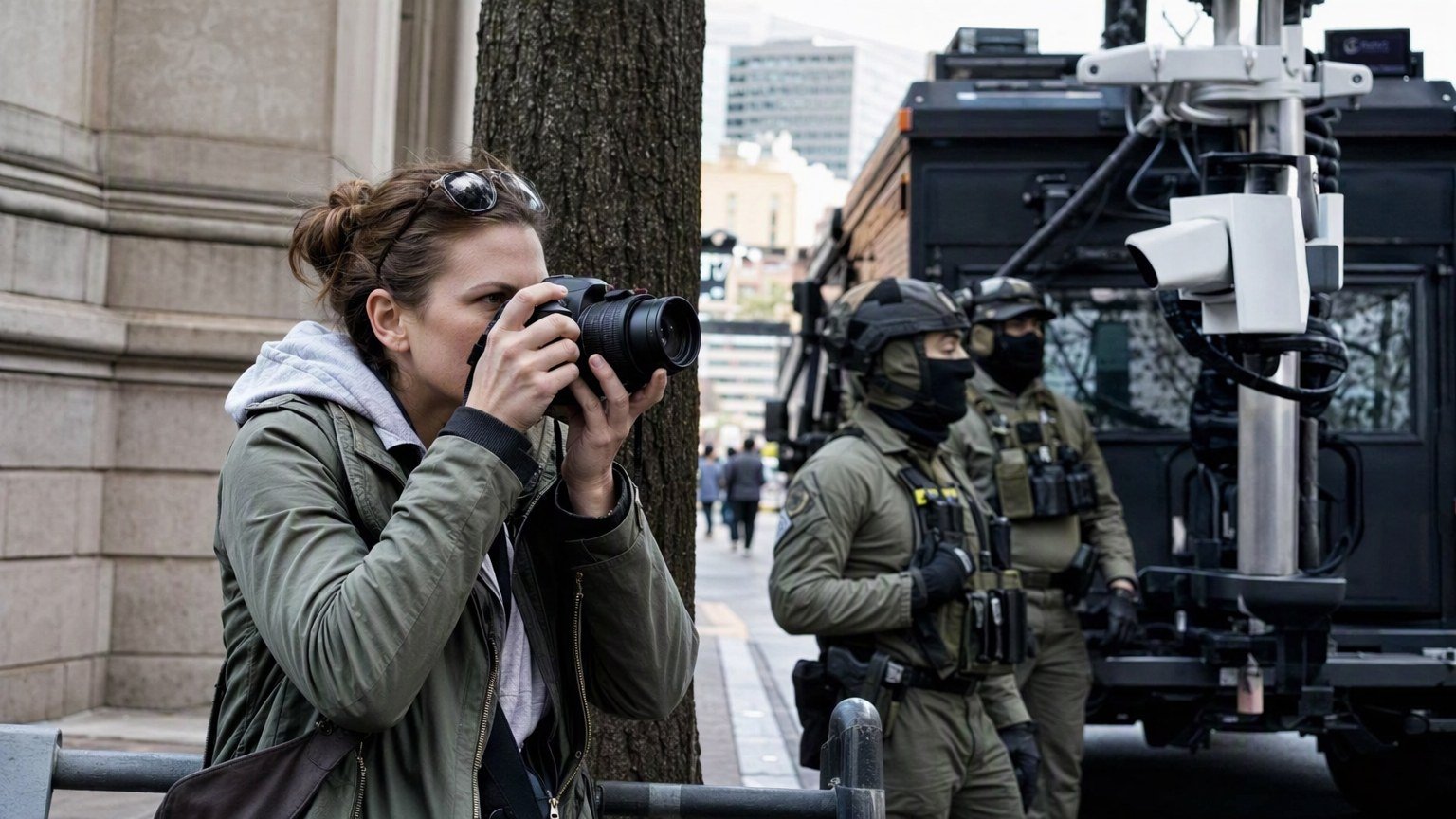
Here’s a sentence that should stop you cold: a woman stood on a public sidewalk in Portland, Maine, took a photo of federal agents making an arrest, and within days her spouse’s home address, phone number, and a list of everyone living in that house turned up inside a federal investigative…
Here’s a sentence that should stop you cold: a woman stood on a public sidewalk in Portland, Maine, took a photo of federal agents making an arrest, and within days her spouse’s home address, phone number, and a list of everyone living in that house turned up inside a federal investigative database. Not a parking ticket database. Not some DMV lookup. A system reportedly built for tracking actual criminal suspects. That’s the allegation now sitting in partially unsealed court filings, and if even half of it holds up, we’ve got a real problem on our hands.
So What Actually Happened Here
Polyxenia Pantos was watching an immigration enforcement operation unfold near her in Portland, which, last I checked, is still legal in this country. You’re allowed to stand on a sidewalk. You’re allowed to take pictures. That’s not me editorializing, that’s just… the First Amendment, doing its job. But according to court documents from an active federal class action, an agent identified only as “J.C.” allegedly turned around and ran the license plate of a car nearby – a car registered to Pantos’s spouse, Carlyn Williams – through Accurint, which is a LexisNexis law-enforcement database normally used to dig up background info on, you know, actual investigative targets.
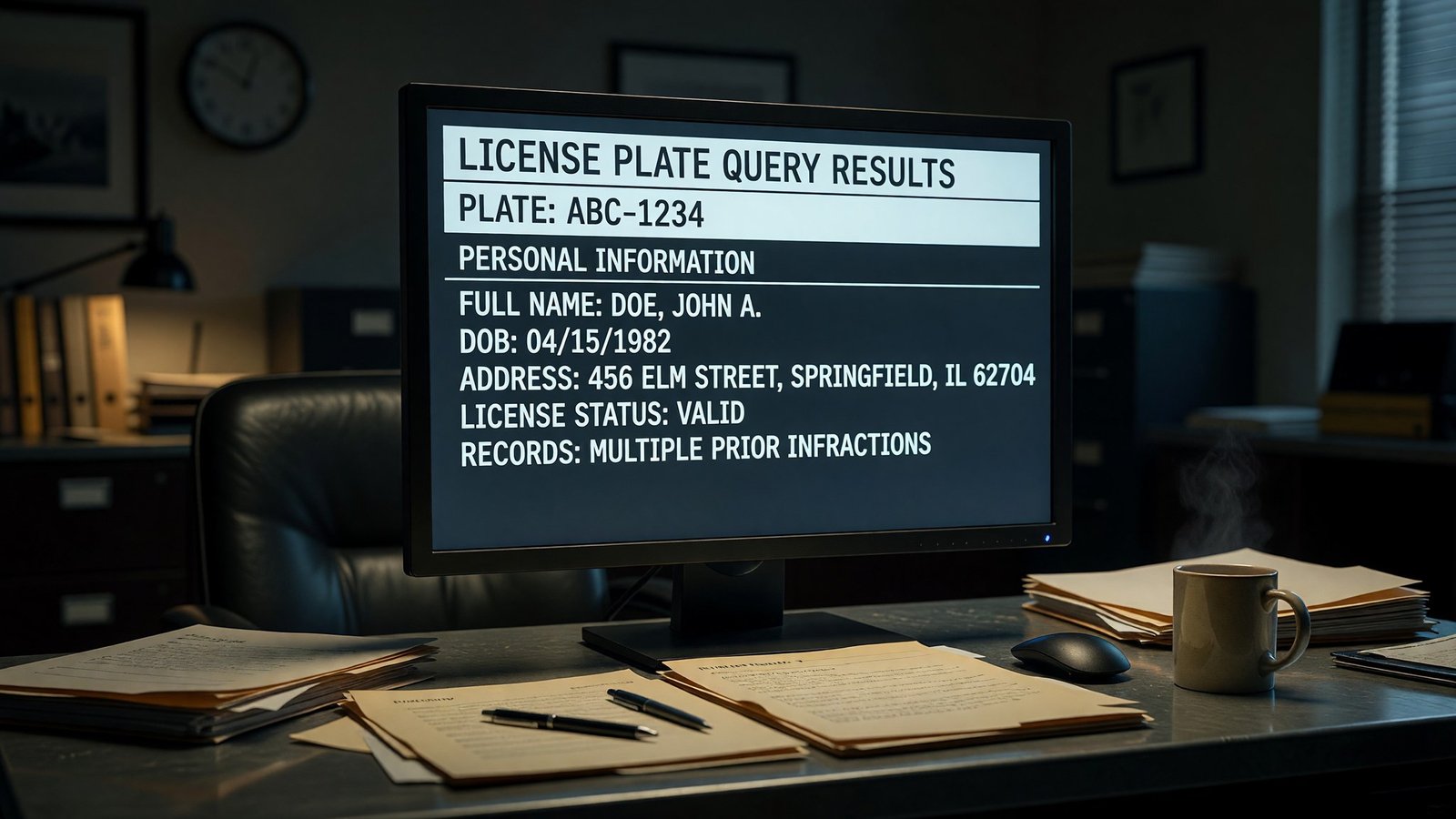
What came back, allegedly, was a report with Williams’s home address and phone number. And that information – according to the filing – didn’t just get glanced at and tossed. It allegedly ended up logged inside something called an ICM record. Investigative Case Management. That’s the kind of file you’d expect to see built around someone suspected of, I don’t know, trafficking or fraud or something with actual criminal weight behind it. Not someone’s spouse who happened to be standing nearby with a camera.
This Wasn’t Just One Person
The timing matters too. This all traces back to something called Operation Catch of the Day, an immigration enforcement surge that hit Maine in January 2026. And Pantos apparently wasn’t alone in getting this treatment. The filings allege J.C. created these ICM records for at least six observers – people who were, again, just watching enforcement actions happen in public. The government’s own filings put that number even higher, at eight. Make of that discrepancy what you will. Either way, this isn’t a one-off mistake by some overzealous agent having a bad day. It looks like a pattern. And patterns are what should actually worry you here, not isolated incidents.
The Part That Really Gets Me
It’s not just addresses and phone numbers, which honestly would already be bad enough. The filings describe photographs of observers being collected, license plate numbers logged, names of household members pulled and recorded – people who, as far as anyone’s shown, did absolutely nothing except exist in the same house as somebody who watched an arrest. And then there’s the label. The actual language allegedly attached to these records. The license plate tracking piece is particularly relevant now that Bernie Sanders Just Declared War on License Plate Surveillance with new federal legislation.
“Threat to Law Enforcement, Professional Protestor”
Read that again. A label like that – sitting in a federal investigative file, next to someone’s home address and the names of the people they live with – is not a neutral administrative note. That’s a characterization. That’s someone deciding, apparently without much to back it up, that a person taking a photo on a sidewalk belongs in the same category of concern as, what, an actual threat? I’ve covered a lot of overreach stories in fifteen years of doing this, and this one’s got a particular flavor of chilling to it, because it’s not abstract. It’s not “government collects data broadly.” It’s specific people, specific addresses, specific labels that follow them around in a system built for something else entirely.
Why This Should Bother You Even If You Don’t Care About Immigration Policy
Here’s the thing – you don’t have to have an opinion on immigration enforcement to find this disturbing. Strip away the politics for a second. What’s actually being alleged is that a tool meant for serious criminal investigation got repurposed to catalog civilians exercising a basic constitutional right. That should bother conservatives who care about government overreach just as much as it bothers progressives who care about civil liberties. This is the kind of thing that, in theory, cuts across the aisle. Whether it actually will, in this political climate… I’m not holding my breath, but it should.
And this isn’t happening in a vacuum either. This surveillance-app-style targeting of civilians has shown up in other government operations too, which tells me this probably isn’t some rogue agent in Maine freelancing. It smells more like a method. Something that got used once, worked (in the sense that nobody stopped it), and got used again. That’s how bureaucratic overreach tends to spread – quietly, department by department, until a lawsuit drags it into the light. In fact, a Judge Just Called Flock Spying Unconstitutional in another case involving license plate surveillance that crossed similar lines.
What This Actually Means
We’re still early here. These are partially unsealed filings in an ongoing case, not a final ruling, and I want to be honest about that – we don’t yet know how a judge is going to weigh in on all this, or what remedies might actually come out of it. But the mechanics described in the filing are specific enough, and consistent enough across multiple alleged observers, that this doesn’t read like noise. It reads like a system doing exactly what someone built it to do, just aimed at the wrong people.
If you take a picture of federal agents doing their jobs in public, should your spouse’s phone number end up in a case file labeling you a “threat to law enforcement”? I don’t think that’s actually a hard question. But apparently, somewhere in Maine in January 2026, somebody thought the answer was yes. We’ll see what a court thinks.