
Here’s a fun fact that should scare you a little: the people writing the rulebook for the most powerful technology humans have ever built are, in large part, the same people selling it to you. Think about that for a second. We’re not talking about some niche industry nobody cares about. We’re…
Here’s a fun fact that should scare you a little: the people writing the rulebook for the most powerful technology humans have ever built are, in large part, the same people selling it to you. Think about that for a second. We’re not talking about some niche industry nobody cares about. We’re talking about AI, the thing that’s already rewriting how we work, how we get information, and – let’s be honest – how we think. And the folks setting the guardrails are the ones with billions riding on there being as few guardrails as possible.
Move Fast, Break Things, Apologize Later (Maybe)
Silicon Valley has a motto, and you’ve probably heard some version of it: move fast and break things. It sounds punchy on a t-shirt. It sounds a lot less punchy when the “thing” being broken is, say, democratic discourse or teenagers’ mental health. We watched this play out in real time with social media. Facebook – sorry, Meta, I still slip up – spent the better part of two decades building first and asking “wait, is this okay?” later. Usually much later. Usually only after a scandal, a congressional hearing, or a whistleblower forced the question.
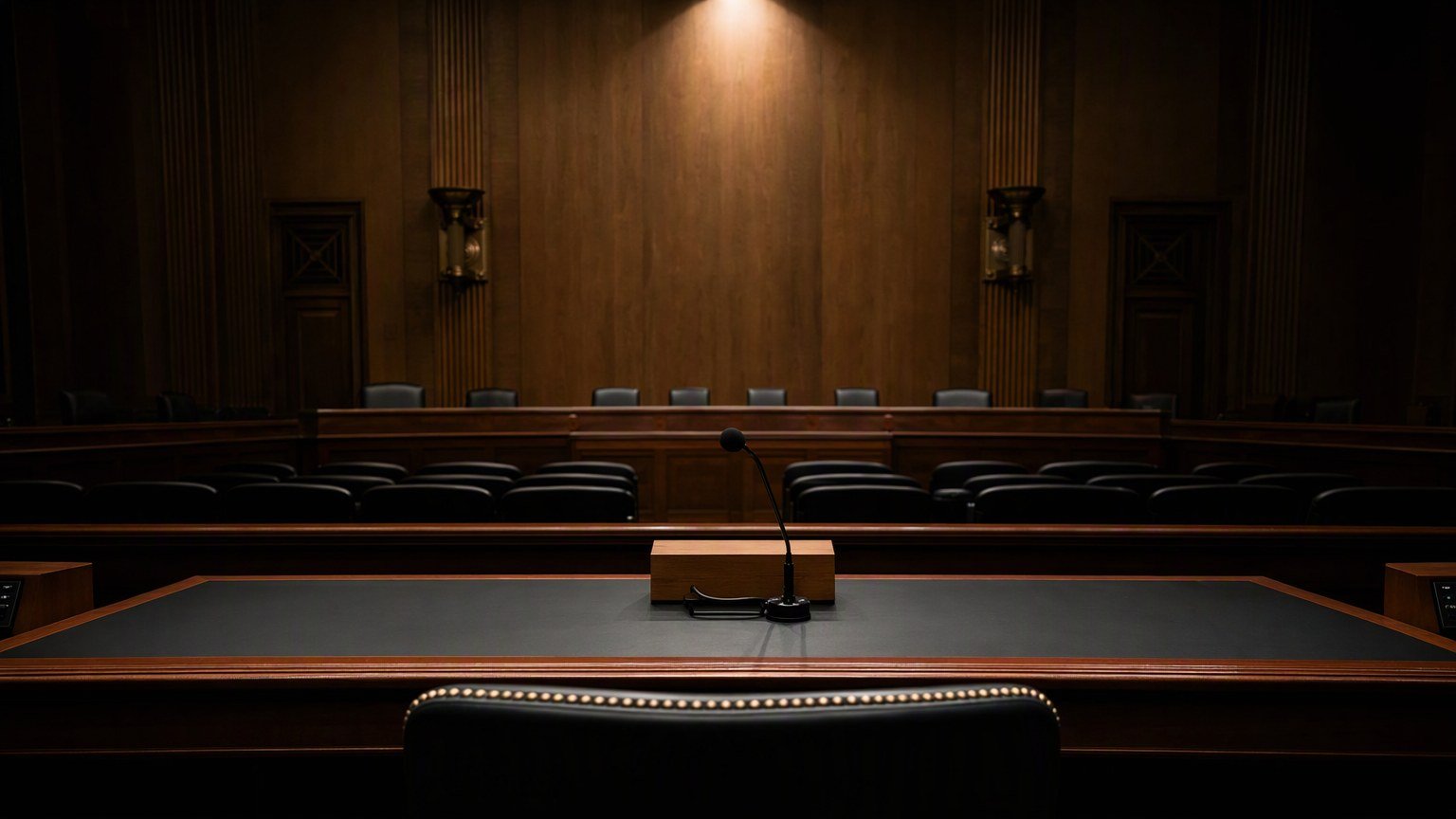
And here’s the thing that really gets me: it worked. Not “worked” in the sense of being good for society, but worked in the sense that by the time regulators caught up, the platforms were already too big, too embedded, too essential to really rein in. Cambridge Analytica happened. Congress held hearings. Mark Zuckerberg wore a suit and gave his best “I understand the gravity of this” face. And then… life went on, mostly unchanged, because the horse had already left the barn years earlier.
Sound Familiar?
Now swap “social media” for “AI” and tell me you’re not getting déjà vu. Because I sure am. We’ve got companies – OpenAI, Google, Anthropic, Meta again, take your pick – essentially setting their own homework and grading it themselves. Sam Altman famously went in front of Congress back in 2023 and said, sure, please regulate us. Which sounds great until you remember that asking for regulation while simultaneously lobbying to shape what that regulation looks like is… kind of the oldest trick in the corporate playbook. I’m not saying it’s cynical. I’m saying it’s at least worth raising an eyebrow at.
Who Exactly Do We Trust Here?
This is the part where I’m supposed to be neutral and present “both sides.” I’m not going to pretend I don’t have an opinion, because I do, and it’s this: letting profit-driven corporations self-police the single most consequential technology of our generation requires an almost absurd amount of blind faith. Faith that these companies will prioritize public good over quarterly earnings. Faith that the same industry that gave us engagement-optimized algorithms designed to keep teenagers scrolling at 2am will suddenly develop a conscience when it comes to AI.

I mean, do we really believe that? Not gonna lie, I don’t. And I don’t think it’s because these are uniquely evil people running these companies – I actually think most of them genuinely believe they’re building something good. That’s almost worse, in a way. True believers with massive financial incentives and no outside check on their judgment are a genuinely dangerous combination.
“Allowing private corporations to self-police the most consequential technology of our era requires blind trust that profit-driven entities will exercise fair judgment over the public good.”
That line sums it up better than I probably could, if I’m being honest. Blind trust. That’s the ask. And it’s a big one.
It’s Not Just a Big Tech Problem – It’s a Governance Problem
Here’s where I think a lot of the commentary on this stuff misses the point. People love to make this a “big tech bad” story, and sure, fine, there’s plenty of material there. But the deeper issue is that governments – plural, everywhere – have been consistently, embarrassingly slow to even understand what they’re regulating, let alone regulate it well. The EU’s AI Act took years to hammer out and was already playing catch-up to the technology by the time it landed. The US still doesn’t have a comprehensive federal AI law – it’s a patchwork of state bills, executive orders that get reversed with the next administration, and a whole lot of hand-wringing. It's part of why governments like the Netherlands are now trying to break free from Microsoft entirely rather than wait for better rules.
Big tech shouldn’t be the only ones writing all the rules – that much is clear. But I’d push it further: who’s actually ready to write better ones? Academics? Sure, some have great ideas, but no enforcement power. Civil society groups? Important voices, chronically underfunded compared to the lobbying budgets they’re up against. Governments? Mostly still figuring out what a large language model even is, let alone how to regulate one responsibly. Bernie Sanders seems to think he's ready to write better ones, having just declared war on license plate surveillance.
That’s the real crisis here. It’s not just that big tech wants to write the rules. It’s that right now, pretty much nobody else is equipped to.
What This Actually Means
I keep coming back to this idea that we’ve basically run this exact experiment before, and we already know how it ends if we don’t change the approach. Social media gave us a preview. We let the people building the technology also define what “responsible” looked like, we called it innovation, and a decade later we’re still cleaning up the mess – the misinformation, the mental health fallout, the erosion of trust in basically every institution.
AI is that same story, except the stakes are higher and the timeline is faster. We don’t have a decade to figure this out gradually. The technology is moving in years, sometimes months, not decades.
So no, big tech shouldn’t be the only ones writing AI’s rules. That part’s not even controversial, really – most reasonable people agree on it. The harder question, the one nobody’s got a satisfying answer for yet, is who else is actually capable of doing it. Until that gets solved, we’re stuck in the same uncomfortable spot: hoping the people with the most to gain from loose rules will somehow write tight ones anyway. I wouldn’t bet on it. Would you?