
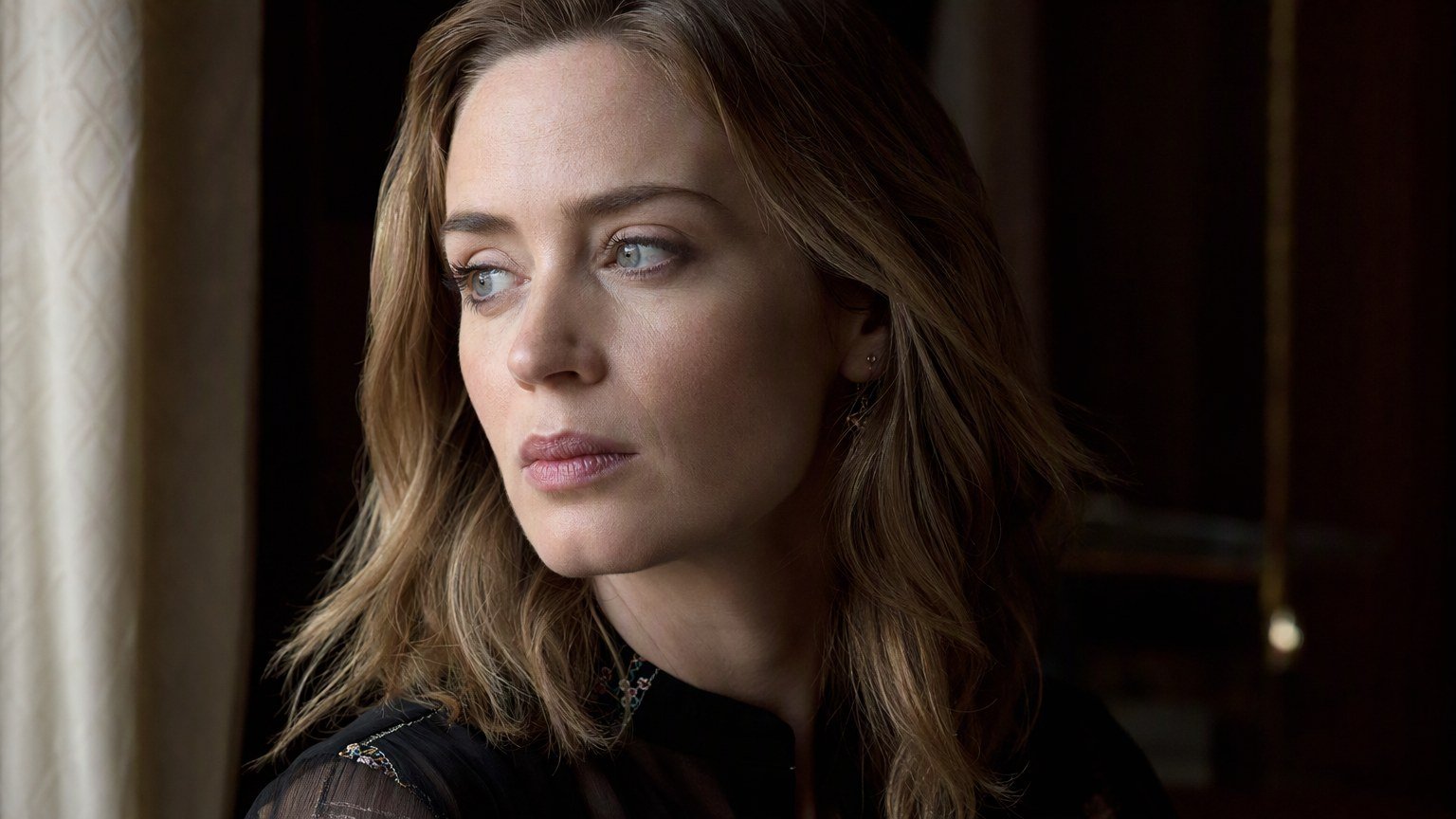
Spielberg’s summer sci-fi hit Disclosure Day arrives October 9, giving subscribers three weeks to watch Emily Blunt’s standout performance. Until then, the streamer offers thrillers, slashers, and prestige drama.
Peacock is betting October on one film: Disclosure Day, Steven Spielberg’s summer sci-fi hit starring Emily Blunt as a meteorologist who suddenly speaks unknown languages and exhibits telepathic abilities. The film drops October 9, leaving subscribers three weeks to stream what may be Blunt’s career-best performance.
But the first week of the month matters too. Before Disclosure Day arrives, Peacock’s October catalogue includes Harrison Ford and Michelle Pfeiffer’s moody 2000 thriller What Lies Beneath, the 1981 slasher sequel Friday the 13th Part 2, and Denzel Washington’s forensic procedural The Bone Collector. The lineup skews toward genre work and prestige auteur fare, a combination that signals how mid-tier streaming libraries now live or die by a handful of anchor titles surrounded by catalogue depth.
Disclosure Day returns Spielberg to sci-fi
Disclosure Day follows cybersecurity analyst Daniel Kellner, played by Josh O’Connor, who steals classified government intel. He crosses paths with Margaret Fairchild, Blunt’s TV meteorologist, after she begins speaking multiple foreign languages and demonstrating telepathic powers. The two uncover a conspiracy involving the U.S. government and possible extraterrestrial contact. Whether their discoveries are real or shared delusion remains the film’s central tension.
Spielberg returns to science fiction after West Side Story and The Fabelmans, both departures from the genre that built his reputation. His skill with chase sequences remains intact, and he gives Margaret a layered arc as her transformation accelerates. The plot follows predictable beats, but the execution elevates it. Top-tier craft makes ordinary material feel vital.
What the roster says about streaming in late 2026
Peacock’s October selection reflects a broader shift in how platforms program monthly windows. One or two event titles anchor the month while catalogue pulls fill the gaps. Disclosure Day is the marquee. What Lies Beneath and Friday the 13th Part 2 are the filler that doubles as counter-programming for viewers who want suspense without aliens.
The list also includes Christopher Nolan’s Oppenheimer, Wes Anderson’s Asteroid City, Spielberg’s own The Fabelmans, and Ray Romano’s Somewhere in Queens. These are not new acquisitions. They are library plays designed to extend watch time around the headline release. Peacock is not alone in this strategy. Every streamer now treats the monthly content drop as a spoke-and-hub model: one big wheel, many small spokes.
Blunt’s performance draws the most attention
Early coverage of Disclosure Day emphasised Blunt’s range. Playing a character who shifts from ordinary professional to something unrecognisable requires physical and vocal control, and Blunt delivers both. Margaret is not a passive subject. She drives the investigation alongside Kellner, and the film’s emotional weight rests on her shoulders.
O’Connor, known for playing tortured aristocrats and repressed romantics, pivots here into paranoid analyst mode. The pairing works because neither actor plays to type. Kellner could have been a stock hacker. Margaret could have been a hysterical victim. Instead, both characters feel grounded even as the premise escalates.
Why October programming leans into genre
October used to mean wall-to-wall horror. Now it means suspense, science fiction, and anything that holds attention in a cluttered release calendar. Peacock’s list includes two Halloween sequels and one Friday the 13th entry, but the month is not defined by slashers. Disclosure Day is the centre, and it is not a horror film. It is a paranoid thriller with sci-fi scaffolding, closer in tone to early Spielberg than to contemporary streaming horror.
This marks a subtle but meaningful change. Genre is no longer confined to its traditional lanes. A meteorologist with telepathic powers can anchor October as easily as a masked killer. Audiences expect tonal variety within the same content window, and platforms are programming accordingly.
The catalogue titles worth watching before the ninth
What Lies Beneath remains one of Robert Zemeckis’s most underrated films. It uses the bones of a ghost story to explore marital distrust, and Pfeiffer and Ford play against their usual warmth. The Bone Collector pairs Denzel Washington and Angelina Jolie in a forensic thriller that holds up better than most late-’90s procedurals. Friday the 13th Part 2 is the film that established Jason Voorhees as the franchise lead, not his mother.
Oppenheimer is the prestige anchor. It won Best Picture earlier this year and remains a technical showcase. Asteroid City offers Wes Anderson at his most self-contained, a film that plays like a diorama with dialogue. The Fabelmans is Spielberg’s most personal work, a coming-of-age story about falling in love with filmmaking. All three are worth watching if you missed them theatrically.
What this lineup signals about Peacock’s strategy
Peacock does not have the Same-day theatrical window that HBO Max enjoys or the original film budget that Netflix commands. Its strategy is event acquisition and deep catalogue. Disclosure Day is the event. The surrounding twelve films are the catalogue. Together, they create a programming block that feels curated rather than random.
This approach works when the anchor title delivers. If Disclosure Day underperforms, the rest of the month feels like filler. If it holds attention, the surrounding films benefit from proximity. Streaming libraries are no longer neutral. They are shaped by adjacency, and October’s roster is built to amplify one film’s success across two weeks of viewing behaviour.