

Reliance Jio just announced it’s putting 1,600 satellites into orbit. And honestly? This isn’t just about better phone service in rural India – though that’s what they’ll say in the press releases. This is about Mukesh Ambani’s kid looking at Elon Musk’s Starlink and Jeff Bezos’s Kuiper and…
Reliance Jio just announced it’s putting 1,600 satellites into orbit. And honestly? This isn’t just about better phone service in rural India – though that’s what they’ll say in the press releases. This is about Mukesh Ambani’s kid looking at Elon Musk’s Starlink and Jeff Bezos’s Kuiper and thinking, “Yeah, we’re not letting you own our sky.”
The Numbers Are Actually Insane
So here’s what Jio dropped at the India Mobile Congress this week: a constellation of “around 1,600” satellites – and I love that hedge word “around,” like they’re not exactly sure if they’ll launch 1,598 or 1,612 – backed by 23 ground stations spread across India. They’re calling it “sovereign satellite connectivity,” which is corporate speak for “we don’t want American billionaires controlling our internet infrastructure.”

Akash Ambani, who runs Jio Platforms now (and yeah, he’s Mukesh’s son, let’s not pretend this isn’t still a family operation), told reporters they’ve built their “own satellite stack – a whole data, end-to-end stack which enables 5G product use.” The guy’s clearly excited. You can tell because he used the phrase “really, really beneficially” which is… not quite grammatical but very human when you’re pumped about something.
Why This Actually Matters
Look, India has 1.4 billion people. A huge chunk of them still don’t have reliable internet. And the ones who do? They’re mostly getting it through infrastructure that ultimately traces back to equipment and platforms controlled by companies headquartered in California or Seattle or Beijing. That’s a problem if you’re trying to be a superpower. It’s a bigger problem if you’re Modi’s government, which has been pretty clear about wanting technological independence.
Jio isn’t stupid. They’ve already completely reshaped India’s telecom market over the past decade – basically gave everyone dirt-cheap data and destroyed the competition. Now they’re looking up instead of sideways.
But Wait, Doesn’t Starlink Already Do This?
Sure. Starlink has about 6,000 satellites up there right now, and they’re providing internet to people in 100+ countries. But here’s the thing – and this is what Western tech press keeps missing – Indian regulators have been incredibly hesitant about letting Starlink operate freely in the country. There’ve been licensing delays, spectrum allocation fights, the whole bureaucratic nightmare.
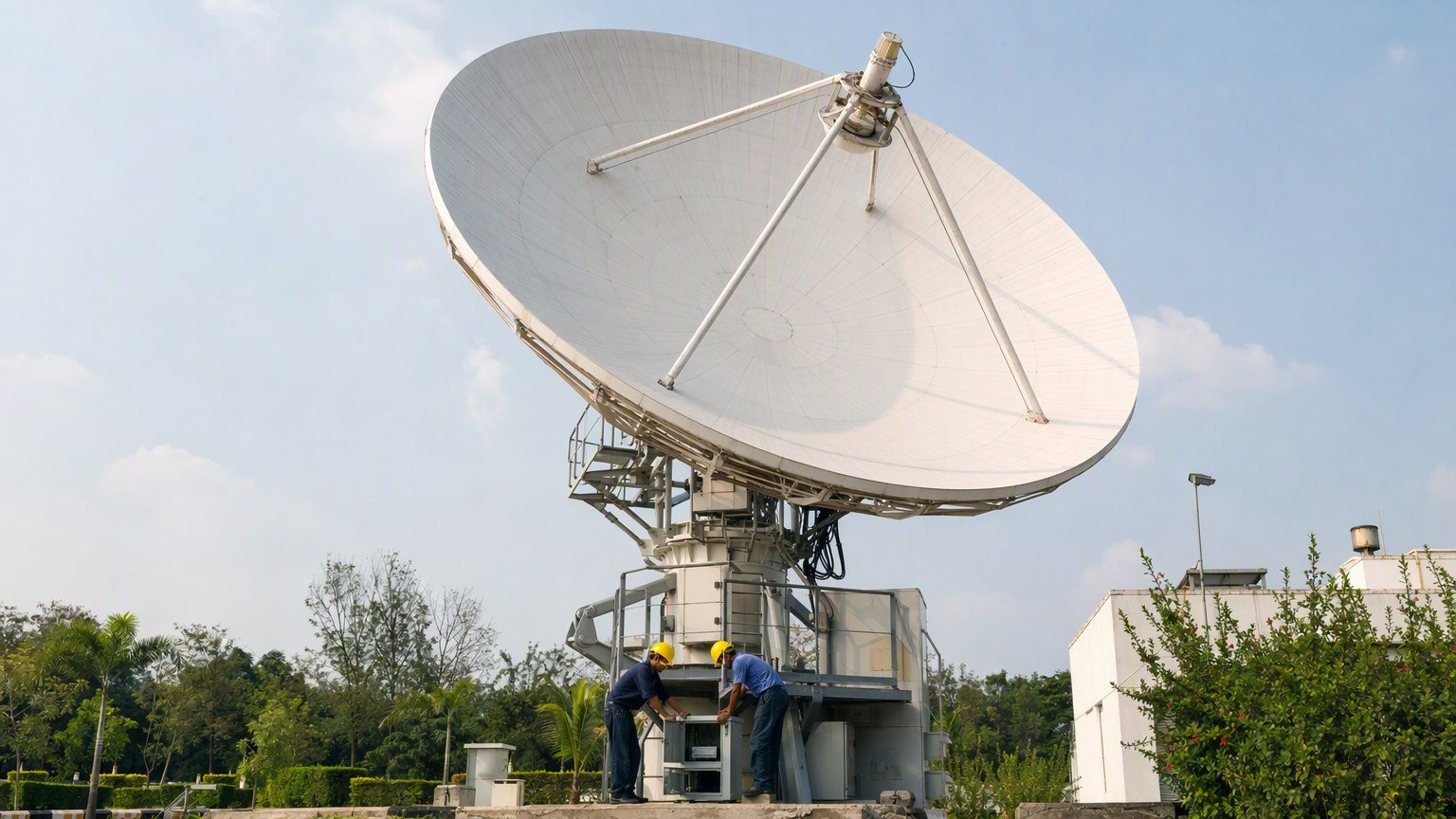
It’s not really about technical standards or safety concerns. It’s about control. If all your satellite internet flows through a company that answers to the U.S. government (and yeah, Starlink does when push comes to shove), you’ve got a sovereignty problem. Especially if you’re in an increasingly multipolar world where you might not always see eye-to-eye with Washington. The Netherlands already made that exact call when they ditched Microsoft for good over similar sovereignty concerns.
“We will keep on driving to become an end-to-end technology player and creator and enable that so we can scale really, really beneficially.” – Akash Ambani
The Big Tech Breakup Nobody’s Talking About
This is part of something bigger that’s happening right now. India’s been watching China build its own tech stack for years – their own apps, their own satellites, their own everything – and thinking, “We should probably do that too, but without the whole authoritarian censorship thing.”
You’re seeing it everywhere. India’s pushing its UPI payment system as an alternative to Visa and Mastercard. They’ve got their own app stores in development. They banned TikTok and a bunch of Chinese apps. And now this – a homegrown satellite network that could, theoretically, provide internet service completely independent of foreign infrastructure.
I mean, let’s be real: Jio probably isn’t going to manufacture all 1,600 satellites themselves. They’ll partner with aerospace companies, some of which will be foreign. But the point is operational control. The ability to say “our network, our rules, our data sovereignty.”
The Timeline’s the Tricky Part
Ambani didn’t give a launch date, which… yeah, that tracks. Putting 1,600 satellites into orbit isn’t exactly a weekend project. Starlink’s been at this for years and they’ve got Elon’s SpaceX advantage – they literally own the rockets. Jio’s going to have to contract launches, probably with ISRO (India’s space agency) and maybe some international partners.
If I had to guess? We’re looking at 2028-2030 before this thing is anywhere near operational at scale. Maybe sooner if they really push, but satellite constellations are expensive and complicated and nothing in India’s bureaucracy moves quickly (I say that with affection, but also… come on).
What This Actually Means
This isn’t just Jio being ambitious. It’s a signal that the era of American tech companies having free run of global markets is ending. Not everywhere, not all at once, but country by country, sector by sector. India’s big enough and rich enough now to build its own alternatives. And when you’re that big, you can actually make it work economically.
The question isn’t whether Jio can pull this off technically – they probably can, given enough time and money. The question is what happens when every major economy decides it needs its own sovereign internet infrastructure. Because that’s not really the internet anymore, is it? That’s just… separate networks that happen to use the same protocols. And I’m not sure anyone’s really thought through what that world looks like. But we’re building it anyway. We've already seen what happens when sovereign internet infrastructure fails completely – Amazon spent six months telling customers their cloud data was gone forever.