






Six months. That’s how long it took for Amazon to finally say the words nobody wanted to hear: your data is gone. Not “being restored.” Not “temporarily inaccessible.” Gone, as in permanently, as in don’t bother waiting by the phone. On September 15, AWS posted two updates confirming what a lot…
Six months. That’s how long it took for Amazon to finally say the words nobody wanted to hear: your data is gone. Not “being restored.” Not “temporarily inaccessible.” Gone, as in permanently, as in don’t bother waiting by the phone. On September 15, AWS posted two updates confirming what a lot of customers in the Middle East had probably already guessed – the Iranian drone strikes that hammered its infrastructure back in March did more damage than anyone was letting on, and some of it simply can’t be undone.
Wait, the Cloud Can Just… Disappear?
Yeah. It can. And I think that’s the part a lot of us need to sit with for a second, because “the cloud” has this reputation as some indestructible, infinitely-backed-up fortress in the sky. Turns out it’s still buildings. Still servers. Still physical hardware sitting in a physical place that can get hit by physical missiles. Who knew (everyone, actually, if they thought about it for more than five seconds, but we don’t, do we).
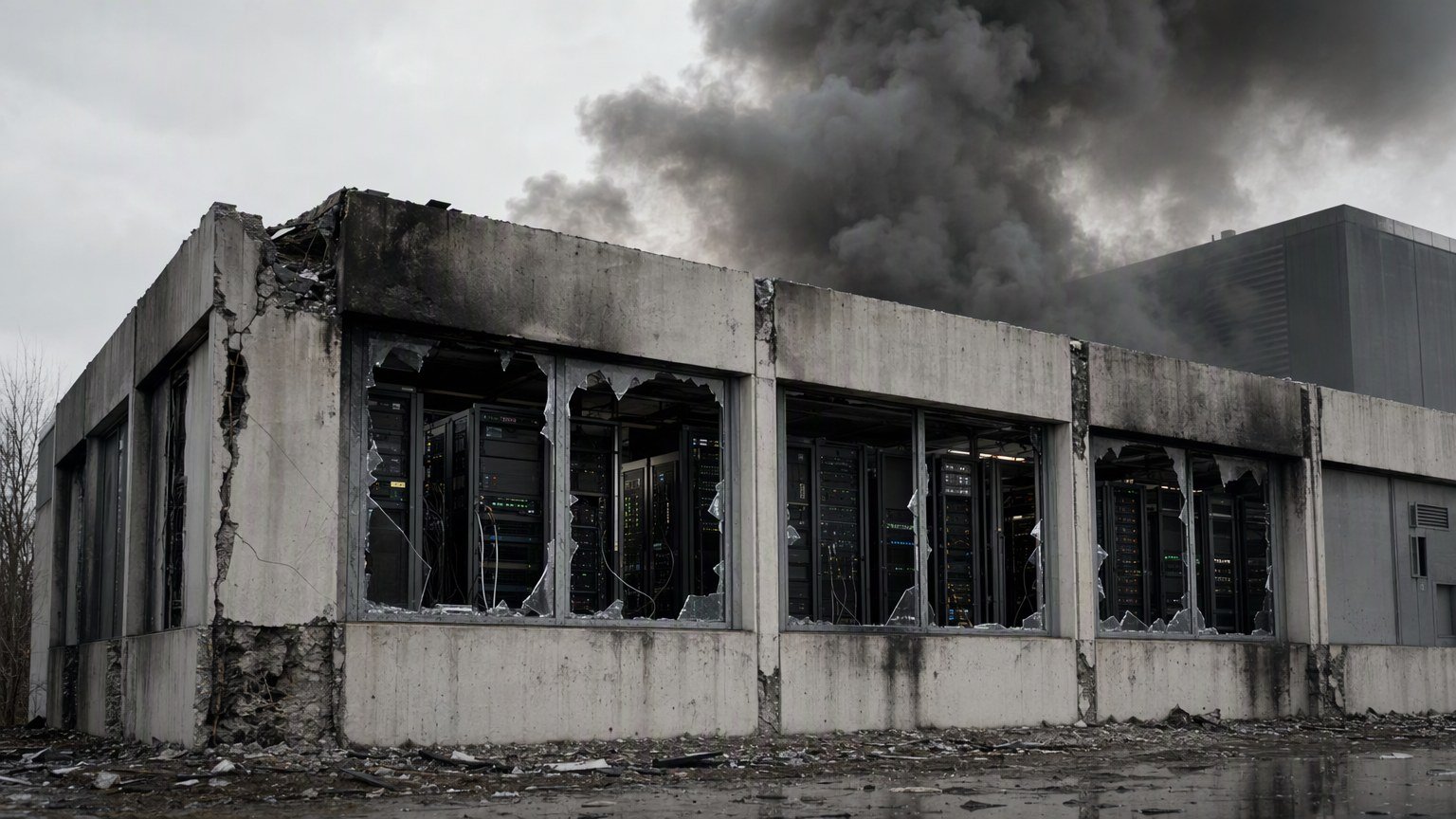
The two regions in question are me-south-1, AWS’s Bahrain region, and me-central-1, its UAE region. These aren’t small, obscure corners of the AWS map either – Bahrain and the UAE are major regional hubs for cloud infrastructure in the Gulf, serving everything from local businesses to multinational operations that picked those zones specifically because they wanted data to stay close to home for compliance reasons. Ironic, in a grim sort of way.
The UAE Situation – Bad But Not Total
In the UAE, the damage is at least contained, if “contained” is the right word for losing an entire availability zone’s worth of customer data forever. AWS said it’s “unable to restore access to the resources and data hosted exclusively in mec1-az2” – that’s one of three availability zones in the region. The other two, mec1-az1 and mec1-az3, are apparently still salvageable, and AWS says work on those plus the shared regional infrastructure is ongoing.
So if your stuff happened to be sitting in az2 specifically, I’m sorry. Genuinely. That’s a brutal way to find out which availability zone you picked matters a whole lot more than you thought it did.
Bahrain Got It Worse
Here’s where things get really ugly. Bahrain’s region wasn’t a one-zone problem – AWS says the damage spread across multiple availability zones and exceeded what the company could recover from entirely. The language in the update is blunt: “unable to restore access to the resources and data hosted exclusively in this Region.” Not a zone. The whole region.

Think about that for a second. An entire AWS region, just… erased. Not corrupted, not degraded, erased. If you were a company that built your entire disaster recovery plan around “well, it’s in the cloud, it’s fine,” this is the nightmare scenario come to life. And I’d bet real money there are IT teams right now having some very uncomfortable conversations with their leadership about why “the cloud is basically magic and never fails” was maybe not the soundest assumption to build a business on.
“We remain committed to supporting our customers in the UAE. We are working on replacing the affected infrastructure and will provide an update on the restoration of our services in the coming months. We have notified the relevant authorities and continue to work with them toward that goal.”
Six Months of Silence Is a Choice
What really gets me about this whole thing isn’t even the data loss itself – infrastructure gets attacked, bad things happen, I get it, war is war. What bugs me is the timeline. Six months between the strikes and the actual acknowledgment that this data isn’t coming back. Six months of customers presumably being told things were “in progress” or “under review” or whatever corporate-speak keeps people from panicking in the short term.
I’m not saying AWS was lying. Recovery efforts probably did drag on for a legitimate reason – you don’t just shrug and declare data lost, you exhaust every option first, especially when lawsuits and reputations are on the line. But there’s a difference between due diligence and just letting the clock run until the news cycle has moved on to something else. From where I’m sitting, this reads a little like the latter, whether or not that was the intent.
And look, I get why a company would want to drag this out. Admitting “we lost your data permanently” is about as bad as it gets for a cloud provider whose entire business model is built on trust. People pay AWS specifically so they don’t have to think about where their data physically lives or what happens if a building gets blown up. The second that illusion cracks, you’ve got a real problem – not just technical, but existential, for the whole pitch of cloud computing as “safer” than keeping your own servers.
What This Actually Means
If you’re a business with anything sitting in a Middle East AWS region right now, this should scare you a little, and it should probably push you toward actually testing your multi-region backup strategy instead of just assuming it works because you checked a box in a settings panel somewhere. Geopolitical risk isn’t some abstract thing happening to other people anymore – it’s apparently a line item in your disaster recovery plan now, whether you wanted it there or not.
The bigger question, the one I don’t think anyone’s really answered yet, is what this does to how companies think about regional cloud strategy in conflict-adjacent areas going forward. Do businesses pull out of these regions? Do they demand better multi-zone redundancy guarantees? Or does everyone just… shrug, absorb the loss, and move on, the way we tend to do with most tech disasters these days?
I don’t have a clean answer. I’m not sure AWS does either, honestly, and that update reads like a company that’s still figuring out how to say “we’re sorry, there’s nothing more we can do” without saying it in those exact words. Six months from now, I’d bet we’re having a very similar conversation about az1 and az3 in the UAE. Hopefully I’m wrong about that one.

