
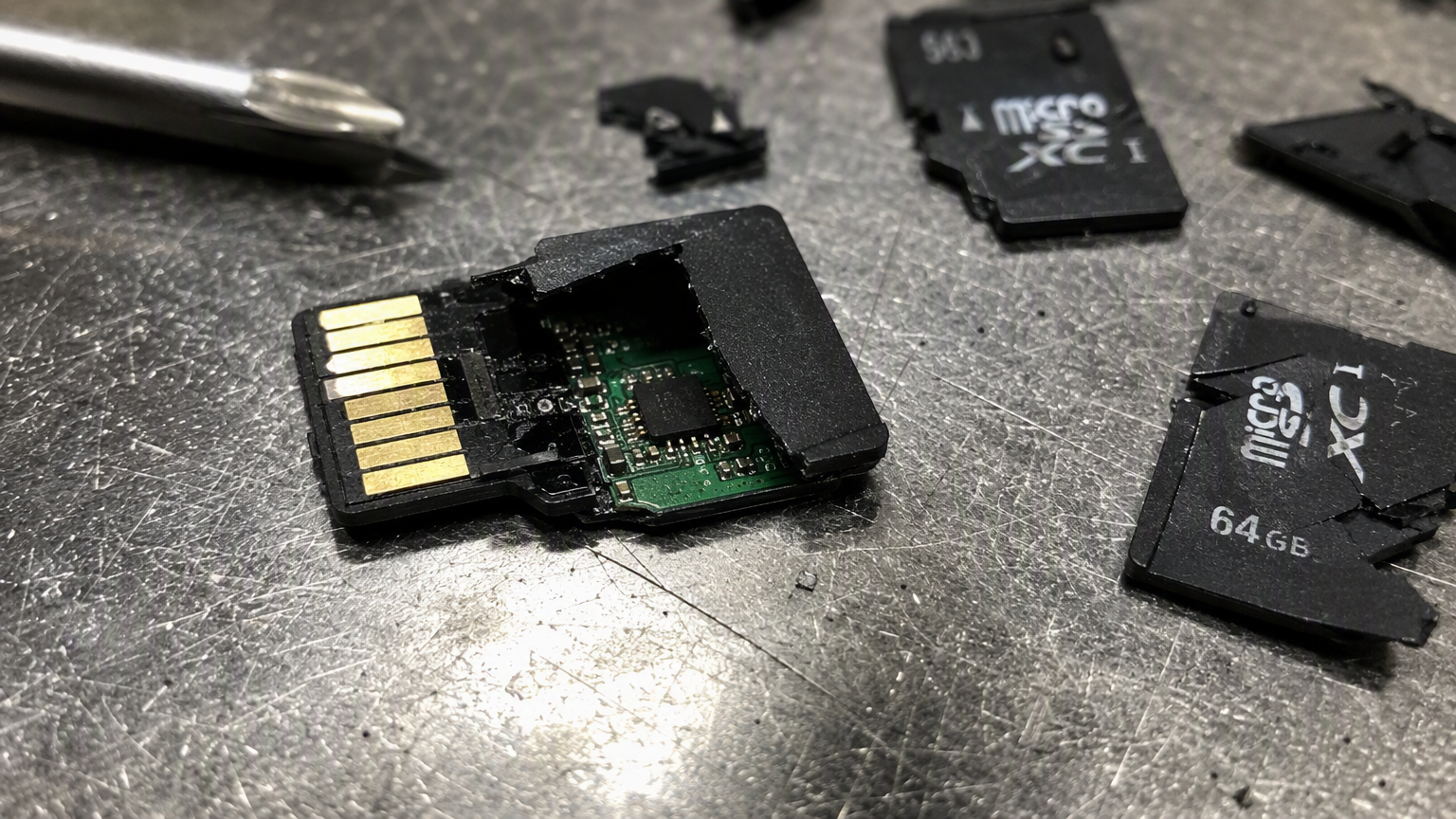
Three years. 351 microSD cards. 133 petabytes of data hammered onto tiny slivers of plastic and silicon until they died. And when the dust settled, one brand stood out for all the wrong reasons: SanDisk. Six out of seven of their cards tested to failure actually failed. Six. Out of seven. That’s not a fluke, that’s a pattern.
Okay, So What Actually Happened
Someone out there ran what’s basically a torture chamber for storage cards, writing data over and over until each card gave up the ghost. That’s the whole point of a “test to failure” – you’re not looking for the cards that survive, you’re looking for the exact moment they don’t. And across the board, most brands held up reasonably well. SanDisk, though? Not so much.
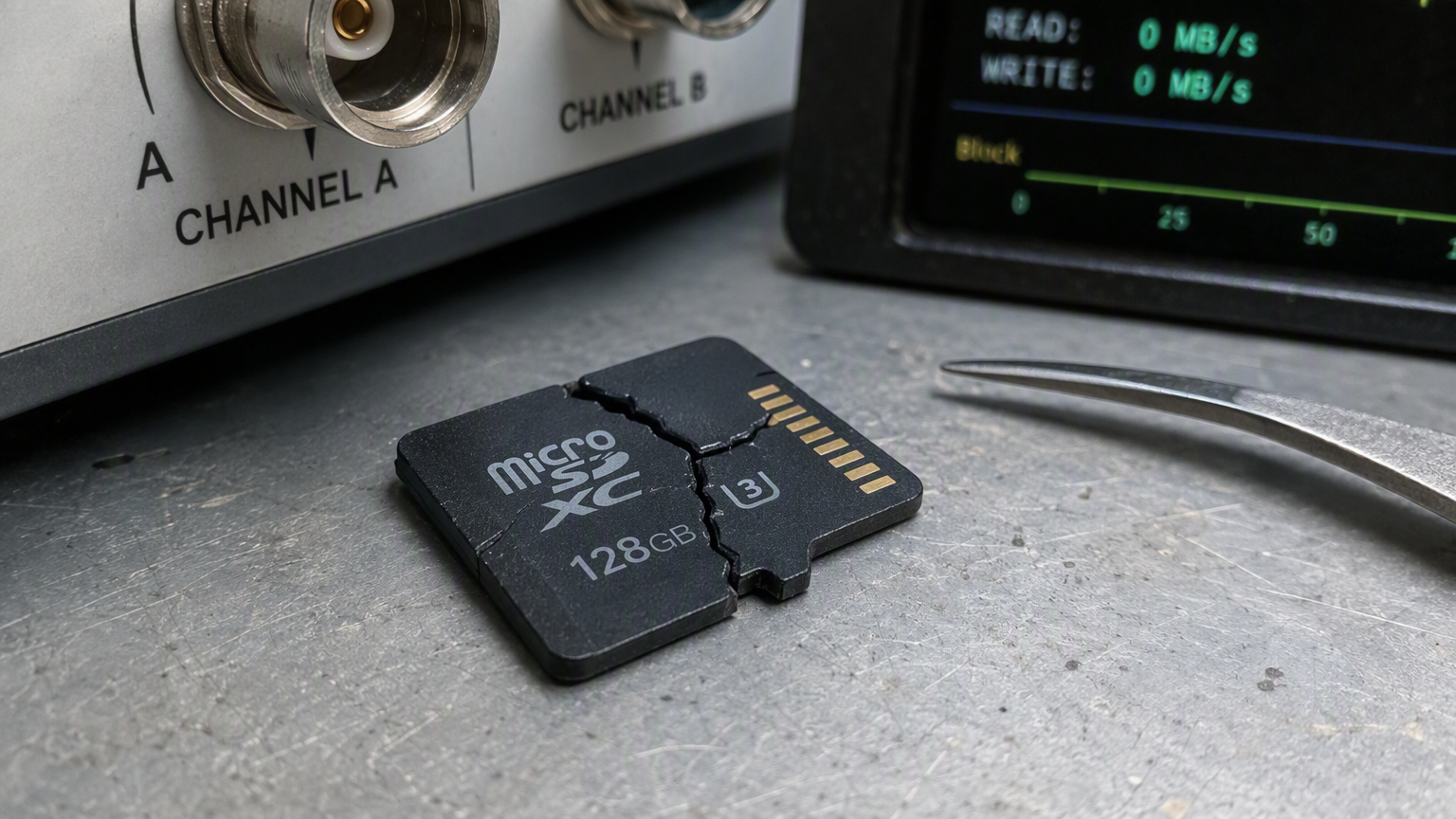
Now, I’ll be honest, SanDisk is one of those names people just trust by default. It’s the brand you grab without thinking twice at Best Buy or Amazon because it’s been around forever and it’s got that reputation. This test kind of blows a hole in that assumption. Not entirely – one card out of seven survived – but come on, an 85% failure rate in a controlled endurance test is not something you just shrug off.
Why This Matters More Than You’d Think
MicroSD cards aren’t just for your Nintendo Switch anymore. They’re in security cameras, dash cams, drones, action cameras that record 4K footage nonstop, Raspberry Pi projects running 24/7. These are write-heavy, unforgiving use cases. If your card fails silently after two years of continuous recording, you might not find out until you actually need that footage – like, say, after a break-in or a crash. That’s the nightmare scenario here.
But Wait, Isn’t All Flash Storage Supposed to Wear Out Eventually?
Yeah, technically. All NAND flash has a finite number of write cycles before it degrades. That’s just physics, not a conspiracy. But the whole reason you run a test like this is to see how different brands and models handle that wear differently. Some manage it gracefully with better wear-leveling algorithms and error correction. Others just… don’t.
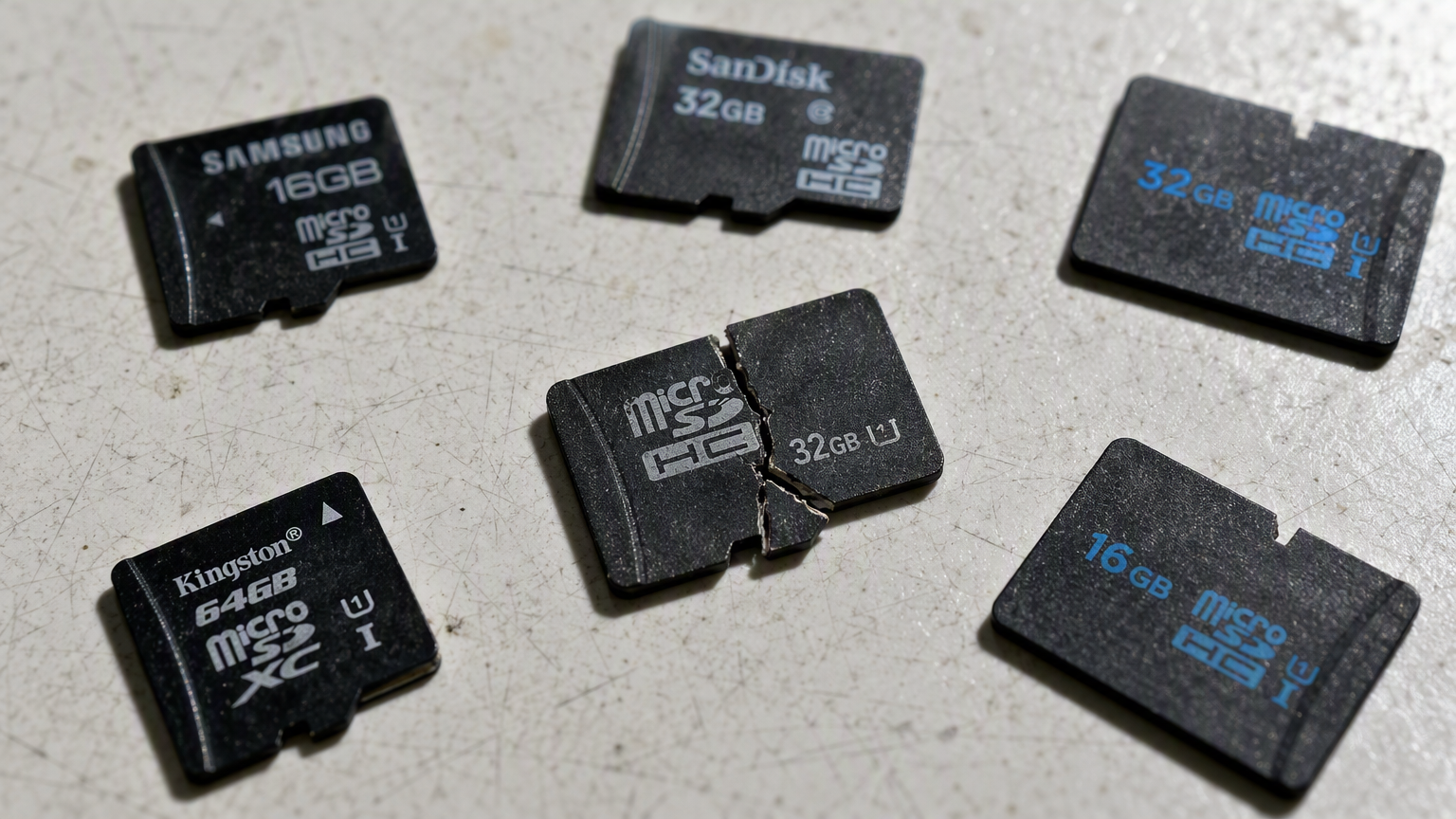
“Endurance testing isn’t about proving flash memory dies – everyone already knows that. It’s about figuring out which brands you can actually trust when the writing never stops.”
And that’s really the crux of it. This wasn’t some casual weekend project either – 133 petabytes is an absurd, almost incomprehensible amount of data. For context, that’s roughly the equivalent of streaming Netflix in 4K nonstop for… honestly I did the math and gave up because the number got silly. The point is, this was a serious, sustained effort to push these cards past any reasonable real-world workload, and SanDisk still buckled under it repeatedly.
Is This Actually SanDisk’s Fault, Or Just Bad Luck?
Here’s where I have to be a little careful, because seven cards isn’t a massive sample size on its own. If we’re talking statistics, seven units failing six times could theoretically be a batch issue, a manufacturing defect in that specific lot, or just unlucky sourcing. I’ve seen this kind of thing before with other components – one bad shipment skews the whole narrative around a brand’s reliability.
That said, when you’re the clear outlier compared to every other brand in a 351-card test, that’s not nothing. If Samsung, Kingston, or whoever else in this test had similar failure clusters, this wouldn’t be a story. But SanDisk being the name that jumps out? That’s worth paying attention to, even if it’s not the final word on the matter.
What This Actually Means
Look, I’m not saying throw out every SanDisk card you own and set them on fire. Most consumer use cases – snapping photos on a camera, storing music, backing up files occasionally – aren’t going to come anywhere near the kind of relentless write cycles this test simulated. Your everyday microSD card in a phone or camera is probably fine.
But if you’re running something that writes constantly – a dash cam, a security system, a drone logging flight data nonstop – this test is basically a warning label. Maybe don’t default to SanDisk just because it’s the familiar name on the shelf. Do a little homework, check what other brands performed like in this kind of endurance testing, and maybe spend the extra few bucks on something with a better track record for sustained writes.
At the very least, this is a good reminder that “trusted brand” and “actually reliable under pressure” aren’t always the same thing. Sometimes the household name is just… a household name. The data here says something different, and honestly, I’d rather trust 133 petabytes of real-world torture testing than decades of marketing.