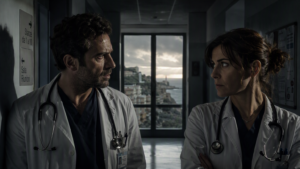





Aaron Sorkin thinks about rebooting The West Wing every single day. And honestly? He probably should stop.
Aaron Sorkin thinks about rebooting The West Wing every single day. And honestly? He probably should stop.
Look, I get it. The man created one of the best political dramas in television history. The walk-and-talks, the rapid-fire dialogue, the idealism that felt earned instead of cheesy – it was lightning in a bottle. But here’s the thing: lightning doesn’t strike twice, and definitely not in the same place. Then again, given Sorkin's $5.5M Flop: When Genius Fails, maybe his instincts about what audiences want right now aren't as sharp as they used to be.
The Problem Isn’t Just Politics
In a recent interview, Sorkin admitted that reviving The West Wing would be “tricky” in today’s political environment. Which is, if I’m being honest, the understatement of the decade. Tricky is figuring out a Rubik’s cube. This would be like trying to solve one while it’s actively on fire.

The West Wing worked because it arrived at a specific cultural moment. We were tired of Clinton-era cynicism but not yet beaten down by the reality TV presidency that was coming. Sorkin’s version of politics – where everyone was whip-smart, fundamentally decent, and capable of being moved by a good argument – felt aspirational without feeling completely absurd.
But that window closed. Hard.
We’re Not That Naive Anymore
The show ended in 2006. Since then, we’ve lived through government shutdowns, impeachments (plural), an insurrection, a pandemic response that became a political football, and social media turning every policy debate into trench warfare. The idea that a Republican and Democrat could have a hallway argument, both make good points, and walk away with mutual respect? That doesn’t feel inspirational anymore. It feels like fantasy football for people who miss the 90s.
And I actually liked The West Wing. I’ve rewatched it. Multiple times. It’s comfort food television. But comfort food from 20 years ago doesn’t always taste the same when you try to reheat it.
What Would It Even Look Like?
This is where Sorkin’s daily daydreaming probably hits a wall. Because what’s the version of The West Wing that works now? A show about a centrist administration trying to find common ground? That’s not drama, that’s a depressing documentary. A show about a progressive president fighting an obstructionist Congress? We’re already living that – we don’t need it gift-wrapped with snappy dialogue.

The thing is, Sorkin’s whole style depends on people believing in the system. His characters argue passionately because they believe argument leads to better outcomes. They work killing hours because they believe government can actually help people. They compromise because they believe the other side, while wrong, isn’t evil.
And sure, there are still people in government who believe all that. But does the audience?
“There’s probably a couple of seconds every day” where Sorkin thinks about bringing it back.
The Nostalgia Trap
Here’s what I think is really happening. Sorkin isn’t just thinking about The West Wing – he’s thinking about what The West Wing represented. A time when political television could be optimistic. When smart people having smart conversations felt like enough. When you could write a president who made stirring speeches about American values without half the country immediately assuming it was partisan propaganda.
That’s not a show you can revive. That’s a whole cultural moment that’s gone.
And honestly, we’ve seen what happens when beloved shows try to come back for our current moment. Some work (maybe). Most don’t. They either try to recapture the original and feel dated, or they try to “update for modern audiences” and lose what made them special in the first place. It’s a lose-lose.
We Already Have Political Dramas
It’s not like there’s a void here. Succession just ended and it was basically a show about terrible people doing terrible things in pursuit of power – which is arguably more honest than The West Wing ever was. The Good Fight spent years grappling with Trump-era politics and the feeling of institutional collapse. Even Parks and Recreation (which was basically The West Wing’s goofy little sister) couldn’t resist getting darker in its later seasons.
What we don’t have anymore is political idealism that doesn’t immediately feel naive. And I’m not sure Sorkin – or anyone – can write their way out of that.
What This Actually Means
So yeah, Sorkin should probably stop thinking about The West Wing reboot every day. Not because the original wasn’t great – it was. But because some things are better left as time capsules. The show worked because of when it existed, not despite it. If you're looking for that same fix, here's Why The West Wing Fans Are Obsessed With These 10 Films that capture pieces of what made the original work.
If he really wants to write about politics again, he needs to write something new. Something that grapples with where we actually are, not where we wish we could be. Something that doesn’t assume good faith arguments in marble hallways can save democracy.
Because here’s the uncomfortable truth: The West Wing gave us a vision of politics that was inspiring but ultimately incomplete. It showed us the best-case scenario and asked us to believe in it. And we did, for a while. But you can’t inspire people with the same vision twice, especially after reality’s shown them something completely different.
Let it stay perfect in our memories. That’s actually worth something.