




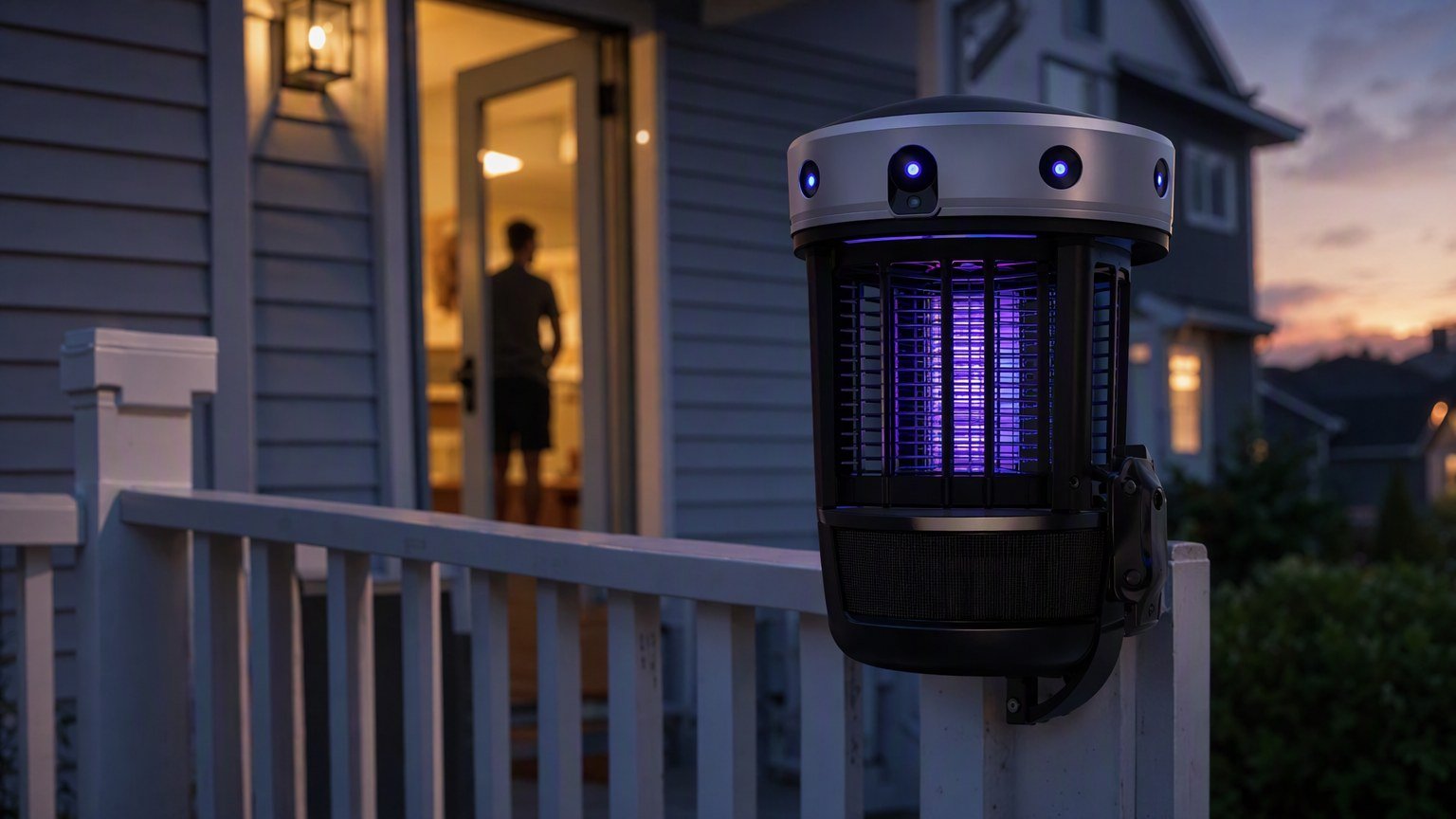
So there’s this startup in Pennsylvania – 30 people, probably working out of some converted warehouse – and they’ve built mosquito traps that are basically spying on us. Not in the creepy Big Brother way (well, not yet), but they’re watching humans to figure out how to kill mosquitoes better….
So there’s this startup in Pennsylvania – 30 people, probably working out of some converted warehouse – and they’ve built mosquito traps that are basically spying on us. Not in the creepy Big Brother way (well, not yet), but they’re watching humans to figure out how to kill mosquitoes better. Which is… I mean, that’s kind of brilliant? And also kind of unsettling?
Here’s what’s happening: Mosqitter makes these chemical-free traps that pretend to be human. They mimic our heat, our scent, the way we breathe. Female mosquitoes – the ones that actually bite us because they need blood for their eggs – get lured in thinking they’ve found dinner. Instead they get trapped.
But to build a really good fake human, you have to study the real thing. A lot.
The Mosquito Problem Just Got Way Worse
Look, I’m not trying to be alarmist here, but the numbers are genuinely scary. Dengue cases doubled in one year. Doubled. From 6.5 million in 2023 to 14.6 million in 2024, according to the World Health Organization. That’s not a trend, that’s an explosion.

And it’s not like mosquitoes suddenly got more ambitious. The planet’s changing underneath us – temperatures rising, rainfall patterns shifting, people traveling everywhere. The WHO says disease-carrying mosquitoes are thriving in places they never could before. Which means dengue, malaria, Zika, all of it… they’re spreading into new territory.
The old playbook isn’t working anymore. You can only spray so many chemicals. You can only drain so many puddles. At some point you need a different approach.
Enter the Trap That Studies You
This is where Mosqitter comes in. They’re not just building a better mousetrap – or mosquito trap, whatever. They’re building something that understands what mosquitoes are actually looking for when they hunt us down.
Female mosquitoes (the males don’t bite, fun fact) are incredibly good at finding humans. They can detect carbon dioxide from our breath from pretty far away. They sense our body heat. They pick up on the specific cocktail of chemicals our skin puts off. It’s actually impressive how good they are at this, which is unfortunate for us.
So Mosqitter’s devices replicate all of that. No pesticides, no chemicals – just really convincing human mimicry. The mosquito shows up, thinks she’s about to get a meal, and boom. Trapped.
But Here’s Where It Gets Interesting
To make these traps work, you have to really understand human biology and behavior. What temperature is human skin? How much CO2 do we exhale and at what rate? What does our scent profile actually look like? When are we most active, most vulnerable, most likely to be outside where mosquitoes are waiting?

These aren’t abstract questions. Someone at Mosqitter has been measuring this stuff. Studying patterns. Maybe they’ve got sensors tracking real people (with permission, hopefully). Maybe they’re analyzing data about when and where mosquitoes bite most successfully. Either way, they’re learning a lot about human behavior in the process of building these traps.
And I have to admit, this is pretty impressive from an engineering standpoint. But also – we’re teaching machines to identify and track human signatures. Yeah, it’s for mosquito control right now. It’s a 30-person startup trying to solve a real public health crisis. But the technology they’re developing? That data about what makes humans detectable?
That doesn’t just disappear.
The Dual-Use Problem Nobody’s Talking About
Here’s the thing about building really good human-detection systems: once you’ve figured out how to find people for one reason, you can find them for any reason. The sensor that identifies your heat signature and breathing pattern to save you from dengue… well, it identifies your heat signature and breathing pattern. Period. The Ad That Hacks You Without a Click shows how surveillance tech is already being weaponized in ways most people never see coming.
I’m not saying Mosqitter is doing anything nefarious. They’re probably exactly what they appear to be – a bunch of engineers and public health people trying to fight disease. But we’ve seen this movie before. GPS was military tech. Facial recognition started in labs. The internet itself was a defense project. Technologies that begin with good intentions don’t always stay there.
And with 14.6 million dengue cases last year, there’s going to be huge demand for this kind of solution. Which means scaling up. Which means more data, more sensors, more sophisticated tracking of human patterns and behaviors.
What This Actually Means
The irony is pretty thick, right? We’re being watched so that mosquitoes – which watch us to bite us – can be caught watching us. It’s surveillance all the way down.
For now, this technology probably does more good than harm. Dengue is miserable. Malaria kills people. If chemical-free traps can slow the spread of mosquito-borne diseases without poisoning everything around them, that’s genuinely worthwhile. I’m not going to pretend otherwise.
But I also think we should pay attention to what’s being normalized here. We’re getting comfortable with machines that identify humans by our biological signatures. We’re accepting that being monitored – even if it’s ostensibly by a mosquito trap – is just part of the deal now. Your Phone Is One Ad Away From Total Surveillance through systems that track you the same way these traps track humans – by reading signatures you didn't know you were broadcasting.
Maybe that’s fine. Maybe the threat of disease outweighs the weirdness of being studied by the things meant to protect us. But we should at least be asking the question: who else is watching while we’re busy swatting mosquitoes?