





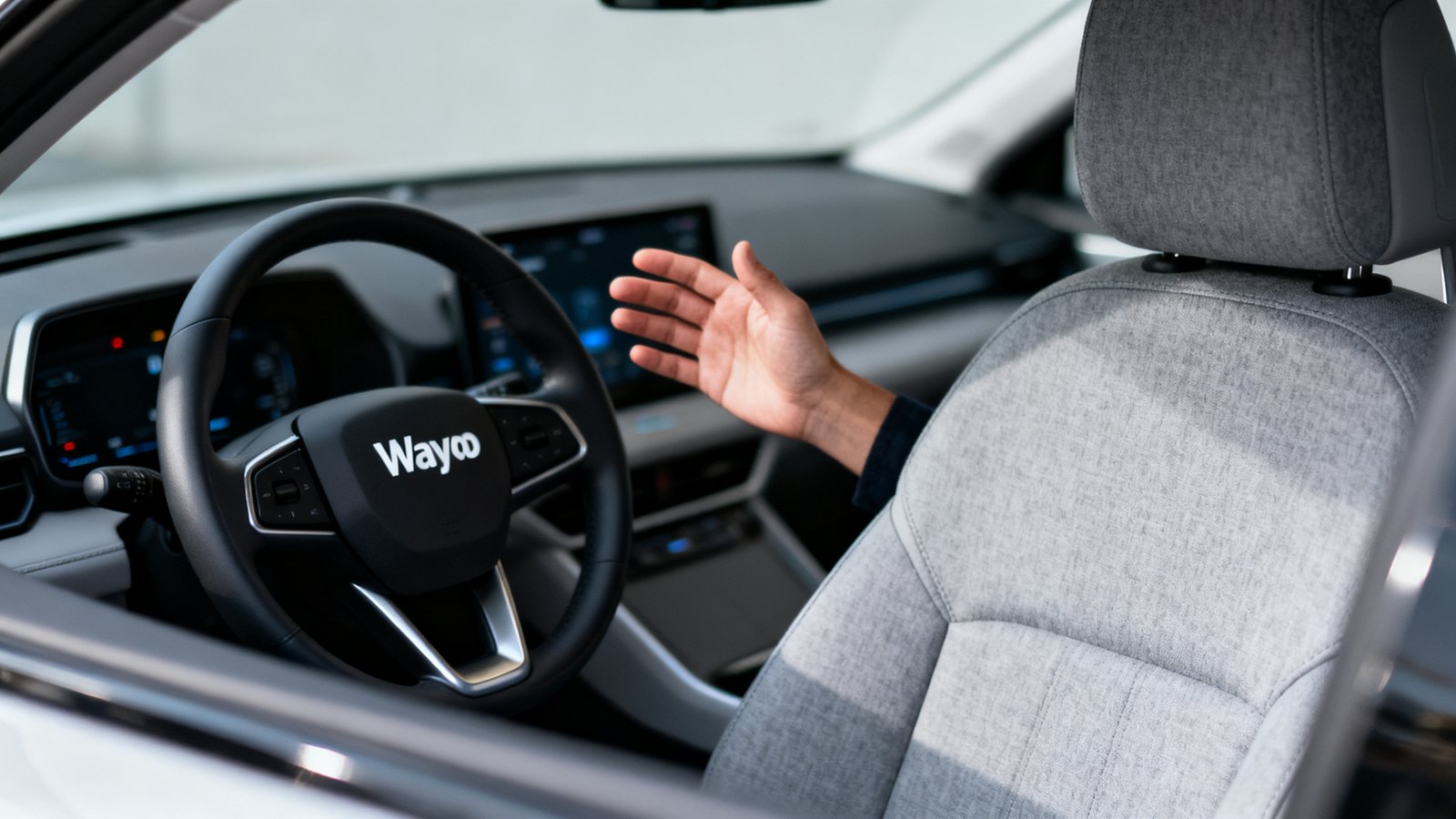
Alright, so Waymo, the big shot in the self-driving car game, you know, Google’s whole robotaxi thing? Yeah, them. Turns out, their fancy “AI autopilot” isn’t quite the futuristic, silicon-brained marvel we were all led to believe. Or, you know, that they led us to believe. Because, surprise! A whole lot of the time, that car isn’t making its own decisions. It’s actually got a human in the loop. Like, a real, breathing, probably underpaid person in the Philippines. Seriously.
The Wizard of Oz Had a Better PR Team
Look, I’ve been doing this for fifteen years, and I gotta tell you, I’ve seen some doozies. But this one? This feels like a bait-and-switch on a grand scale. We’re talking about a company that has spent years, and frankly, billions, pushing this narrative of fully autonomous vehicles. Cars that think for themselves. Cars that are safer, smarter, faster than us error-prone meatbags behind the wheel. And then, oops, turns out when the AI gets a little confused – which is apparently, like, a lot – it just calls for help. And that help isn’t another AI. It’s a guy named Juan, probably, working a night shift thousands of miles away, trying to remotely guide a multi-ton vehicle through rush hour traffic in Phoenix. It’s wild.
The whole thing, it just screams “Wizard of Oz,” doesn’t it? All that smoke and mirrors, the booming voice from behind the curtain, “Pay no attention to the man behind the curtain!” Except, in this case, the man behind the curtain is in a call center, staring at a screen, probably with a headset on, trying to figure out if that weird shadow is a pedestrian or just a bush. It’s not even a secret anymore, really. Waymo kind of, you know, admitted it. Not with a big press conference, obviously. More like a quiet nod when someone finally pushed hard enough. And I’m just sitting here thinking, really? This is the future?
“Remote Assistance” – The New Buzzword for “Not Actually AI”
They call it “remote assistance.” Which sounds so sterile, so technical. But let’s be real, what it is, is someone else driving the car when the computer gets stumped. It’s basically a high-tech version of calling your friend to ask for directions when your GPS craps out, except your friend is controlling your car. And from what I understand, this isn’t some rare occurrence. This isn’t just for super complex, once-in-a-blue-moon scenarios. We’re talking about everyday stuff – construction zones, weird traffic patterns, even just a confusing intersection. Basic driving stuff. And that, my friends, is where the whole “fully autonomous” claim starts to look pretty flimsy.
So, Is It AI or Not? And Who Cares, Really?
This whole thing kinda makes you question everything, right? Like, what is AI, actually? Is it AI if it can only do the easy stuff and needs a human to babysit it through anything remotely tricky? It feels like we’re constantly being sold this vision of seamless, intelligent machines, and then you pull back the curtain and find a whole lot of human labor patching up the cracks. And who cares, you might ask? Well, I care. And you should too. Because trust, man, that’s the big thing here. We’re talking about putting our lives in these cars. If they’re not upfront about how these things actually work, how can we trust them when things go wrong?
“It’s a lot like those ‘AI’ chatbots that turn out to be powered by actual people typing responses in real time. We’re just swapping one form of labor for another, often less visible, one.” – Some guy I know who works in tech, probably. Or me, right now. Take your pick.
The thing is, it’s not even a new trick. Remember those “AI” customer service chats that were actually just people pretending to be bots? Or the “automated” content moderation that still has thousands of humans sifting through truly awful stuff? It’s the same pattern, over and over again. We’re so desperate for the future, for the magical solution, that we’re willing to believe the PR until the cracks show. And Waymo, they’re just another chapter in that book.
The Human Secret Revealed
What’s interesting here, if I’m being honest, is the sheer scale of it. It’s not just a few edge cases. From what I can gather, this remote assistance is a pretty integral part of their operation. It’s baked into the system. Which means the entire perception of what these cars can do, autonomously, has been, shall we say, significantly embellished. And that’s not just a little white lie. That’s a fundamental misrepresentation of their core technology. It’s frustrating because it slows down actual progress. It creates this false sense of what’s possible, and when the truth comes out, it erodes trust in the entire industry.
And let’s talk about the human cost for a second. These “remote assistants” in the Philippines? They’re probably working long hours, dealing with incredibly stressful situations – remotely controlling a car in a foreign city is no joke – for wages that are a fraction of what a similar job would pay in the US. It’s the hidden human labor that props up our gleaming “AI” future. It’s not just about technology; it’s about global labor practices and what we’re willing to accept in the name of innovation and cost-cutting.
What This Actually Means
So, what does this all mean for you and me? Well, for starters, maybe take all those “fully autonomous” claims with a truckload of salt. It seems like the reality is a lot more complicated, a lot messier, and a lot more human than the slick ads would have you believe. It means that for the foreseeable future, those self-driving cars? They’re still going to have a human touch, even if that human is thousands of miles away, frantically trying to click the right button to avoid a fender bender.
I don’t know, maybe one day we’ll get truly autonomous vehicles. But right now, it feels like we’re stuck in this weird, uncanny valley of AI, where the machines are just good enough to fool us into thinking they’re independent, but not quite good enough to actually be independent. And until companies like Waymo are fully transparent about the limitations and the actual human effort involved, I’m going to remain pretty skeptical. Call me old-fashioned, but I like knowing who’s actually driving the bus, even if it’s just from a monitor. It’s not a secret, Waymo. It’s just the truth. And people deserve to know the truth…

