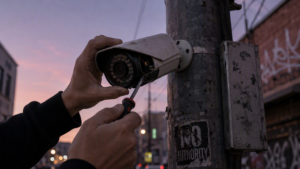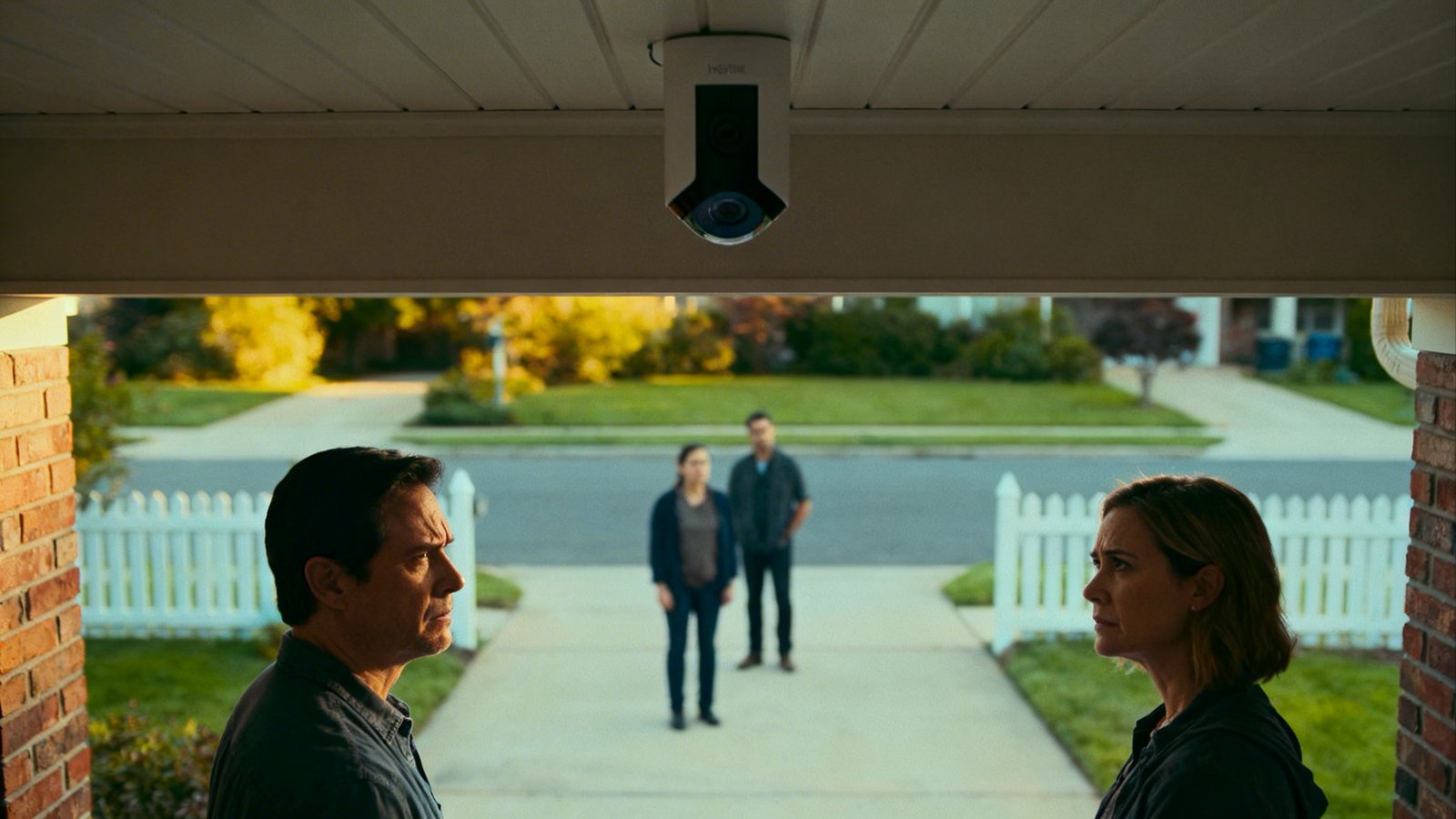
Okay, so remember when Ring doorbell cameras just kind of… watched your porch? Maybe your driveway? You know, the usual. Pretty standard stuff, right? A package thief, a weird neighbor, the occasional squirrel doing acrobatics. But then, Amazon, being Amazon, bought them, and suddenly things got a little… squirrely themselves. A little too cozy with law enforcement, a little too much data, and now? Now we’re talking about something way, way creepier. We’re talking about a leaked email revealing what Ring apparently called “Search Party.”
Your Neighbors, Their Eyes, Everyone’s Business?
Here’s the thing. This isn’t some far-fetched sci-fi plot. This is a real, honest-to-god, leaked email, dug up by The Daily Beast, showing Ring’s internal discussion about a feature that would let neighbors – you know, Karen from down the street, or that guy who never waves – straight-up request video footage from other neighbors. Yeah, you heard me. Request your footage. From your camera. The one you bought to protect your stuff, not to be a community spy device for whatever petty neighborhood drama is unfolding.
I mean, think about that for a second. Let’s say your cat, Mittens, goes missing. Sad, right? Totally understandable you’d want to find her. But under this “Search Party” idea, you could, theoretically, ping every Ring owner in a two-block radius and ask them to hand over their footage. Not just to the cops for a serious crime, which is already a whole other can of worms we’ve discussed before, but to… anyone. For anything. Because they asked nicely, presumably?
The leaked email, apparently from way back in 2019 (so who knows how far this actually got or if it’s still lurking in some dark corner of Amazon’s plans), talked about the idea of creating “a network of interconnected devices that provide real-time location data for a person or object of interest.” A “person or object of interest.” Doesn’t that just send a little shiver down your spine? It does mine. A “network of interconnected devices” sounds less like a friendly neighborhood watch and more like a panopticon, if I’m being brutally honest. This wasn’t just about finding Mittens, was it? This was about tracking. And that’s a whole different ballgame.
A Little Too Helpful, Don’t You Think?
And the way they framed it in the email? “A search party that can find anything or anyone.” Almost sounds noble, right? Like, oh, we’re just helping people out! We’re building community! Except, community isn’t built on surveillance and forced sharing of private footage. It’s built on trust. And this… this feels like a massive trust deficit waiting to happen. Who decides what’s an “object of interest”? Who decides who is a “person of interest”? You? Your nosy neighbor? Some random dude with a grudge?
It’s not entirely clear if this feature ever actually saw the light of day beyond these internal discussions, or if it got shot down due to, you know, being completely dystopian. But the fact that it was even considered? That it was brainstormed and put into an email? That tells you everything you need to know about the mindset. It tells you that the people designing these “security” devices are thinking about how to expand their reach, how to get more data, how to turn every individual camera into a node in a much larger, much more intrusive network.
Who Benefits From All This “Helpful” Spying?
Look, I get it. We want to feel safe. We want our stuff to be safe. We want to know what’s going on around our homes. That’s why people buy these cameras in the first place. But there’s a line, and this “Search Party” concept just leaps over it with both feet, does a little jig, and then starts waving a flag that says “Big Brother Was Here.”
We’ve already seen the massive privacy concerns with Ring’s existing relationships with police departments. The whole “Neighbors app” thing, where people share footage and sometimes jump to conclusions faster than a speeding bullet, often feeding into racial profiling and unfounded panic. Add to that the ability for any neighbor to ask for your footage, and you’ve got a recipe for disaster. Or at least, a recipe for some seriously uncomfortable neighborhood interactions. “Hey, did you get my request for that footage of your backyard from last Tuesday? Just checking if you saw anything unusual near my compost bin.” Ugh.
“The thing about technology designed for ‘convenience’ is that it often conveniently erodes privacy, one tiny, seemingly innocuous feature at a time, until you wake up and realize you’re living in a surveillance state built by your own purchases.” – (Me, just now, because it’s true.)
The thing is, Amazon’s business model is built on data. It’s built on knowing everything about everyone, whether it’s what you buy, what you watch, or, apparently, who walks past your house. This “Search Party” idea, even if it never launched, shows a clear intent to deepen that well of information. To make every Ring device a potential data collection point not just for Amazon, but for… anyone who asks. It decentralizes the surveillance, putting the power to request private footage into the hands of literally anyone with a Ring device. And that’s just a terrifying thought.
What This Actually Means
So, what does this all boil down to? It means that even when a company backs off a truly boneheaded idea – and let’s hope this one stayed firmly in the “boneheaded ideas” pile – it reveals their true inclinations. It shows where their compass is pointing. It’s pointing towards more integration, more sharing, more data collection, and frankly, less privacy for you and me.
This isn’t about finding lost pets anymore. This is about building a comprehensive surveillance network, piece by piece, powered by our own wallets and our desire for security. And it’s doing it under the guise of “community” and “helpfulness.” But you know what? When everyone’s a potential spy, and every camera is a potential tool for someone else’s agenda, then nobody’s really safe, are they? You just trade one kind of insecurity for another, far more insidious one.
It’s a reminder, actually, that we need to be incredibly vigilant about the technology we bring into our homes. Because once it’s there, once it’s connected, once it’s generating data, you’re not always in control of where that data goes or who gets to see it. And sometimes, the most dangerous ideas are the ones presented as the most “helpful.” Just something to think about the next time you see a delivery truck, or, you know, a neighbor asking to see your footage of their cat.