




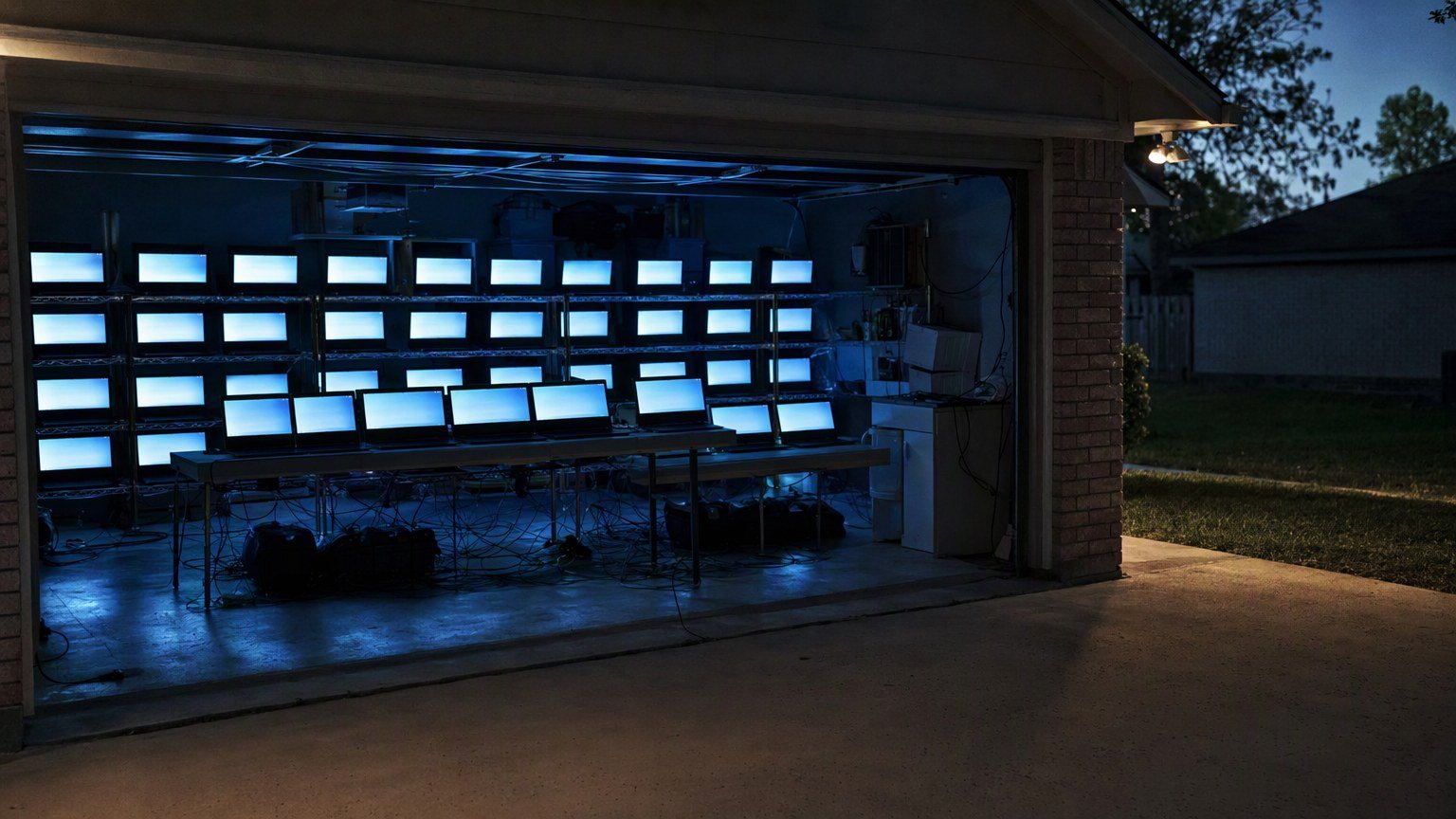
The FBI just raided over 40 homes in North Texas and walked out with 187 laptops. Not because of some crypto scam or ransomware ring – because North Korea has apparently been running a remote work operation on American soil, using stolen identities to get IT jobs at U.S. companies and funneling…
The FBI just raided over 40 homes in North Texas and walked out with 187 laptops. Not because of some crypto scam or ransomware ring – because North Korea has apparently been running a remote work operation on American soil, using stolen identities to get IT jobs at U.S. companies and funneling the paychecks back to Pyongyang’s weapons programs.
I mean, you can’t make this stuff up.
A Laptop Farm. In Texas.
Here’s how it worked, from what we know: North Korean IT workers – sitting somewhere in North Korea or maybe China, hard to say – were applying for remote tech jobs at American companies using fake or stolen U.S. identities. But they needed a way to make it look like they were actually logging in from inside the United States, because most companies aren’t thrilled about hiring someone from a country we’re technically still at war with.

So they set up what investigators are calling “laptop farms” – basically a bunch of laptops sitting in houses across North Texas, remotely accessed by workers thousands of miles away. The North Koreans would VPN into these machines, do their jobs, collect their paychecks, and send the money back home. All while their employers thought they were just another remote developer in Dallas or Fort Worth.
It’s honestly kind of brilliant in a deeply unsettling way.
No Arrests Yet – Which Is Weird
The U.S. Attorney’s Office for the Northern District of Texas announced the raids on October 14th, but here’s the strange part: no arrests. They seized 187 laptops, but nobody’s been charged. Which makes you wonder – were the people living in these houses actually complicit, or were they just… I don’t know, renting out closet space and wifi without asking too many questions?
The investigation is ongoing, they say. That’s the line you always get when they’re still trying to figure out who knew what.
This Isn’t Really About Fraud
U.S. Attorney Ryan Raybould said something in his statement that stuck with me: “This investigation is about far more than fraud. It is about a hostile foreign regime infiltrating American companies through stolen identities and covert access points inside our own borders.”

He’s right. This isn’t just some guy in Lagos sending phishing emails. This is North Korea – a nuclear-armed state under heavy sanctions – finding a workaround to fund its weapons programs by exploiting the American remote work boom. And it apparently worked for long enough that they had 187 laptops running across Texas.
“Every laptop farm we dismantle shuts down a revenue stream that the North Korean government uses to fund its weapons programs.”
That quote got cut off in the release, but you get the idea. This is geopolitical stuff disguised as a work-from-home gig.
How Did Nobody Notice?
Look, I’ve worked remote. I’ve hired remote developers. And the thing that gets me here is – how did this fly under the radar? Background checks exist. Identity verification exists. But if you’ve got a real Social Security number (stolen, sure, but real), a U.S. address, and you’re logging in from a Texas IP address through one of these laptop farms… I guess it’s not that hard to slip through.
The remote work explosion during COVID basically created the perfect cover for this kind of operation. Companies were desperate to hire, onboarding went virtual, and suddenly you didn’t need to show up to an office or shake anyone’s hand. You just needed to seem legit on a Zoom call – and apparently, these North Korean workers were good enough at their jobs that nobody asked questions. The trust erosion goes beyond hiring fraud – just look at how Always Listening: Meta's Glasses Caught Recording in Secret without wake words showed how easy it is for surveillance tech to hide in plain sight.
That’s the part that’s actually scary. Not that they tried this. That it worked.
What Happens Next?
The FBI’s clearly not done here. You don’t seize 187 laptops and call it a day – this is the kind of investigation that spirals outward. They’ll be tracing financial flows, identifying more locations, figuring out which companies got infiltrated and for how long. And honestly? I wouldn’t be surprised if this is happening in other states too. Texas was just where they started.
There’s also the uncomfortable question of what these workers had access to while they were employed. Corporate systems. Proprietary code. Client data. If you’re North Korea and you’ve got someone on the inside of a U.S. tech company, you’re not just collecting a paycheck – you’re collecting intelligence. And if backdoor access sounds far-fetched, remember your phone is one ad away from total surveillance through ad network exploits that don't even require a click.
So yeah, this is bigger than fraud. It’s bigger than stolen identities. It’s a reminder that the stuff we thought was theoretical – nation-states exploiting remote work, digital borders meaning nothing – is actually happening. Right now. In North Texas.
And if it’s happening there, where else is it happening that we just haven’t found yet?