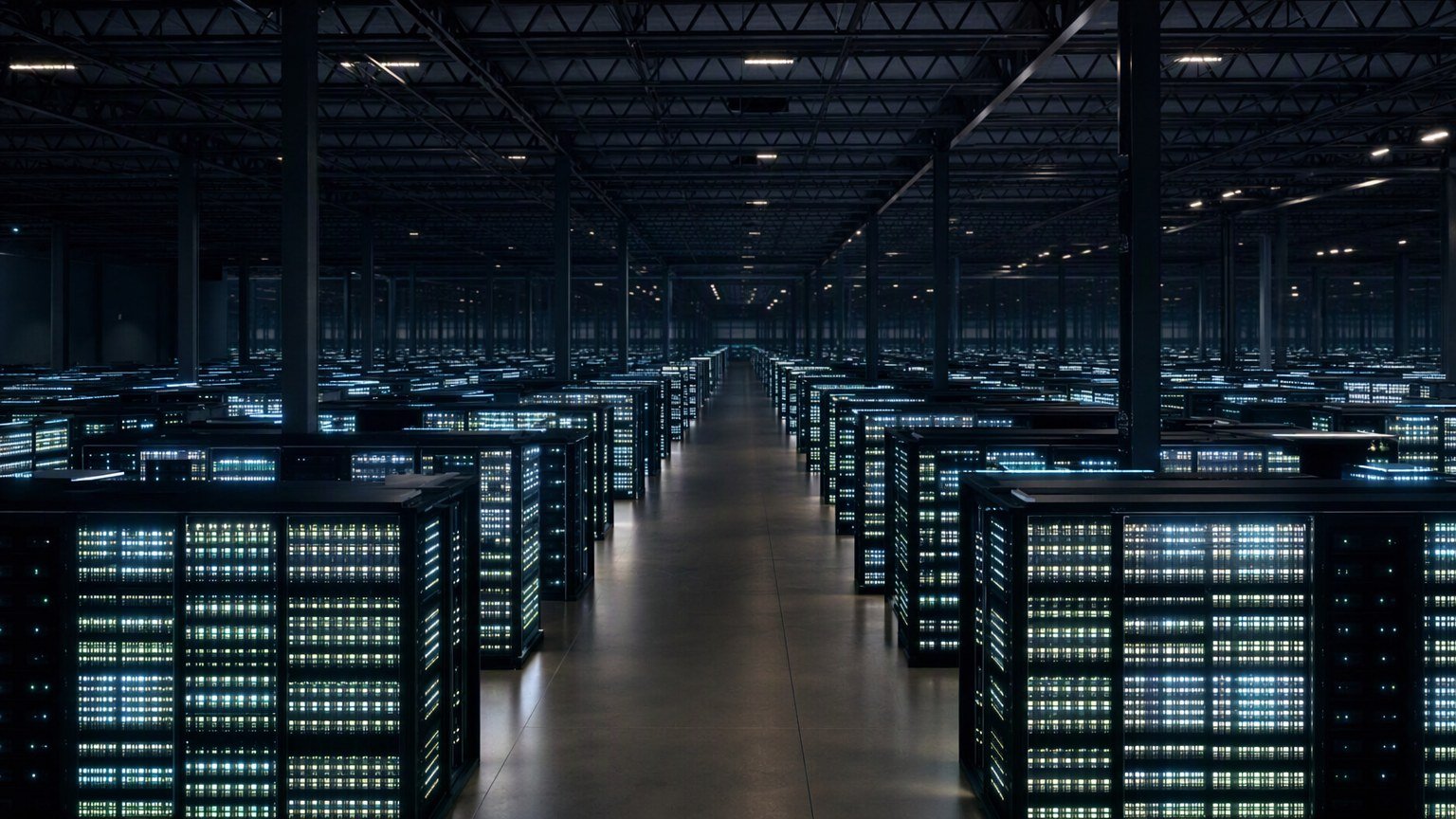
Your Netflix binge last night? It didn’t just drain your phone battery. Somewhere in a warehouse-sized building you’ll never see, servers are humming through enough electricity to power a small city, and here’s the kicker – nobody’s really telling you about it.
Your Netflix binge last night? It didn’t just drain your phone battery. Somewhere in a warehouse-sized building you’ll never see, servers are humming through enough electricity to power a small city, and here’s the kicker – nobody’s really telling you about it.
In the Netherlands alone, AI data centers burned through 5,100 gigawatt-hours of electricity in 2024. That’s nearly two million households worth of power. And before you think “okay, but at least we know about it now” – that figure only covers facilities that actually disclosed their numbers. Less than one in four did.
The Reporting Game Nobody’s Winning
Look, Europe has rules about this stuff. Under the European Energy Efficiency Directive, data centers with at least 500 kilowatts of installed IT power have to report their energy and water consumption. It’s not optional. The 2023 Directive and the 2024 delegated regulation spelled it all out – categories, deadlines, the whole nine yards.
But here’s the thing: required to report doesn’t mean anyone can actually find the information.

A cross-border investigation by Lighthouse Reports and Trouw spent roughly a year – a full year – chasing freedom-of-information requests across Europe. What they found was basically a masterclass in how to technically comply with a law while making sure the information stays buried. The disclosure exists, sure. But accessible? Readable? Actually useful to the people living next to these facilities or paying the electricity bills for their towns?
Not so much.
The Dutch Example (Or: How to Hide in Plain Sight)
The Netherlands counted 186 commercial data centers that should be reporting at the end of 2024, according to the Dutch Datacenter Association. These aren’t small operations – we’re talking about the kind of infrastructure that tech companies love to brag about in their investor calls but somehow forget to mention when local residents start asking questions about their power bills.
And I mean, I get it from a business perspective. If you’re Meta or Google or Microsoft, you don’t exactly want headlines screaming about how much juice your AI models are sucking down. Bad for the whole “we’re making the world better” narrative. It's the same instinct that led Meta to roll out a cute AI mascot instead of addressing the harder questions.
The Information Black Hole
What really gets me is the gap between what’s technically disclosed and what anyone can actually access. These facilities report to government bodies, the data goes… somewhere… and then it just kind of disappears into bureaucratic limbo. You want to know how much power the data center near your town is using? Good luck. You’ll need patience, legal expertise, and probably a year of your life you’re not getting back.

This isn’t transparency. This is transparency theater. It’s the corporate equivalent of mumbling the truth really fast at the end of a commercial.
Why This Actually Matters (And Why They Don’t Want You Thinking About It)
The power consumption itself is wild enough. But what drives me nuts is the timing. We’re in the middle of this massive AI boom, right? Every company’s racing to deploy bigger models, more compute, fancier algorithms. Microsoft’s making Copilot, Google’s pushing Gemini, everyone’s got their own ChatGPT competitor.
Not gonna lie, some of this tech is genuinely impressive. But nobody’s having the honest conversation about what it costs. And I don’t just mean money. It's the same pattern we saw when OpenAI's safety team vanishes overnight right as the company races to ship bigger models.
National electricity grids weren’t designed for this. The infrastructure in most European countries is already stretched, and now you’re adding what amounts to small cities worth of constant, 24/7 power demand. In summer, when everyone’s running AC and data centers need even more cooling? It’s not hard to see how this becomes a real problem.
“The information largely isn’t reaching anyone who needs it.”
That line’s doing a lot of work. Because who needs this information? Not just researchers or policy wonks. Regular people trying to understand why their energy costs keep climbing. Local governments trying to plan infrastructure. Climate advocates trying to track emissions. Journalists trying to hold these companies accountable.
The opacity isn’t a bug. It’s a feature.
What Happens Next (Probably)
If I’m being honest, I’m not wildly optimistic here. The tech companies have gotten really, really good at the sustainability branding thing – carbon neutral pledges, renewable energy commitments, glossy reports with lots of green imagery. And some of that’s real! Some of it’s genuine progress.
But the fundamental issue remains: AI is expensive, and that cost gets externalized onto power grids and, eventually, consumers. As long as the disclosure system stays broken – technically legal but practically useless – that’s going to continue.
Europe’s got the regulations. It’s got the reporting requirements. What it doesn’t have is enforcement that actually makes the information accessible. And until that changes, we’re all just guessing at the real cost of our increasingly digital lives. Even in the U.S., courts are only just catching up, recently ruling that the AI training loophole on copyrighted material has to close.
Maybe that’s the point. Hard to complain about something you can’t see.