
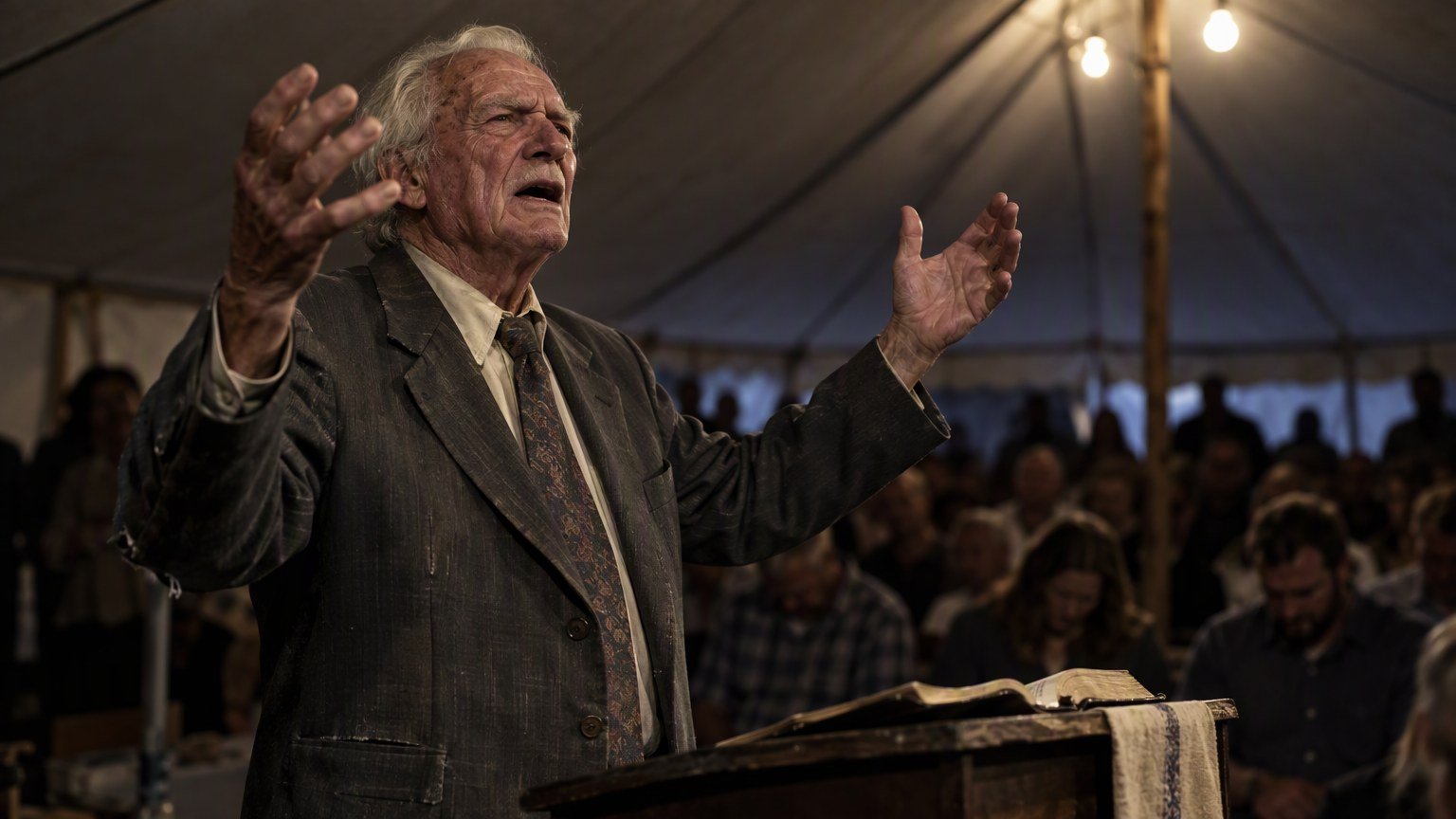
Marjoe Gortner died Friday in Santa Fe at 82, and if you don’t know the name, stick with me for a second because this is one of the wildest stories American religion ever produced. The guy was ordained at age four. Four. He was baptizing people before he could probably tie his own shoes, touring…
Marjoe Gortner died Friday in Santa Fe at 82, and if you don’t know the name, stick with me for a second because this is one of the wildest stories American religion ever produced. The guy was ordained at age four. Four. He was baptizing people before he could probably tie his own shoes, touring the country as a child evangelist, raking in cash for his parents, and then as an adult he turned around and blew the whole thing up in a documentary that basically said “yeah, it was all fake, I was coached to cry and shake and speak in tongues on cue.” His wife, Susan Magestro, confirmed his death to Variety. A memorial notice said he’d been dealing with health issues for years.
The Kid Who Was Built in a Lab, Basically
Here’s the thing about Marjoe Gortner’s childhood – it wasn’t really a childhood. His name itself is a mashup of Mary and Joseph, which should tell you everything about how his parents viewed him. Not as a kid. As a product. His father, an evangelist preacher, trained him to perform entire sermons from memory before he turned five, complete with the hand gestures, the vocal inflections, the whole theatrical package that gets a congregation on its feet and reaching for its wallets. And it worked. It worked so well that by the time he was a teenager, Marjoe had been part of a traveling tent-revival circuit that pulled in serious money, money that, by his own later account, mostly didn’t end up benefiting him.

I keep coming back to how strange this is to even type out. A toddler, performing faith healing. Not understanding a word of what he was saying, just mimicking cadence and emotion like a tiny, terrifying parrot in a suit. And audiences bought it. Hook, line, and sinker. That’s not a knock on the people in those pews, by the way – that’s a knock on the adults who built this whole machine around a child who had zero say in any of it.
Running Away, Then Running Back
Gortner eventually left the preaching life as a teenager, bounced around doing odd jobs, and from what I can tell spent a chunk of his young adulthood kind of lost, trying to figure out who he was outside of the character he’d been playing since before he could read. But money has a funny way of pulling people back into things they swore off, and eventually he returned to preaching, not out of faith but because he knew the business inside and out. He knew exactly which buttons to push.
Then He Just… Told Everyone
This is the part that still gets me. In 1972, Gortner let a documentary crew follow him around during one of his final preaching tours, and the result – “Marjoe” – won the Oscar for Best Documentary. But it wasn’t a flattering portrait. It was Gortner basically narrating his own con. Explaining how the “speaking in tongues” was rehearsed gibberish. Showing how he’d fake being overcome by the spirit, timing his collapses for maximum emotional effect on the crowd right before the offering plates came around. He wasn’t being blackmailed into confessing or caught in some scandal. He chose to expose it. Chose to burn the whole thing down publicly, on camera, with his name attached.
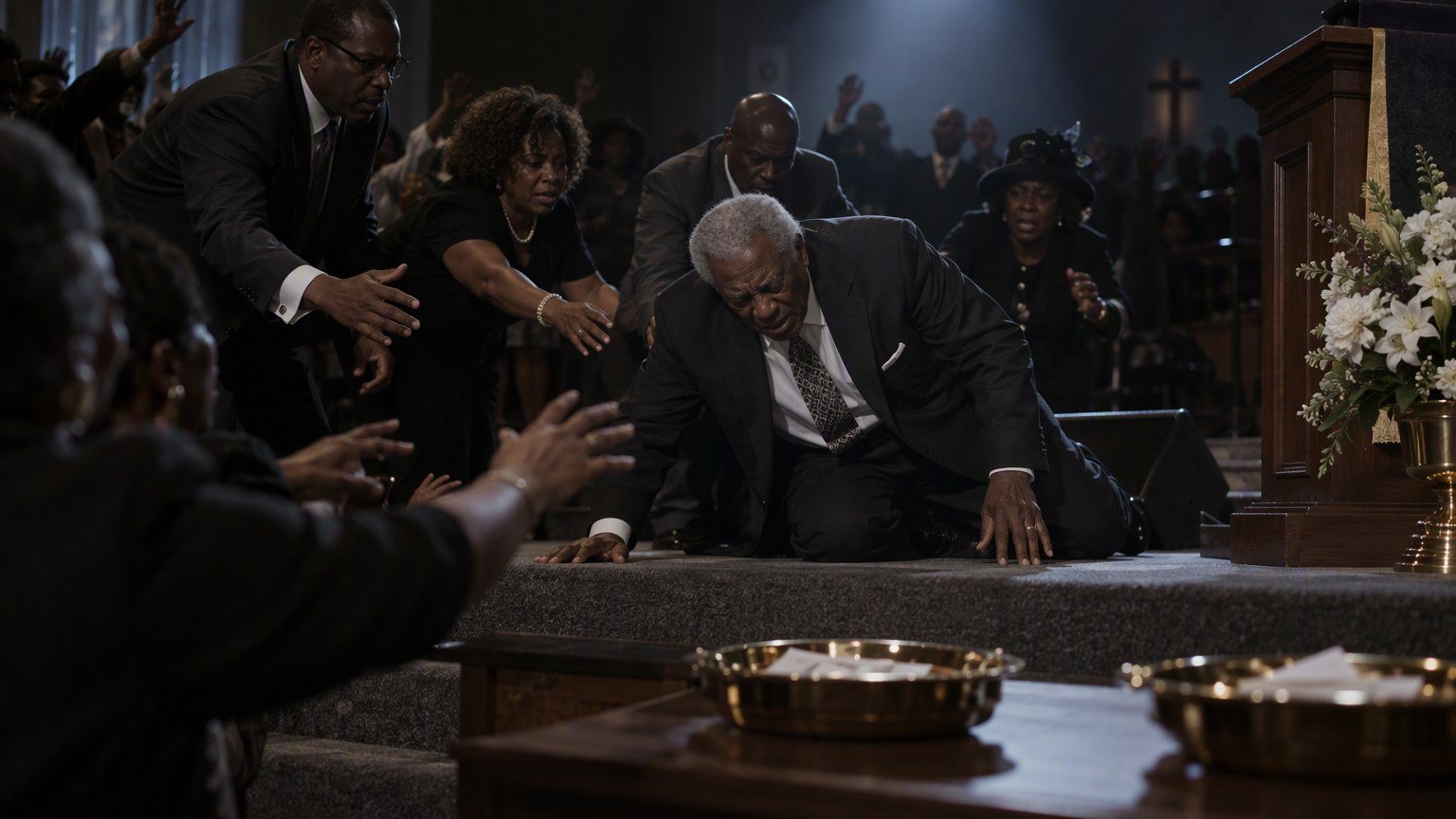
Not gonna lie, that takes a specific kind of guts. Think about it – this was his entire livelihood, the only skill set he’d ever been given, and he torched it in front of millions of moviegoers. There’s something almost punk rock about that, honestly, even though “punk rock” and “evangelical preaching” are two phrases I never thought I’d put in the same sentence.
“I was performing a role I didn’t believe in, for people who desperately wanted to believe in me,” is roughly the sentiment Gortner expressed in interviews about the film over the years – a line that’s haunted me ever since I first read it.
So What Happened to the Preacher-Turned-Truth-Teller?
After “Marjoe” came out, Gortner pivoted to acting, which honestly makes sense when you think about it – the man had been performing since before he could spell his own name. He showed up in disaster movies like “Earthquake” and “Starcrash,” did a bunch of television work, and generally lived the kind of mid-list Hollywood career that doesn’t make headlines but pays the bills and lets you stay in the business for decades. He wasn’t a huge star. He didn’t need to be. He’d already had his moment of actual cultural impact, and it happened before he was even old enough to buy a drink at the bar afterward.
What’s interesting here is how little lasting fame actually attached to him considering how significant that documentary was. Ask ten people under 40 about Marjoe Gortner and I’d bet eight of them have never heard the name. But ask documentary nerds, or anyone who’s studied the history of American evangelicalism and media manipulation, and his story comes up constantly. It’s a reference point. It’s practically a case study at this point for how performance and faith can get tangled up until nobody – maybe not even the performer – can tell where one ends and the other begins.
What This Actually Means
Look, I think about Marjoe Gortner every time I see some modern televangelist weeping on cue during a sermon, or some influencer having a perfectly lit “spontaneous” breakdown on camera. The playbook he exposed in 1972 is basically still running today, just with better lighting and a ring light instead of a tent revival banner. The specifics change. The mechanics really don’t.
It's the same institutional reckoning Spotlight director Tom McCarthy was getting at when he said the church still isn't protecting kids.
What gets me, at the end of all this, isn’t even the fraud part. Fraud is everywhere, in every industry, always has been. What gets me is that this was a little kid who had this entire persona built around him before he had any say in the matter, and somehow, decades later, he found a way to take that back – to say “this was never really me, and here’s exactly how it worked.” That’s not nothing. That takes a weird kind of courage most adults never find for the lies that get built around them, let alone ones built by them.
Rest in peace, Marjoe. You were a conman at four and a truth-teller by thirty, and honestly, I’m not sure which version of you did more good in the world.