A woman stood up at a city council meeting, said her piece about a surveillance camera system, and got handcuffed for it. Not shouting. Not throwing anything. Just talking – and apparently talking too long, or too pointedly, depending on who you ask. The video’s been ripping through Reddit and it’s exactly as uncomfortable to watch as it sounds.
So What Actually Happened Here
Here’s the setup: a local council meeting, public comment period, the kind of civic theater most of us tune out entirely. A resident gets up to talk about Flock Safety cameras – those automated license plate readers that have been popping up in neighborhoods across the country like Starbucks locations. She’s not screaming. She’s not cursing anyone out. From what I can tell watching the clip, she’s making a pretty standard argument about surveillance overreach and wanting answers about how the data gets used.
And then, mid-sentence basically, she gets cut off and told her time’s up. She keeps talking anyway (because, I mean, that’s kind of the point of public comment, right?) and that’s when things go sideways fast. Police move in. She gets physically removed. Dragged, honestly, is not too strong a word for what the footage shows.

I’ve watched a lot of these public meeting flare-ups over the years and most of them involve someone who’s genuinely being disruptive – yelling, refusing to leave, that sort of thing. This one felt different. She wasn’t being disruptive. She was being inconvenient. Those are not the same thing, and honestly, the fact that we keep treating them like they are should bother more people than it does.
Why Flock Specifically Is Such a Lightning Rod
If you haven’t heard of Flock Safety, you will. The company makes automated license plate readers that a ton of cities and HOAs and even private neighborhoods have installed. The pitch is simple: catch stolen cars, solve crimes faster, keep neighborhoods safer. And look, nobody’s against catching criminals.
But here’s the thing – these systems track everyone. Every car. Every time. Creating this massive rolling database of who went where and when, with basically zero public oversight over how long that data sits around or who gets to peek at it. Local police? Sure, probably fine. Federal agencies buying access to local Flock networks without a warrant? That’s happened. That’s not a hypothetical, that’s documented reporting from 404 Media and others digging into this stuff.
So when someone stands up at a council meeting to ask pointed questions about Flock, they’re not being some random conspiracy person. They’re asking the exact question a responsible citizen should ask. “Who has access to this data and what stops them from misusing it” is not a crazy thing to want answered.
Why This Arrest Feels Like a Bigger Deal Than One Meeting
Not gonna lie, my first reaction watching this was just anger. Genuine, low-grade anger that builds the longer you sit with it. Because this isn’t really about one council meeting in one town anymore. It’s about what happens when local government decides that criticism of a surveillance vendor is the same thing as a public safety threat.
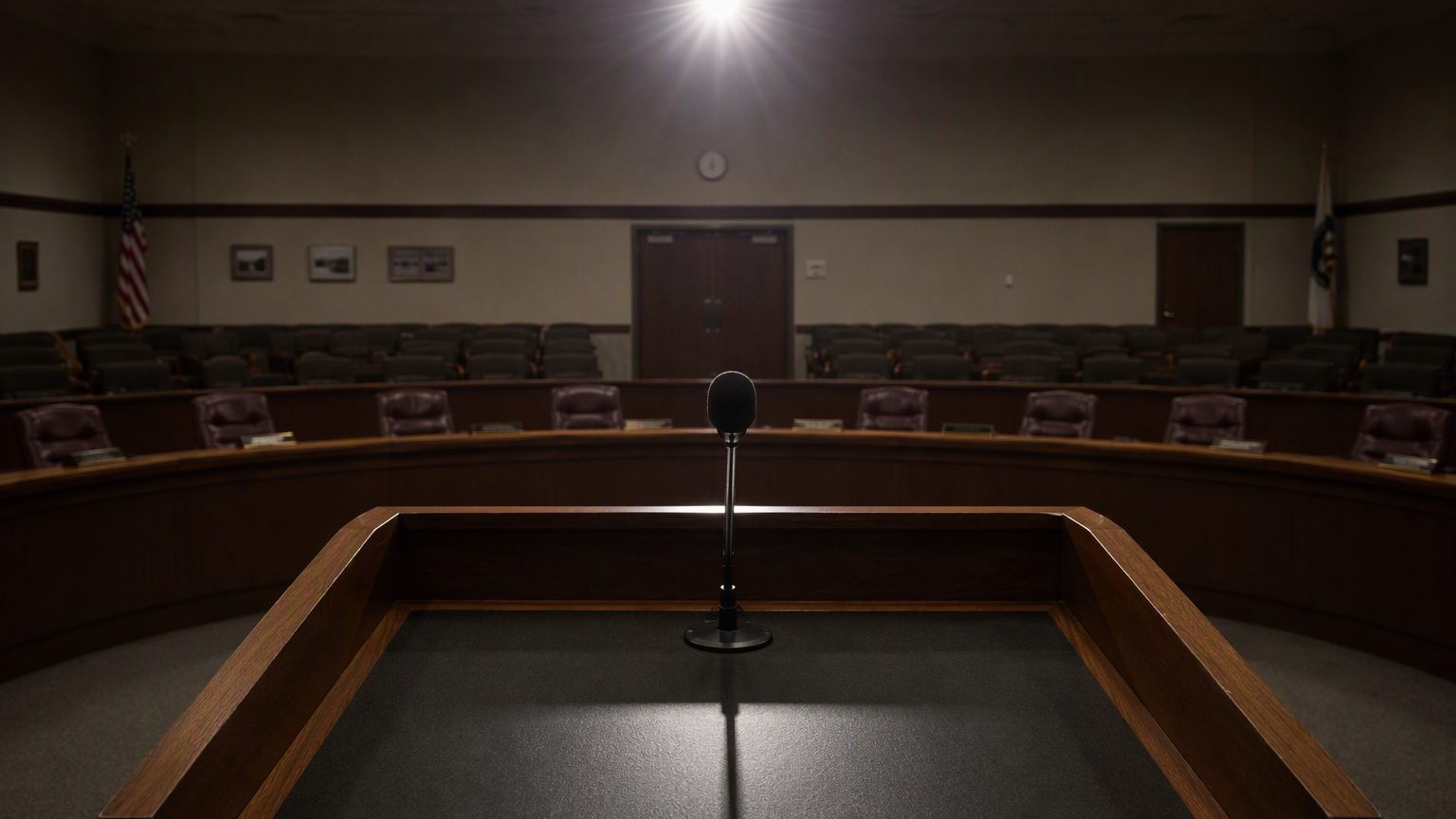
Think about the message this sends to literally everyone else who might’ve wanted to speak up at that same meeting. You watch a woman get handcuffed for talking past her allotted two minutes, and suddenly the calculation in your head changes. Maybe you don’t raise your hand next time. Maybe you just… don’t bother. That’s the actual damage here, way beyond whatever legal trouble she’s now facing. It’s the chilling effect. It’s real, and it works exactly the way it’s designed to work, whether anyone intended it that way or not.
“They didn’t arrest her for being loud. They arrested her for not stopping when they wanted her to stop.”
That’s basically the sentiment running through the top comments on that Reddit thread, and honestly? They’re not wrong. There’s a difference between enforcing meeting rules and using police as a shutdown button whenever a speaker gets uncomfortable to listen to.
The Part Everyone’s Missing
What’s interesting here – and what a lot of the outrage online is kind of skipping past – is that this isn’t actually rare. It just went viral this time. Council meetings across the country have quietly become these weird pressure-cooker spaces where public comment rules get applied selectively. Speak in favor of something the council likes? You might get some grace on the time limit. Speak against it, especially about something like a surveillance contract that probably involved money changing hands somewhere? Suddenly the gavel comes down fast.
I’ve seen this pattern before, actually, in different cities, different issues. Zoning disputes. Police budget debates. It’s always the same shape: rules get enforced strictly right when someone’s making an argument the room doesn’t want to hear. Nobody wants to say that out loud because it sounds paranoid, but the pattern’s there if you go looking for it.
And that’s really the uncomfortable question buried in this whole story. Was this really about a two-minute time limit? Or was it about the topic itself making some people in that room very uncomfortable, and time limits just happened to be the convenient excuse sitting right there?
What Happens To Her Now
It’s not entirely clear yet what charges, if any, stick. These things tend to get messy fast – initial arrests happen, then charges get quietly dropped weeks later once the news cycle’s moved on and nobody’s watching anymore. That’s honestly the most likely outcome here too. Cities generally don’t love it when footage of them dragging a resident out of a public meeting goes viral, so don’t be shocked if this gets walked back with zero real accountability attached to it.
But the arrest already happened. The footage already exists. You can’t un-drag someone out of a council chamber, no matter what happens legally after the fact.
What This Actually Means
Look, I think this story is bigger than Flock cameras, bigger than one city council, bigger even than the woman at the center of it, whose name deserves way more attention than it’s gotten so far honestly. This is about whether local government still has room for actual friction. Actual pushback. The messy, occasionally rude, sometimes-runs-over-the-time-limit kind of civic engagement that used to just be called democracy before we started treating every uncomfortable moment as a security incident.
Surveillance tech companies love quiet rollouts. No debate, no scrutiny, just contracts signed in committee meetings nobody attends and cameras that show up on street corners like they were always there. The second someone tries to make noise about it, actual literal noise, at the one forum specifically designed for that purpose, and gets handcuffed for it? That tells you everything about how threatened the whole arrangement is by basic questions.
My guess is this won’t be the last time we see footage like this. Not because more people are getting radicalized about surveillance tech, but because more people are finally starting to notice the cameras were there all along. And once you start noticing, it’s hard to stop asking who’s watching, and why nobody wants to answer.