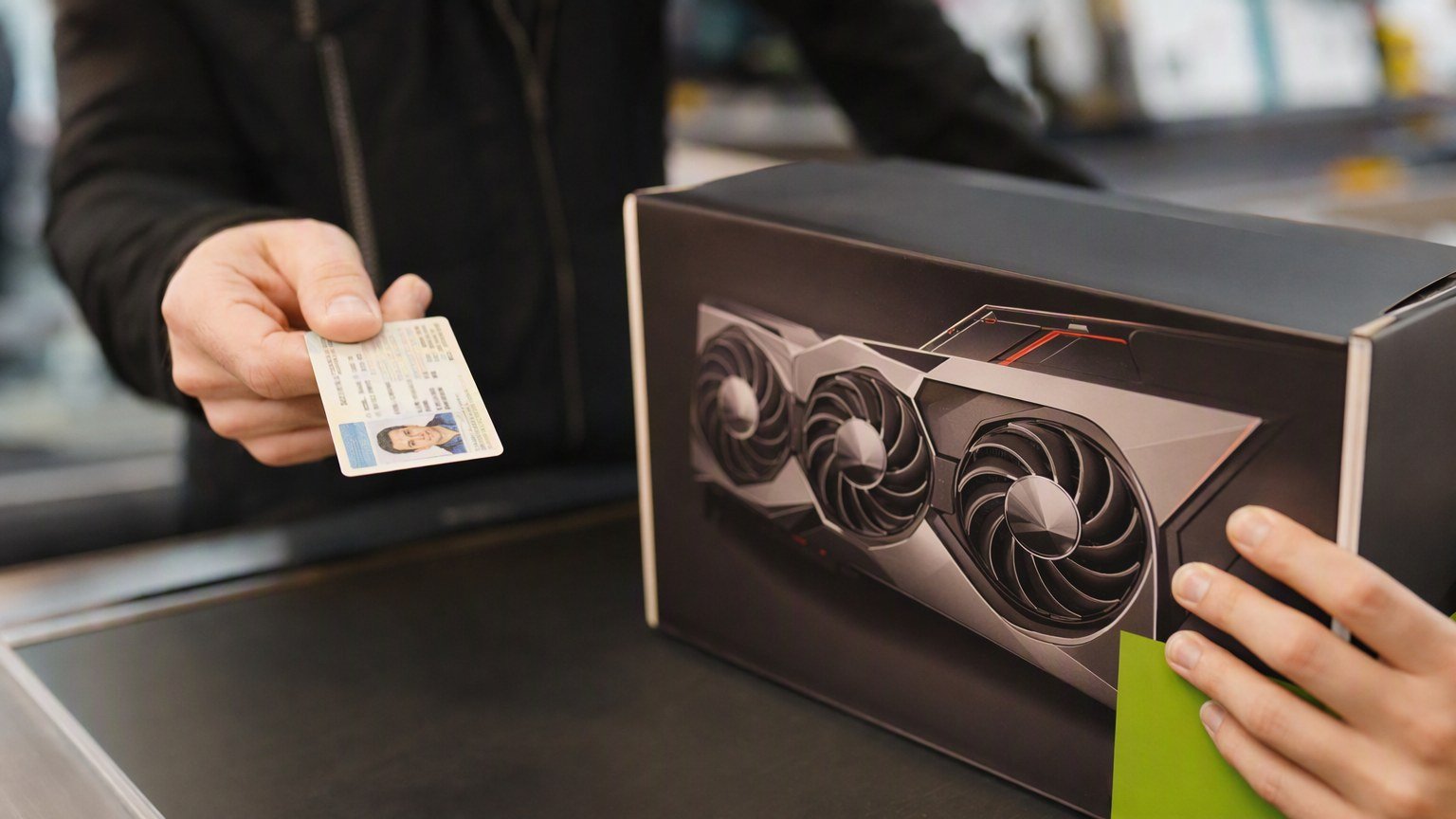
So you want to buy a graphics card. Not just any graphics card, mind you, the RTX 5090, Nvidia’s current king-of-the-hill gaming GPU. Cool. Now bring your driver’s license, your home address, a written explanation of where exactly this thing is going to live, and get ready to sign a legal…
So you want to buy a graphics card. Not just any graphics card, mind you, the RTX 5090, Nvidia’s current king-of-the-hill gaming GPU. Cool. Now bring your driver’s license, your home address, a written explanation of where exactly this thing is going to live, and get ready to sign a legal declaration promising the US government you’re not smuggling it to Shenzhen in your carry-on. Welcome to buying a graphics card in 2026, apparently.
Wait, You Need a Permission Slip Now?
Here’s what actually happened. A Micro Center customer in Tustin, California walked in to buy a PowerSpec AI90 Workstation, a pretty loaded machine with an AMD Ryzen 9 9950X CPU, an RTX 5090 Founders Edition, 64GB of DDR5-6000 RAM, and a 2TB SSD. Not a cheap impulse buy, this is a serious rig. But instead of just ringing it up, the store manager pulled out a form. An “Advanced Computing Product Purchaser Declaration,” to be exact. And the buyer had to sign it before Micro Center would let them walk out the door with their own hardware.
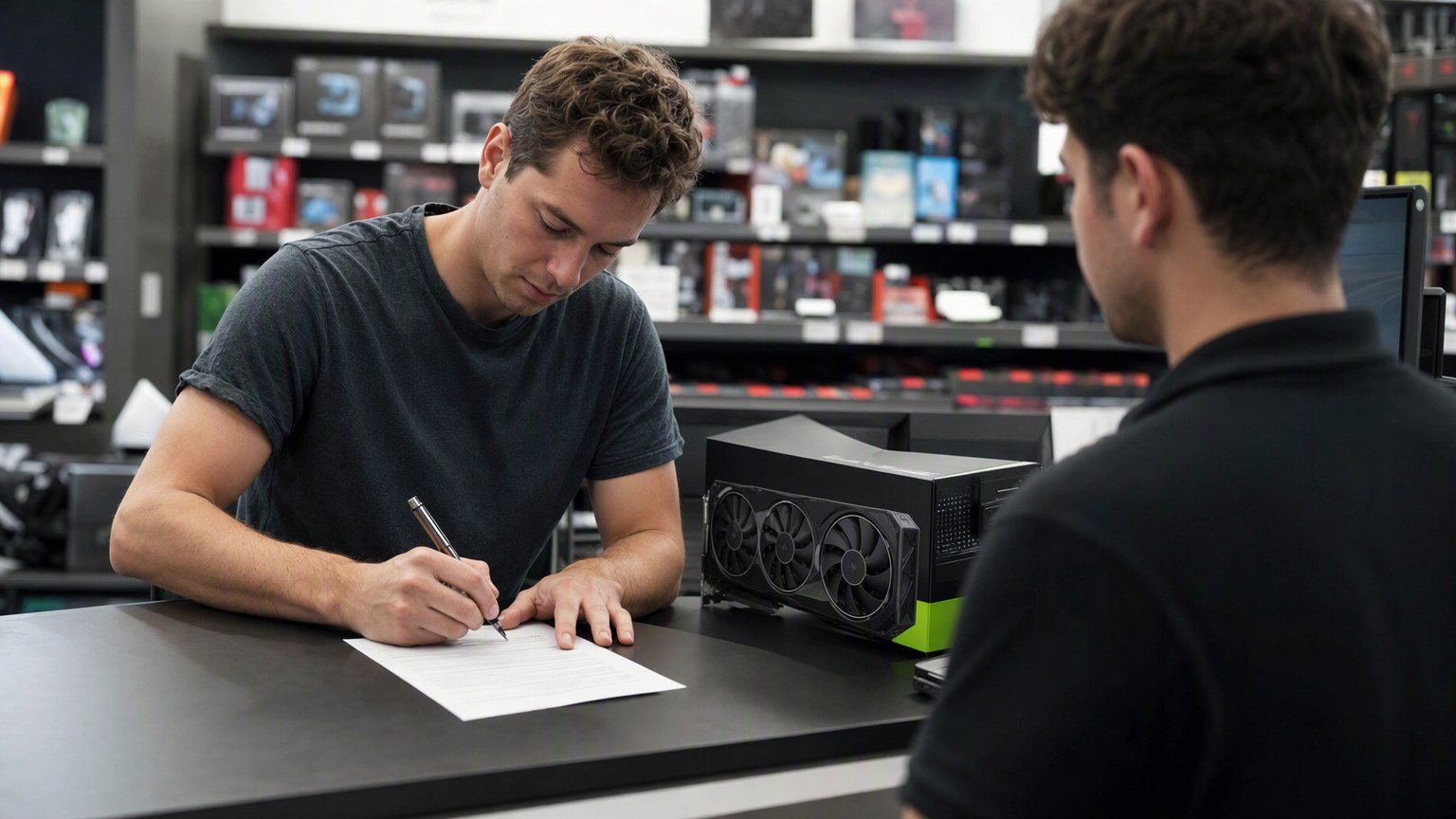
The person posted the whole thing on the r/Microcenter subreddit under the username u/Krothic, and honestly, I get why. This isn’t normal retail behavior. You don’t sign an export compliance document to buy a toaster.
What’s Actually On This Thing
The form itself reads less like a receipt and more like something you’d fill out for a government contract. It wants your full legal name. Your residential or business address. A government-issued photo ID. Phone number, email, the works. Then it gets specific, really specific. It asks who the actual end user is, if that’s different from whoever’s standing at the register. It wants to know exactly where the product is going to be installed. And it wants a written statement of intended end use.
Then comes the part that reads like it was written by a lawyer who’s had one too many energy drinks: “NO EXPORT – NO EXCEPTIONS.” Micro Center states flat out that it will not sell this product to anyone who intends to export, reexport, resell, transfer, or otherwise cause the GPU to leave the United States.
Why Would a Store Care Where Your GPU Ends Up?
This is where it gets interesting, and honestly, kind of makes sense once you connect the dots. The US has had export restrictions on advanced AI chips going to certain countries, China chief among them, for a while now. Nvidia’s top-tier silicon, the stuff that can be repurposed or clustered together for AI training, has been treated less like a gaming part and more like a strategic asset. The RTX 5090, with its absurd compute power, sits right in that gray zone where “gaming card” and “AI accelerator” start to blur together.
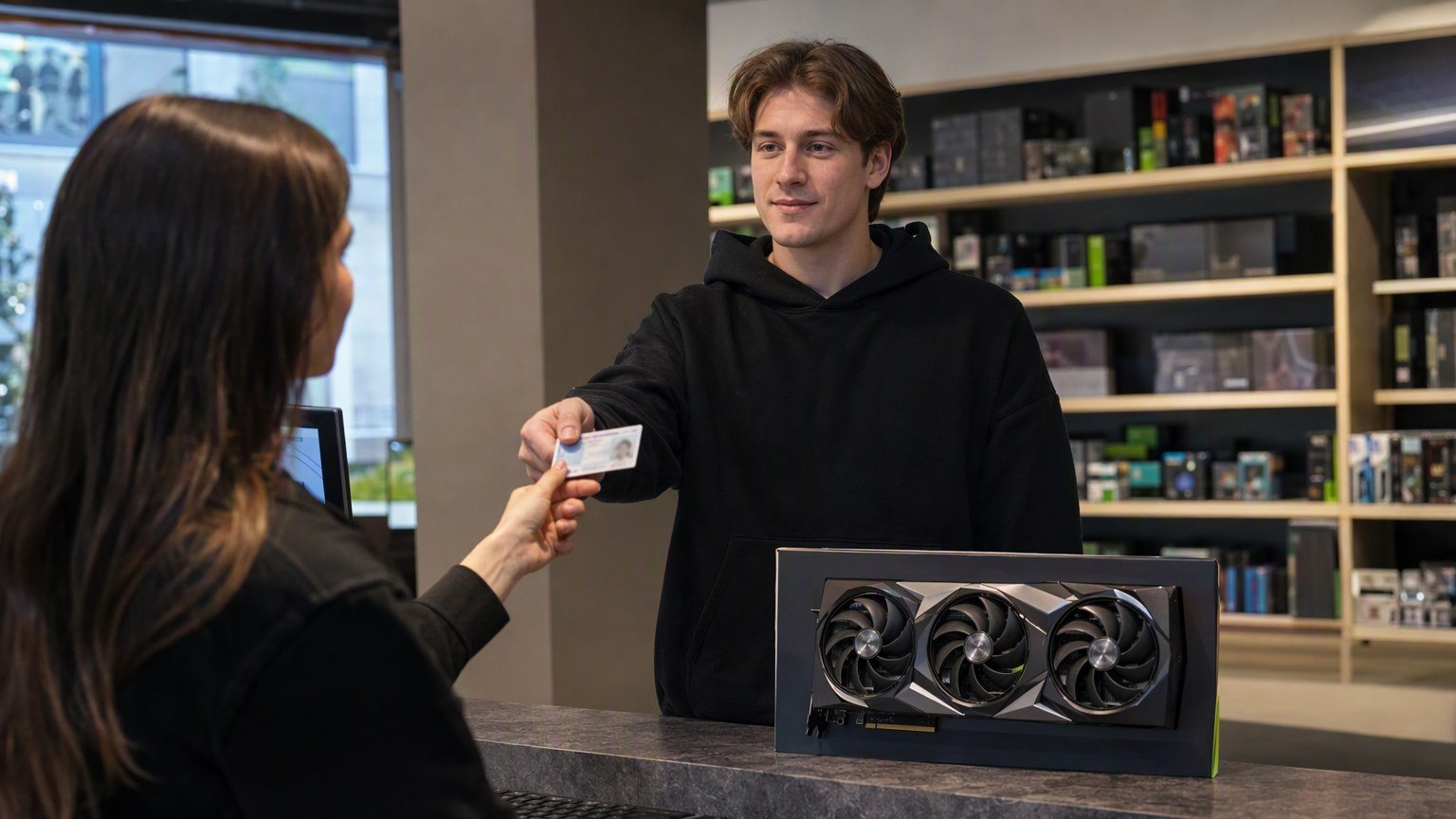
And that’s probably exactly why Micro Center is covering itself here. If a reseller buys a stack of 5090s with the intent of shipping them overseas to get around export controls, and it later comes out that a US retailer sold them knowingly, that’s a massive legal and reputational mess nobody wants. It's the same kind of export workaround at the center of a $300 million chip-smuggling scheme that recently landed a California tech CEO facing serious federal prison time.
“NO EXPORT – NO EXCEPTIONS.”
Not gonna lie, when I first read that line I pictured customs agents staking out the parking lot. But the reality is probably a lot more boring and a lot more lawyer-driven. This is a company trying not to get caught in the crossfire of a trade policy that’s gotten increasingly aggressive about where high-end chips can legally go.
The GPU Scalper Problem Never Really Went Away
Let’s be real for a second, this also smells like a response to the scalping chaos we’ve seen with every GPU launch since the pandemic. Remember trying to buy a 3080 or a 4090 at launch? Bots, resellers, people buying ten cards to flip on eBay for double the price. If Micro Center is now requiring ID, address verification, and a written declaration of where the card is physically going to sit, that’s also a pretty effective way to make bulk reselling a massive headache. Can’t exactly sign ten declarations under ten different names with the same ID, can you?
So maybe this isn’t purely about geopolitics. Maybe it’s a two birds, one stone situation: deter the export of advanced compute to restricted countries, and incidentally make life harder for scalpers trying to flip hardware for profit. I actually don’t think these two things are unrelated, if I’m being honest. A lot of the GPU export workaround schemes involve exactly this kind of retail-level buying and reshipping.
What This Actually Means
Here’s my honest take: this is probably just the beginning. If one Micro Center location is doing this, it’s likely a corporate policy rolling out across stores, not some overzealous manager making up rules on a random Tuesday in Tustin. And if that’s the case, buying flagship Nvidia hardware is quietly turning into something closer to buying a firearm or a controlled chemical than picking up a gaming part. ID required. Paper trail required. Declared end use required.
Is that annoying for the average gamer who just wants to play Cyberpunk at max settings? Sure, a little. Nobody loves extra paperwork at checkout. But given how tangled the GPU supply chain has gotten with AI demand, export restrictions, and scalpers all fighting over the same limited stock, I kind of get why retailers are covering themselves this hard. The real question is whether this stays limited to the 5090, or whether we’re looking at the new normal for every high-end GPU release going forward. My guess? Once the paperwork exists, it doesn’t go away. That tangled GPU supply chain is also why memory makers like Micron have been posting record margins by shipping less to regular consumers.