
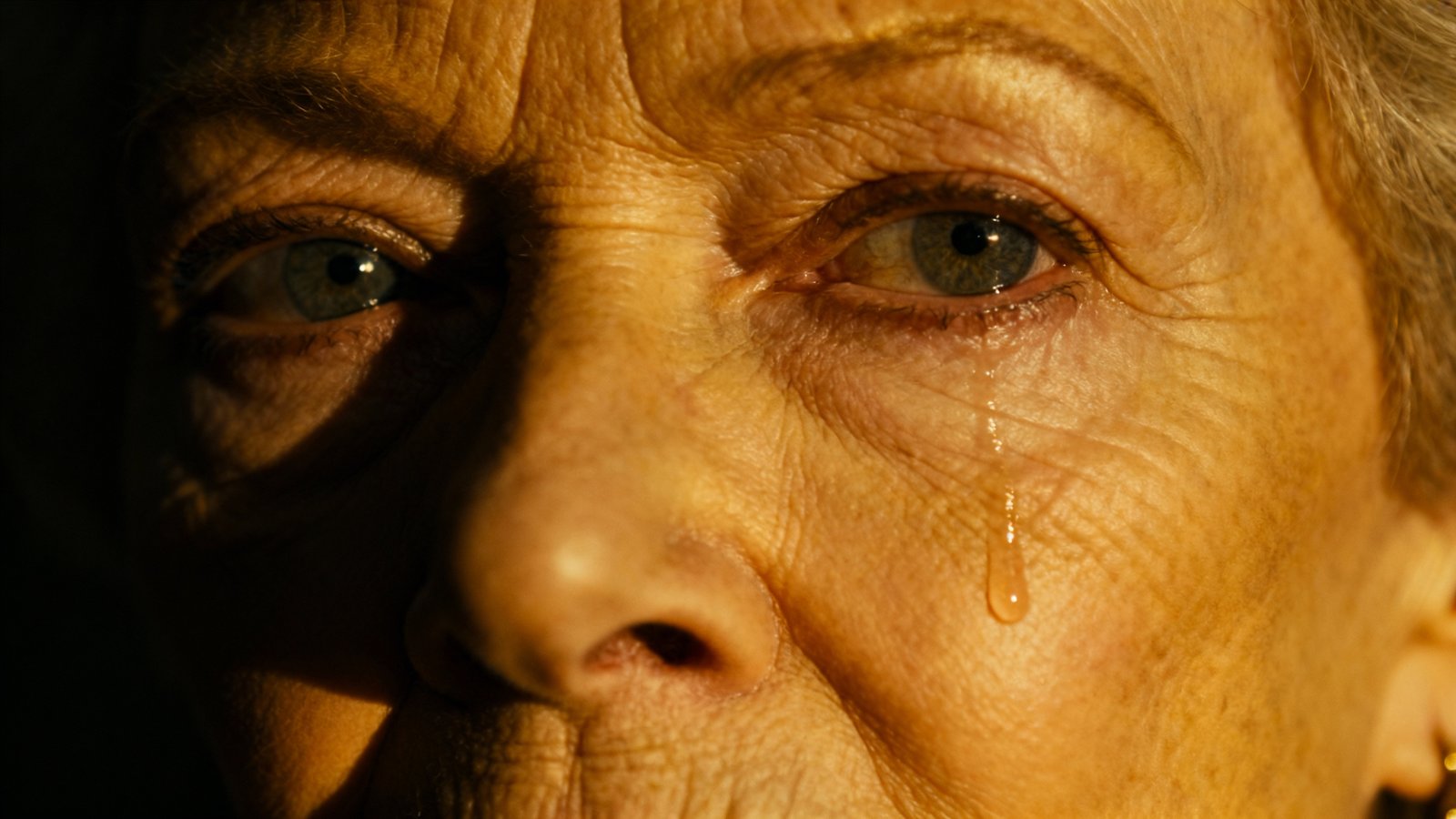
Imagine, for a moment, inhabiting the world of someone like Judi Dench, an actress whose entire career, whose very essence, has been woven into the fabric of human connection-observation, nuance, the subtle flicker in an eye that tells a whole story. Now, imagine that very world, that rich tapestry of faces and expressions, slowly but surely fading into a blur. It’s a pretty heavy thought, isn’t it? Because that’s basically what she’s living through.
You probably know her, right? Queen Victoria, M in James Bond, or maybe from one of a hundred other incredible roles. She’s synonymous with sharp wit, unparalleled presence, and a gaze that could frankly cut diamonds. And yet, she recently made a confession that just stopped me in my tracks: she can’t actually see your face anymore. As in, can’t recognize people. Just a bit ago, in an interview, she was really open about how her macular degeneration has progressed, making it impossible to see distinct features. It’s kind of heartbreaking to hear, honestly.
The Invisible Veil-What It Must Be Like
When you hear something like “I can’t see your face,” your mind, or at least my mind, immediately jumps to pure darkness. But that’s not quite how macular degeneration typically works. It’s more like a central blind spot, a smudge in the middle of your vision, which is just- insidious. Peripheral vision might still be there, maybe even pretty intact, but the very thing we rely on for reading, for recognizing faces, for all those little moments of shared humanity-that’s gone. Poof.
A Life Defined by Sight, Now Redefined
For an actress, truly, a master of her craft, this is monumental. Think about it: a huge part of acting is reacting, reading the room, catching those tiny cues from your scene partners. How do you do that when you can’t see their eyes, their subtle smile, the furrow in their brow? It’s not just about memorizing lines-though that’s a whole other battle we’ll get to-it’s about the dance, the back-and-forth that’s so crucial to making a performance sing. She’s been adapting, obviously, for years now, but this latest admission just feels like another rung on a really challenging ladder.
- The Readaptation: She’s had to figure out new ways to learn scripts, relying on friends and family to read them aloud, memorizing through repetition rather than sight. It’s a massive undertaking, a testament to her dedication.
- The Social Impact: Imagine walking into a party, a premiere-a place where you’re expected to recognize and greet dozens of people-and you literally can’t tell who’s who. The social anxiety alone must be crushing, or at least incredibly awkward.

It means she’s basically flying blind, trying to piece together identities from voices, gaits, maybe even a particular cologne. Most of us take that second nature recognition for granted, don’t we? Just seeing someone across the room and knowing instantly who they are. What an absolute privilege.
“I can’t see your face. It’s like a cloud in the middle. I just can’t see to read, and I can’t see my eyes, can’t recognize anybody.”
Judi’s Unyielding Spirit-The Show Goes On
Here’s the kicker though, the absolutely incredible part. She’s still working. Still acting. Still giving us performances that are, frankly, masterclasses. She’s not letting this stop her, and that, to me, is just mind-blowing. It speaks volumes about her grit, her passion for her craft, and that undeniable performer’s drive.
Finding New Ways to Be Judi
I mean, what’s her secret? Well, it’s probably not a secret at all, just sheer bloody determination. And a really good support system, I’m sure. She talks about how frustrating it is, how terrifying it can be, but she always brings it back to the work. That’s the constant, the anchor. It reminds me a bit of Beethoven, you know, still composing symphonies even as his hearing faded. Different senses, same astounding resilience.
- The Memorization Marathon: We already touched on it, but imagine tackling a Shakespearean monologue, pages and pages of dense text, by having someone speak it to you, over and over. That’s some serious dedication right there. It turns the script into a kind of auditory tapestry she weaves in her mind.
- The Power of Voice and Touch: Without visual cues, other senses become hyper-attuned. The timbre of a voice, the way someone moves, even the energy they give off-these things must be amplified for her, creating a new kind of sensory map of the world.
It’s also pretty wild to think about the people around her, her team, her fellow actors. They must be incredibly careful, incredibly supportive. Creating a safe, understanding environment where she can thrive even with this challenge. It definitely makes you appreciate the human element of filmmaking even more.
Beyond the Glare-A Deeper Understanding
Her openness about this, about saying “I can’t see your face,” it does so much more than just inform us of her personal struggle. It shines a really important light on what living with macular degeneration is actually like. It’s not just a fuzzy picture-it’s a fundamental shift in how you interact with the world, how you recognize love, friendship, even just casual acquaintances.
It’s a powerful reminder too, I think, of how much we rely on our dominant senses and how truly vulnerable we can become when one of them starts to fail. Yet, here she is, Dame Judi Dench, showing us all that limitations, while undeniably difficult, don’t necessarily have to define us. They can, instead, force us to find new pathways, new strengths, new ways to connect and, yes, still captivate. What an absolute legend.