




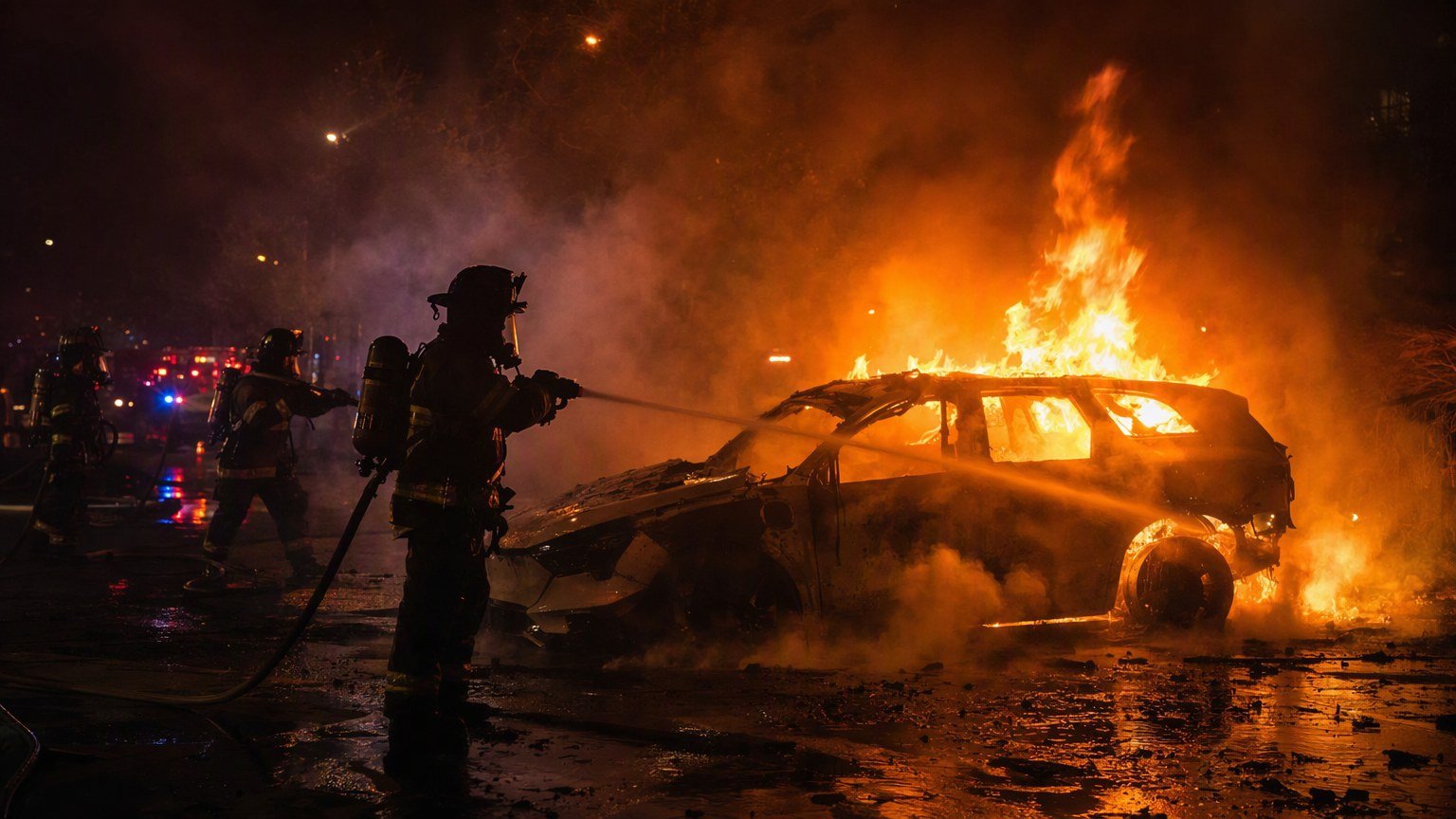
Eighteen hours. Let me say that again – eighteen hours to put out a car fire. Not a building. Not a chemical plant. Six SUVs in a dealership parking lot kept firefighters from Fort Worth’s Station 23 busy for nearly an entire day, and honestly? This is the part of the EV transition nobody wanted…
Eighteen hours. Let me say that again – eighteen hours to put out a car fire. Not a building. Not a chemical plant. Six SUVs in a dealership parking lot kept firefighters from Fort Worth’s Station 23 busy for nearly an entire day, and honestly? This is the part of the EV transition nobody wanted to talk about.
When “Just Add Water” Stops Working
It started simple enough on October 9th at Frank Kent Cadillac. One vehicle on fire. Standard stuff for any fire crew. Except it wasn’t standard at all, because these weren’t your typical gas-guzzlers – they were electric vehicles, including some Escalade IQs, and the firefighters didn’t even know it at first.

“As crews were battling the fire that was quickly spreading from one SUV to the next, they realized these were all electric vehicles,” the Fort Worth Fire Department posted later. And that’s when everything changed. Because here’s the thing about EV fires that the industry really doesn’t love advertising – they burn hotter, they burn longer, and the standard playbook goes straight out the window.
The battery packs in these vehicles are designed to be watertight. Which is great when you’re driving through a puddle, not so great when firefighters are trying to douse the flames. The water can’t get to where it needs to go. It’s like trying to put out a fire inside a sealed Tupperware container. Good luck with that.
Six Down, Two Damaged, and a Really Long Night
By the time the smoke cleared (literally), six Cadillac SUVs were total losses and two more were damaged. That’s a lot of expensive metal sitting in a charred heap. But the cost isn’t just measured in destroyed inventory – it’s measured in firefighter hours, water usage, and the growing realization that our emergency response systems aren’t really built for this yet.
The Part Nobody Prepared For
Look, I’m not anti-EV. I think the technology is impressive, and yeah, we probably need to move away from fossil fuels eventually. But we’ve been so focused on range anxiety and charging infrastructure that we kind of… forgot about the part where these things can turn into infernos that laugh at traditional firefighting methods? Other infrastructure challenges in the energy transition are being tackled in unexpected ways, like how The Alps Just Cracked Clean Energy's Winter Problem with solar panels on a dam.
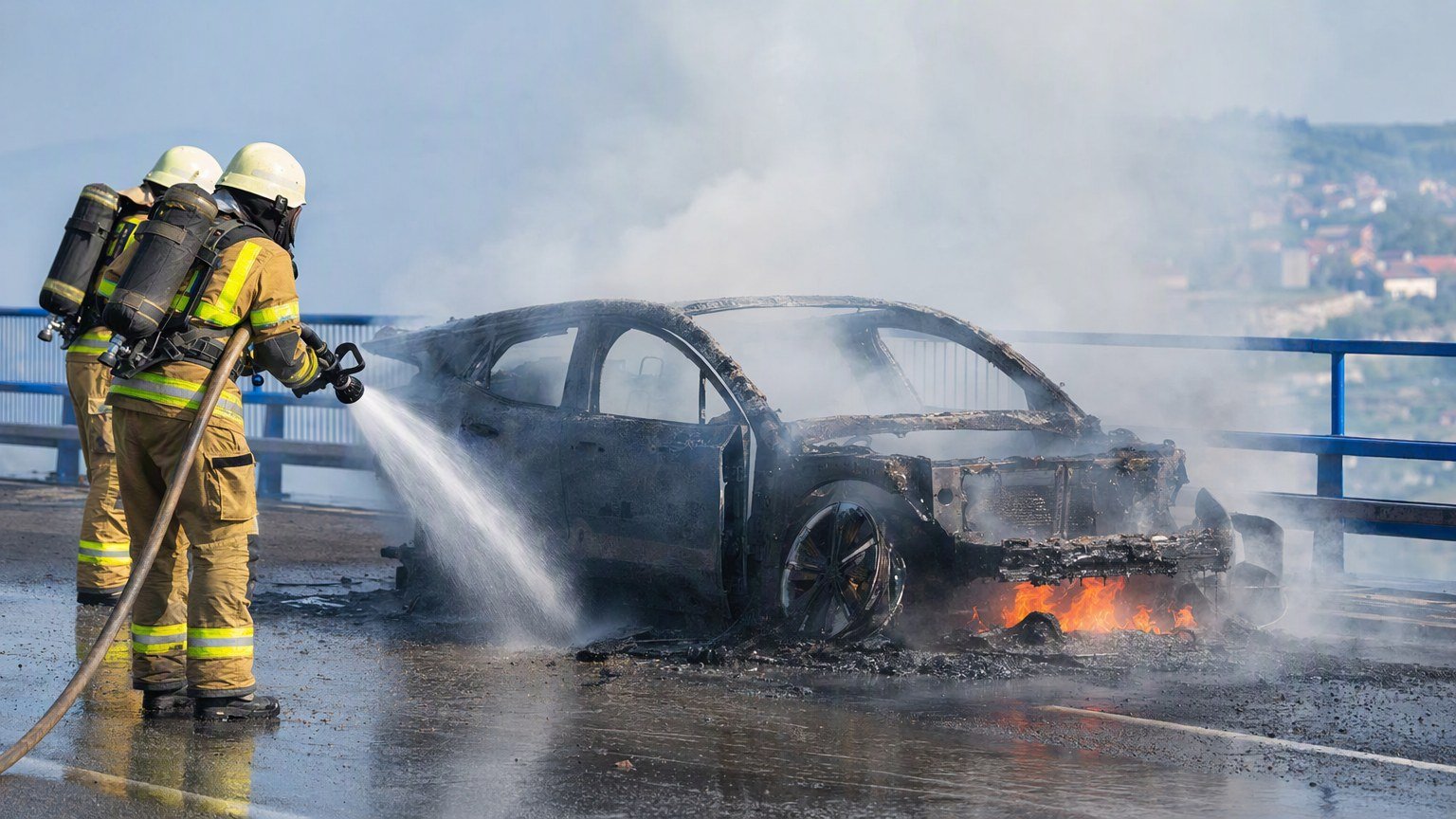
And it’s not like this is new information. Fire departments have been sounding the alarm (pun intended) for a while now. Tesla fires have made headlines. There was that cargo ship full of luxury cars – including EVs – that burned for weeks in the Atlantic last year. The patterns are there. But somehow we’re still catching fire crews off guard.
“As crews were battling the fire that was quickly spreading from one SUV to the next, they realized these were all electric vehicles.”
That sentence should terrify you a little bit. They didn’t know. How are firefighters supposed to respond appropriately if they can’t immediately identify what they’re dealing with?
It Gets Weirder
The real nightmare scenario with lithium-ion battery fires is something called thermal runaway. Basically, once one cell in the battery pack starts cooking off, it triggers a chain reaction. The temperature spikes, more cells fail, and the whole thing becomes self-sustaining. You can think you’ve got it under control, walk away, and then – surprise! – it reignites hours later.
That’s why this fire took 18 hours. It wasn’t incompetence or lack of resources. It was the fundamental physics of how these batteries fail. Firefighters have to cool the entire pack down and keep it cool, which means dumping thousands of gallons of water on something that’s specifically engineered to keep water out. The irony is pretty thick.
Some departments have started using these specialized fire blankets to essentially suffocate EV fires. Others are experimenting with dunking the entire vehicle in a container of water (yes, really). But none of this is standardized yet, and a lot of smaller departments don’t have the equipment or training.
What This Actually Means
We’re at this weird inflection point where EVs are becoming common enough to create real problems, but not common enough that we’ve fully adapted our infrastructure to handle them. And I’m not just talking about fire departments – I mean parking garages, insurance policies, tow truck operators, the whole ecosystem. Infrastructure gaps can have life-or-death stakes in conflict zones too, as Ukrainian troops discovered when Starlink Goes Dark: Ukraine's Frontline Loses Lifeline in the middle of operations.
The Fort Worth crew did everything right, from what I can tell. They stayed on scene, they adapted their tactics, they kept it from spreading beyond those eight vehicles. But eighteen hours for a parking lot fire should make every city planner, building inspector, and emergency coordinator sit up and pay attention.
Because here’s what nobody wants to say out loud – this is only going to get more common. More EVs on the road means more EV fires. Period. The percentages might be lower than gas vehicle fires (they probably are), but the intensity and duration? That’s a whole different ball game. And right now, we’re still learning the rules as we play.