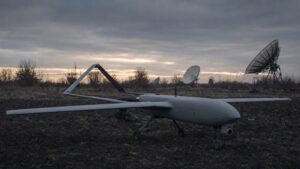




So here’s something wild that happened over the weekend, and honestly, I’m still trying to wrap my head around it. Ukraine launched drone strikes on three Russian data centres – big ones, including Yandex, which is basically Russia’s Google. And then? Reform UK’s social media engagement just……
So here’s something wild that happened over the weekend, and honestly, I’m still trying to wrap my head around it. Ukraine launched drone strikes on three Russian data centres – big ones, including Yandex, which is basically Russia’s Google. And then? Reform UK’s social media engagement just… fell off a cliff.
I mean, we’re talking about a dramatic drop here. Not a little dip. A nosedive.
The Numbers Don’t Lie (And They’re Pretty Damning)
Look, I’ve been covering politics long enough to know when something smells off. But this? This is beyond “smells off” – this is a full-on stink bomb.
After those Ukrainian strikes took out the data centres, bot traffic from the Yandex network dropped to just 0.4% of what it was two weeks ago. That’s not a typo. Point four percent. Basically, the automated accounts hosted on Russian servers went dark. And wouldn’t you know it, right around the same time, Reform UK figures started seeing their social media engagement numbers tank.
Now, you can call that a coincidence if you want. I’m not gonna stop you. But if you actually believe that’s a coincidence, I’ve got a bridge to sell you. A really nice one, great views, very affordable.
The thing is, we’ve all suspected this for years, right? The weird engagement patterns, the accounts that pop up out of nowhere with names like “British_Patriot_1776” spouting Reform talking points at 3 AM. It’s been happening in plain sight. But this? This is the smoking gun turning into a mushroom cloud.
What Actually Happened
The strikes completely decimated Yandex’s infrastructure. And Yandex isn’t some small player – they control over 70% of search traffic in Russia. When their data centres went down, they took a whole ecosystem of bot networks with them. The Attack That Erased the Cloud – For Good shows what happens when critical infrastructure goes offline permanently. Putin's Robot Tank Flop: Stuck in Mud, Not Glory is another case of Russian tech not living up to the hype.
According to bot analysts (and yeah, apparently that’s a real job now – what a time to be alive), the automated activity from these networks has been “virtually eliminated.” Those are their words, not mine. Virtually eliminated. Gone. Poof. Why Anthropic Just Banned Cruelty to Claude explores another angle of how we're grappling with artificial behavior online.
But Wait – Why Does This Matter?
Here’s where it gets really interesting, and kind of terrifying if I’m being honest.
Andy Burnham came out and said Russia “clearly interfered” in the Brexit referendum. And look, that’s not exactly news to anyone who’s been paying attention. But now we’ve got what looks like pretty compelling evidence that the interference didn’t stop with Brexit. It’s been ongoing. Continuous. Propping up certain political movements with artificial engagement that makes them look way more popular than they actually are.

Think about what that means for a second. How many people saw Reform posts with thousands of likes and shares and thought, “Wow, these guys are really popular, maybe they’re onto something”? How many journalists (myself included, probably) gave them more coverage because their social media presence seemed to indicate genuine grassroots support?
“Russia clearly interfered in the Brexit referendum” – Andy Burnham
Social media engagement isn’t just vanity metrics anymore. It shapes coverage, it influences algorithms, it creates the perception of momentum. And if a significant chunk of that engagement was coming from Russian bot farms? That’s not just embarrassing for Reform. That’s a fundamental corruption of our democratic process.
The Questions Nobody’s Asking (Yet)
What I want to know is this – did Reform know? I mean, they had to notice something was off, right? Your engagement numbers don’t just magically soar without someone on the team going, “Huh, that’s weird.”
And if they didn’t know? Well, that’s almost worse in a way. It means they’ve been riding a wave of artificial support without even realizing it, making decisions based on fake feedback loops, thinking they’re more popular than they are.
There’s also the bigger question about other political movements. Reform probably isn’t the only one benefiting from these networks. The bot farms don’t care about ideology – they care about chaos, division, weakening democratic institutions. Who else has been getting this kind of support?
What Happens Now?
Here’s the thing that really gets me. Those data centres are eventually going to come back online in some form. Russia’s not just gonna shrug and say, “Oh well, guess we’re done with information warfare.” They’ll rebuild, probably with better redundancies this time. The bots will come back.
But for right now, we’ve got this weird little window where we can see what organic support for Reform actually looks like. And from what I can tell? It’s a lot smaller than they’ve been claiming. A lot smaller.
Maybe this will be a wake-up call. Maybe we’ll finally have a serious conversation about foreign interference, about bot networks, about how vulnerable our information ecosystem really is. Or maybe in two weeks everyone will forget about this and move on to the next outrage.
I’ve been doing this job long enough to know which one’s more likely. But I really hope I’m wrong this time.