





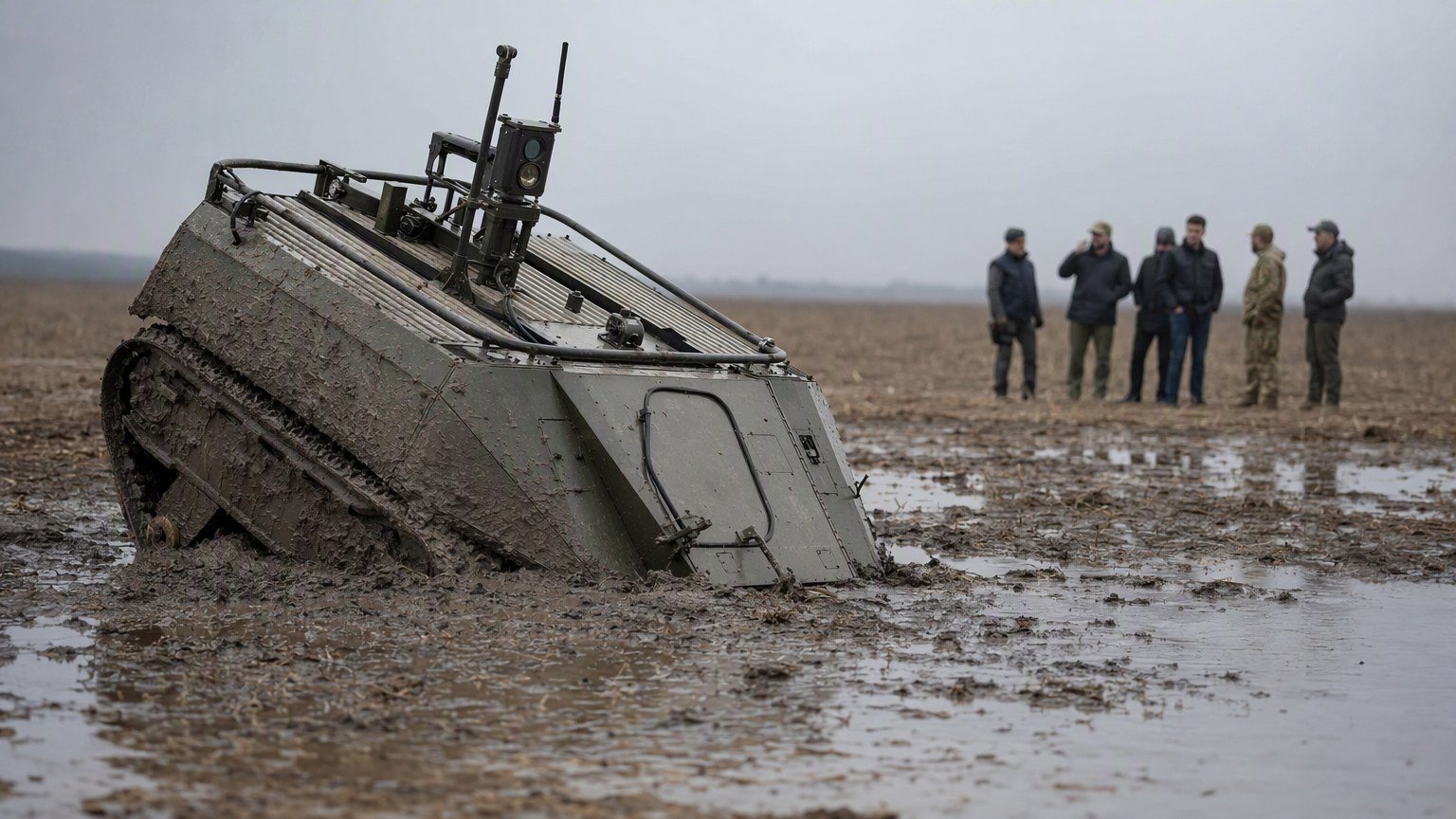
So Russia rolled out its fancy new robot tank in front of Vladimir Putin himself, and within minutes the thing basically gave up and died in a ditch. Not metaphorically. Literally. Tracks buried in mud, nose down, going absolutely nowhere while – presumably – a bunch of generals stood around…
So Russia rolled out its fancy new robot tank in front of Vladimir Putin himself, and within minutes the thing basically gave up and died in a ditch. Not metaphorically. Literally. Tracks buried in mud, nose down, going absolutely nowhere while – presumably – a bunch of generals stood around trying not to make eye contact with each other.
The Shturm’s Big Moment Did Not Go Well
The vehicle in question is called the Shturm, and it’s meant to be Russia’s big leap into uncrewed combat vehicles – the kind of thing that sounds terrifying in a press release and apparently a lot less terrifying when it’s actually sitting in front of the president of Russia. The debut happened at Tsentr-2026, a strategic military exercise that ran from September 28 to October 3. This was supposed to be a showcase moment. Instead, it turned into something closer to a cautionary tale about what happens when you rush hardware in front of cameras before it’s actually ready.
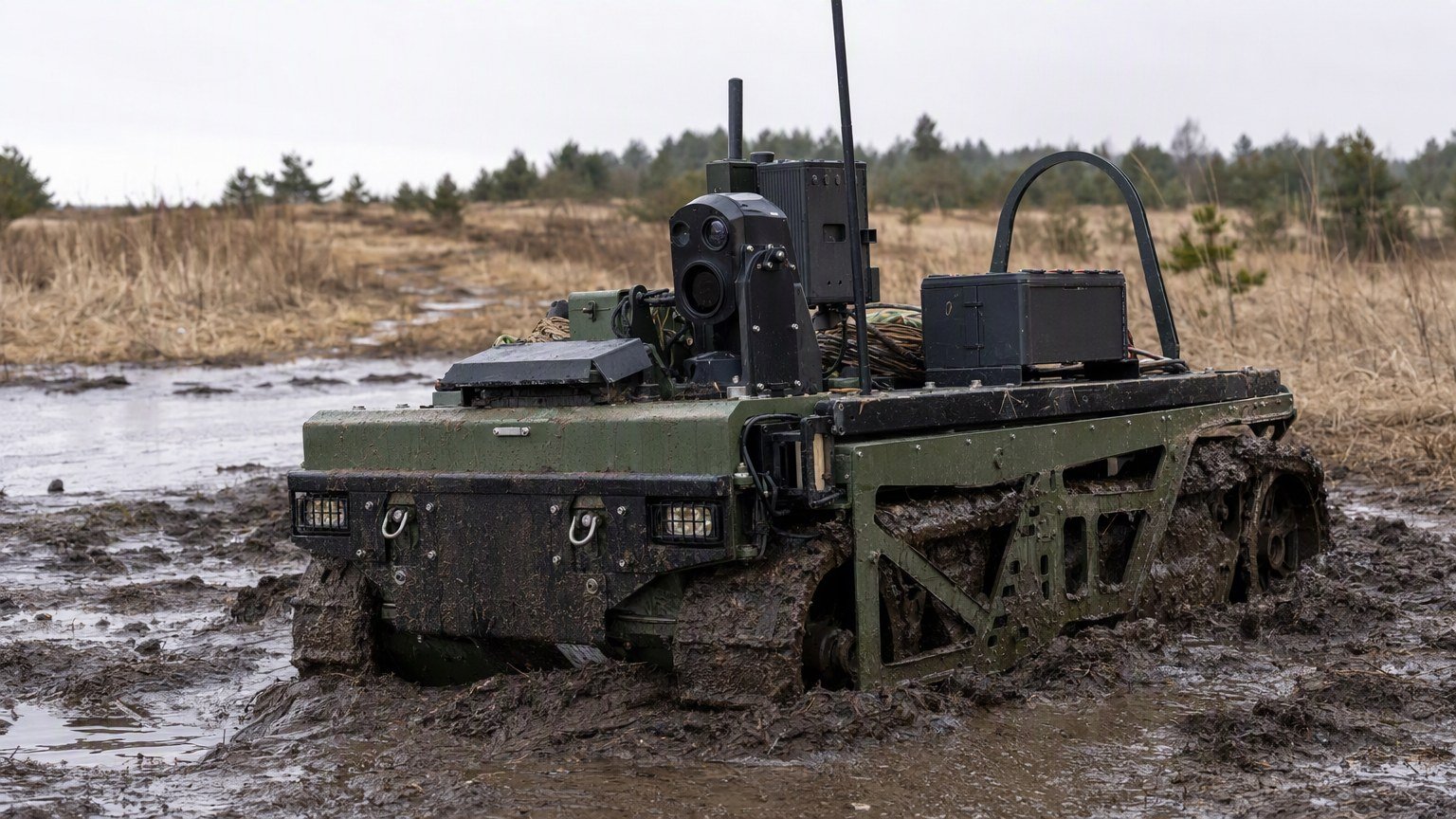
According to an October 3 Defense Blog report, the tank kept losing its command-and-control radio link with the separate vehicle that was supposed to be steering it remotely. Not once. Repeatedly. And when I say “lost the link,” I mean the operators were basically sitting there with a dead remote, watching a multi-ton piece of military hardware just… not respond. That’s the whole point of an uncrewed combat vehicle, right? The “uncrewed” part has to actually work. Otherwise you’ve just built a very expensive tank that nobody’s driving.
Enter the Human Driver (Too Little, Too Late)
So what do you do when your robot tank stops listening to you in front of the head of state? Apparently, you panic a little, then throw a human driver-mechanic into the mix to save face. That’s exactly what happened here – organizers abandoned the remote-control demonstration and switched to manual operation. Which, fine, I get it. You’ve got Putin standing right there, you can’t just let the thing sit frozen in the field like a confused Roomba.
Except that didn’t work either. Even with an actual person behind the controls, the Shturm ended up stuck in a muddy ditch next to a dirt track, hull and tracks sunk right into the soil. So the backup plan failed too. That’s… really not the sequence of events you want when the whole goal of the demo was proving this thing could handle itself in the field, autonomously or otherwise.
“You can swap the pilot, but you can’t swap the mud.”
Okay, But What Even Is This Thing?
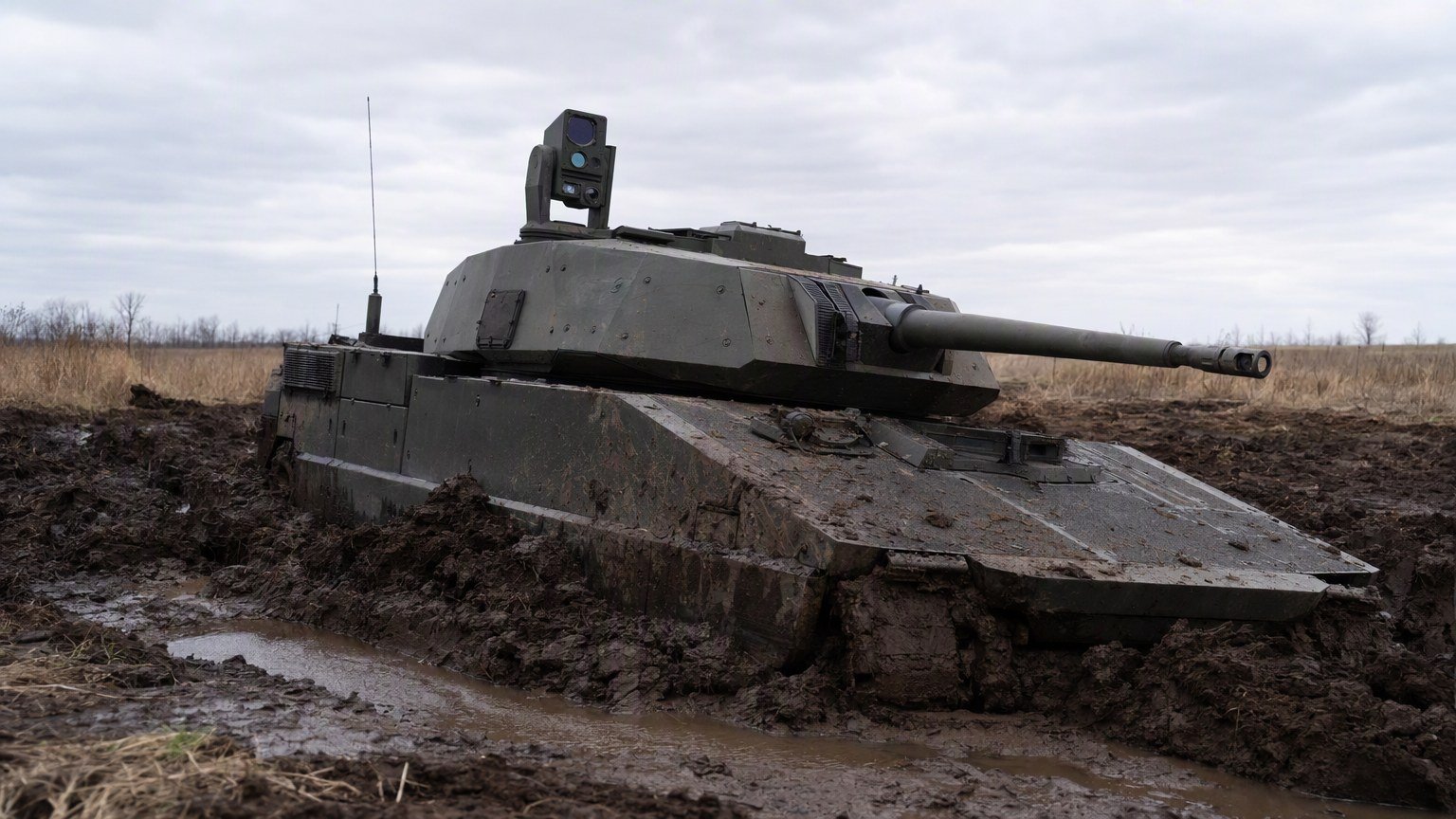
Here’s the context that makes this sting even more. The Shturm isn’t some random prototype slapped together last month – it’s built by Uralvagonzavod, which, fun fact, is literally the largest tank manufacturer on the planet by output. These are the people who make the T-72s and T-90s that Russia has leaned on for decades. The Shturm is built on modified versions of those same chassis, so this isn’t some from-scratch experimental platform. It’s a known, proven base with new tech bolted on top.
It’s designed specifically for urban combat, which, if you think about it, makes the mud situation almost darkly funny. Urban warfare means tight streets, rubble, close-quarters chaos – not open dirt tracks. And yet the thing couldn’t handle a muddy field during a controlled demo with presumably ideal conditions and a human in the driver’s seat. If it’s struggling here, you have to wonder how it’d hold up in an actual contested city block with debris everywhere and nobody around to dig it out.
The hardware itself is no joke on paper – it’s packing a shortened 125mm D-414 main gun, which is a serious piece of firepower for something marketed as an uncrewed platform. So this isn’t a toy. It’s meant to be a legitimate combat asset. Which makes the whole mud-stuck debacle land even harder, because the stakes here aren’t “oh well, back to the drawing board.” This is supposed to be battlefield-ready tech, shown off specifically to project strength.
Why This Actually Matters
Look, demos go wrong. That’s not some shocking revelation – prototypes fail, software glitches happen, Murphy’s Law doesn’t care who’s watching. But there’s a difference between a minor hiccup and losing your control link multiple times, then having your backup plan also faceplant into a ditch. In front of Putin, no less. This wasn’t some low-stakes trade show reveal. This was a strategic exercise meant to show off Russia’s next generation of military tech to, frankly, everyone paying attention – allies, rivals, and anyone trying to gauge how far along Russian drone and robotics programs actually are.
And honestly? This tells you something. Not necessarily that the whole program is doomed – plenty of military tech has rough debuts and gets refined later – but it does suggest the C2 link reliability, which is sort of the entire backbone of any remote combat system, isn’t where it needs to be yet. If you can’t maintain a stable connection during a scripted demonstration on your own exercise grounds, that’s a red flag for how it’d perform under actual jamming or electronic warfare conditions, which, let’s be real, is exactly what you’d expect in a real conflict.
What This Actually Means
I don’t think this was some catastrophic, program-ending failure. These things happen, and militaries test stuff publicly all the time knowing there’s a risk of embarrassment. But I also don’t think you can just wave this off as a minor glitch. Losing the C2 link repeatedly, then still getting stuck even with manual control, points to problems that go beyond software – that’s a vehicle struggling with basic terrain navigation on top of connectivity issues. Two separate failure points, not one.
Whether Uralvagonzavod fixes this before the Shturm sees any real deployment is the real question nobody can answer yet. From what’s been reported, there’s no word on a timeline for addressing the issues. What we do know is that the one time this thing was shown off to the person it mattered most to impress, it ended up looking less like the future of urban warfare and more like a tank that really, really wanted to go home.

