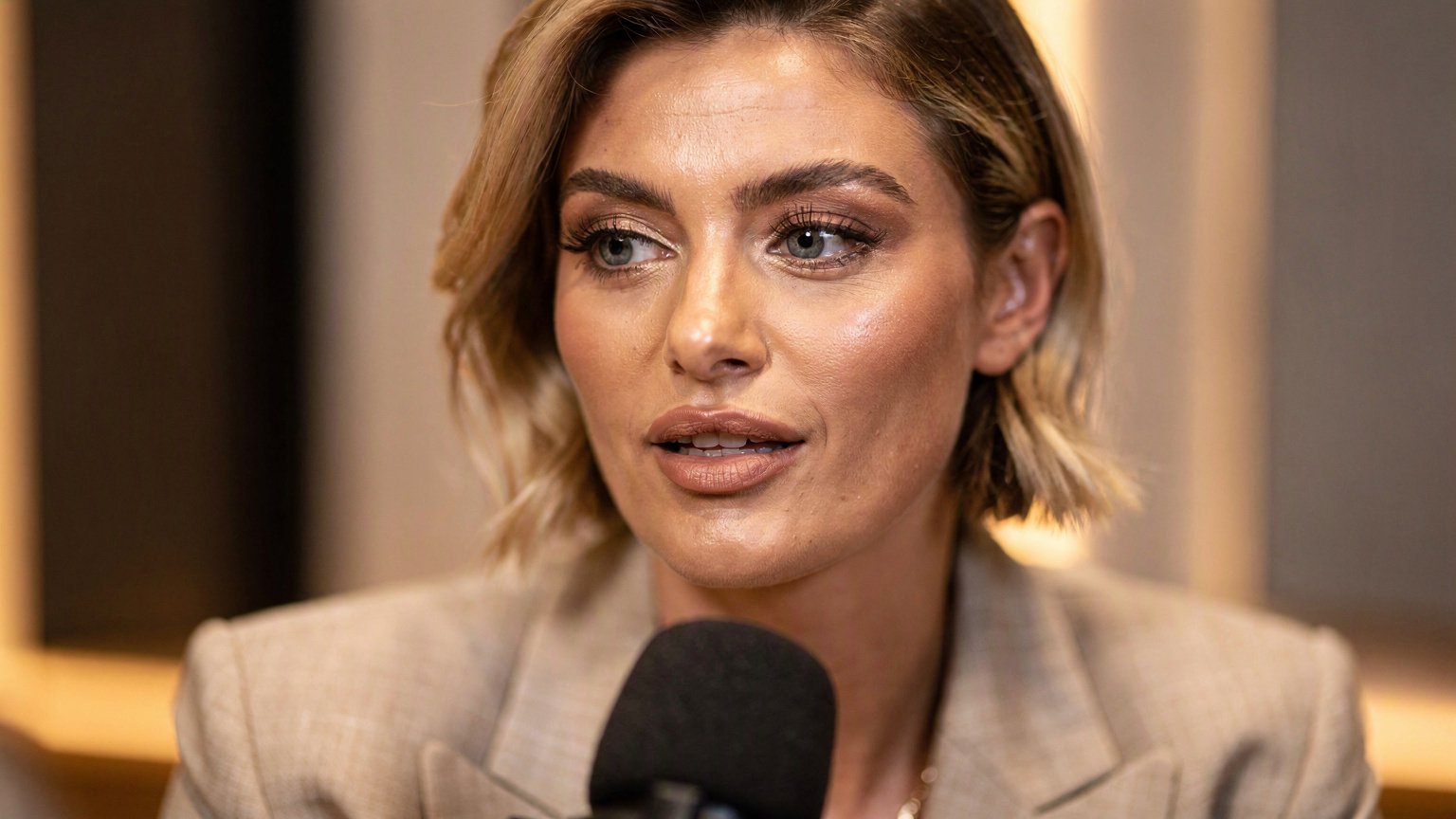
Kelly Clarkson just said something that’s going to make a lot of people nod along and a lot of other people lose their minds, and honestly? That’s kind of the sweet spot for a good opinion. The pop star went on the Las Culturistas podcast and admitted she has a “controversial” take on artificial…
Kelly Clarkson just said something that’s going to make a lot of people nod along and a lot of other people lose their minds, and honestly? That’s kind of the sweet spot for a good opinion. The pop star went on the Las Culturistas podcast and admitted she has a “controversial” take on artificial intelligence – she loves the stuff, thinks it can do “amazing things,” but draws a hard line when it comes to music charts. No AI-generated songs competing with actual humans for chart spots. Full stop.
Wait, Kelly Clarkson Likes AI?
Yeah, I was surprised too. We’ve gotten so used to celebrities either fully trashing AI or staying suspiciously quiet about it (probably because their lawyers told them to) that hearing someone actually say “I love AI” out loud feels almost refreshing. Clarkson didn’t frame this as some doom-and-gloom robot apocalypse thing. She’s not out here saying AI is going to destroy music or steal souls or whatever. She genuinely seems to think the technology has real value and real potential.
But – and this is the part that matters – she’s not willing to let that appreciation extend to the charts. Her reasoning, from what’s been shared, boils down to this: AI can be impressive, useful, even amazing, but it shouldn’t get to go head to head with human artists for chart position. That’s a meaningful distinction, and I don’t think enough people are talking about it that way.
The Line She’s Drawing
Here’s the thing. A lot of the AI-in-music conversation gets flattened into “good or bad,” like there’s no room for nuance. Clarkson’s take actually threads a needle a lot of artists have been too scared or too cautious to touch. She’s saying: use the tool, don’t let the tool take the trophy. It’s a surprisingly clean way to think about it, even if the practical details of “how do you even enforce that” are messy as hell.
Why Does This Even Matter?
Because the charts aren’t just some abstract ranking system nobody cares about. Billboard, Spotify’s top lists, whatever metric you want to point to – these things shape careers. They decide who gets the next tour slot, who gets radio play, who gets a bigger marketing budget next cycle. If AI-generated tracks start legitimately competing on those charts (and some already have, quietly, under aliases or through viral TikTok moments), that’s not a hypothetical problem anymore. That’s a right-now problem. It's part of why a growing number of fans are fleeing algorithms for vinyl and CDs, craving something charts can't fake.
“I love AI. I think it can do amazing things,” Clarkson said.
And look, I get why she loves it. AI can help with production, mixing, even brainstorming melodies when you’re stuck. Plenty of songwriters already use some flavor of machine learning tools without thinking twice about it, the same way nobody blinks at auto-tune anymore even though a decade ago that was its own controversy. Tools evolve. Artists adapt. That part isn’t new.
So Where’s the Actual Problem?
The problem is competition, not creation. There’s a difference between using AI as an assistant and letting a fully AI-generated song occupy a chart slot that a human artist worked their butt off trying to earn. That’s basically Clarkson’s whole point, and honestly, I think she’s onto something a lot of the industry has been dancing around.
Think about it this way – if an AI model can spit out a catchy track in thirty seconds based on patterns scraped from thousands of real human songs, and that track ends up outperforming an artist who spent two years writing, recording, touring, and bleeding for their album… what exactly are we rewarding at that point? Efficiency? Novelty? I don’t think “because it was fast to make” should ever be a reason something climbs the charts over someone’s actual lived creative effort.
This reminds me of the whole ghostwriting debate from years back, except somehow weirder. At least a ghostwriter is still a human being putting in actual labor. AI doesn’t get tired, doesn’t get writer’s block, doesn’t have a bad breakup it needs to turn into a bridge section. It just… generates. And generating isn’t the same as creating, even if the output sounds nice. It's a similar instinct to Jeremy Strong's fierce defense of method acting, both arguing that real effort shouldn't be replaceable by shortcuts.
Not Everyone Will Agree With Her
Some people are going to say this is gatekeeping, that Clarkson’s basically protecting her own turf as an established artist who doesn’t want new competition. I don’t buy that read, not entirely anyway. She’s not saying AI music shouldn’t exist. She’s saying it shouldn’t be ranked against humans in the same lane. That’s a pretty reasonable ask, if you ask me.
Others will probably argue the charts are already kind of broken anyway – stuffed with payola-adjacent playlist placements, bot streams, label manipulation, you name it. And sure, that’s fair. The charts have never been some pure meritocracy. But “the system’s already flawed” isn’t really a great argument for “so let’s just add AI into the mess too.” Two wrongs, no right, etc.
What This Actually Means
Honestly? I think Clarkson’s take is going to become the mainstream position within a year or two, not some fringe opinion. Most artists I’ve followed over the years tend to land somewhere similar once they actually sit down and think it through – AI as a tool, yes, AI as a competitor, no. It’s basically the same instinct that led unions and guilds to push back during the Hollywood strikes a couple years ago. Use the technology, don’t let it replace the people who make the thing worth caring about in the first place.
Will the streaming platforms and chart organizations actually do anything about this? Not entirely clear yet, if I’m being honest. These companies move slow, and there’s real money sitting on both sides of this fight. But public figures with Clarkson’s kind of reach saying this stuff out loud, on a popular podcast, with her name attached? That moves the needle more than people realize. Artists listen to other artists. And fans, whether they admit it or not, take cues from the people they already like.
So where does this go from here? Probably a slow, clunky, very public argument over what even counts as “AI-generated” versus “AI-assisted,” because that line is going to get blurrier before it gets clearer. Clarkson’s drawn her line in the sand. The question is whether the rest of the industry is willing to draw the same one, or if they’ll just keep pretending the problem isn’t already sitting in their playlists.