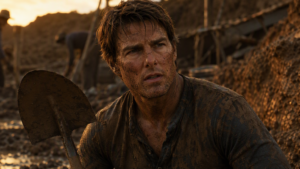

Kid Rock named his new album “Halfway 2 Jesus.” Halfway. Not even trying to pretend he’s all the way there, which, fine, I can respect the honesty. But then you look at the track list and see Jimmie Allen’s name on it, and suddenly “halfway” feels less like humble self-awareness and more like… a pretty generous description of where this project actually lands.
Wait, Who’s Jimmie Allen Again?
If you haven’t been following country music drama for the past couple years (no judgment, I barely keep up either), here’s the quick catch-up. Jimmie Allen was a rising country star, duets with Brad Paisley, CMA nominations, the whole trajectory. Then in 2022, a woman filed a lawsuit alleging he sexually assaulted her and that he filmed the encounter without her consent. A second accuser came forward not long after. Allen has denied wrongdoing, but his label dropped him, his management dropped him, and basically overnight the guy went from country radio staple to industry pariah.

And now he’s popping up on a “Christian” album. From Kid Rock. The same Kid Rock who’s built half his recent career on being the guy who says the thing everybody’s “too afraid” to say. I guess this is that, in a weird roundabout way – except instead of saying something edgy, he’s just… platforming someone with serious, documented allegations against him and slapping Jesus’s name on the project. That’s a choice. A really specific choice.
The “Christian Album” Part Is Doing a Lot of Work Here
Look, I’m not here to litigate anyone’s personal faith journey. People change, people seek redemption, whatever. But there’s something almost comically tone-deaf about branding a record as a spiritual, come-to-Jesus moment while featuring a guy accused of assaulting a woman and filming it without her knowledge. If this were an album about hard living and bad decisions, sure, maybe you could squint and call it thematically consistent. But “Halfway 2 Jesus” is marketed as redemption music. Redemption for who, exactly? And redeemed how?
Is This Actually About Faith, Or Is It About Something Else?
Here’s the thing – I don’t think this is really about faith at all. I think it’s about Kid Rock being Kid Rock. The guy has spent the last several years positioning himself as the anti-woke everyman, the one artist who refuses to bow to “cancel culture.” Featuring Jimmie Allen fits that persona a little too perfectly. It’s not an accident. It reads like a statement, intentional or not: I don’t care who you’ve “cancelled,” if I like your sound, you’re on my album.

“It’s not redemption if there’s no accountability attached to it – it’s just rebranding.”
And that’s really the crux of my issue with this whole thing. Redemption arcs require something. An acknowledgment, consequences, actual change, something. What we’ve got instead is a guy facing multiple sexual assault lawsuits getting a quiet reintroduction to the public via a feature on a record about getting right with God. No accountability step in between. Just a skip straight to “forgiven,” conveniently timed with a new album drop.
The Industry Loves a Quiet Comeback
This isn’t new, by the way. I’ve seen this pattern more times than I can count over fifteen years of covering music and entertainment. Someone gets accused of something awful, disappears from the spotlight for a bit (sometimes a year, sometimes less), and then slowly, carefully, gets reintroduced through a feature here, a guest verse there, a surprise cameo on someone else’s project. It’s a strategy. It works because people have short memories and forgiving algorithms. By the time the next news cycle rolls around, the story’s already old.
What’s different here, though, is the explicit religious framing. Usually these comeback features happen on pretty neutral ground – a pop song, a rap feature, nothing with a moral angle attached. Putting Allen on a gospel-adjacent, Jesus-branded project adds this extra layer of, I don’t know, spiritual cover? Like the album’s theme itself is supposed to pre-absolve anyone involved. “We’re all sinners, we’re all halfway there.” Sure. But some of these alleged sins come with actual lawsuits attached.
What This Actually Means
Honestly? I don’t think Kid Rock loses a single fan over this. His audience has made peace with him courting controversy as a brand strategy at this point, and this will probably just read as more of the same – another headline, another news cycle, another round of outrage from people who weren’t buying his albums anyway. That’s probably the calculation, if there even was one. Controversy sells, and “Halfway 2 Jesus” is getting way more attention right now because of this one feature than it probably would have gotten on musical merit alone.
But I do think it says something about how little “accountability” actually means in the music industry when there’s a profit angle attached to looking past it. Jimmie Allen hasn’t had his legal situation resolved. The allegations are serious – not vague, not he-said-she-said ambiguity, but specific, documented claims including the filming without consent part, which honestly might be the most disturbing detail in the entire case. And none of that mattered enough to keep him off a track list.
Maybe that’s the real takeaway here, more than anything about Kid Rock’s taste in collaborators or his religious branding choices. The industry’s “halfway” point on accountability for serious allegations seems to be… not very far at all. A couple years, a quiet comeback feature, and apparently you’re back in business. Just don’t expect anyone to ask too many questions about the destination.