Let’s get one thing straight before we go any further: HBO handing us a Game of Thrones movie set three centuries before the events we actually care about is a gamble. Aegon’s Conquest doesn’t have Jon Snow. It doesn’t have Tyrion cracking wise in a dungeon. What it has is a blank slate…
Let’s get one thing straight before we go any further: HBO handing us a Game of Thrones movie set three centuries before the events we actually care about is a gamble. Aegon’s Conquest doesn’t have Jon Snow. It doesn’t have Tyrion cracking wise in a dungeon. What it has is a blank slate, Valyrian steel, and dragons the size of apartment buildings, and that’s it. So if this thing is going to work, it needs a blueprint. And honestly? There’s no better blueprint sitting on a shelf than Peter Jackson’s Lord of the Rings trilogy.
I say this as someone who’s watched both franchises more times than I’d like to admit publicly. Game of Thrones gave us incredible TV, but let’s not pretend the ending didn’t leave a scar on a lot of us. Lord of the Rings, on the other hand, nailed the landing all three times. Twenty-plus years later, people are still rewatching the extended editions on a random Tuesday because they want to. That’s not nostalgia talking. That’s craft.
Give Us Characters We’d Follow Into a Burning Building
Here’s the thing about Lord of the Rings that gets overlooked because everyone’s busy talking about the battles: the emotional core of those films is a hobbit and his gardener walking to a volcano. That’s it. No prophecy twist, no last-minute betrayal for shock value. Just Frodo and Sam, slowly breaking, and us rooting for them the entire time because Jackson made sure we knew exactly who they were before anything bad happened to them.

Aegon’s Conquest has a built-in problem here. We know how this story ends. Aegon wins. The Targaryens take the Iron Throne. There’s no mystery in the outcome, so the mystery has to come from the people. Who was Aegon actually, as a person, not as a historical footnote in a book? What did Visenya and Rhaenys want for themselves, beyond “support husband, ride dragon”? If the movie treats these three as chess pieces moving toward a predetermined checkmate, it’s going to feel hollow. Fast. Give me messy siblings with competing agendas. Give me a Aegon who maybe doesn’t even want this, who’s dragged into conquering Westeros because his sister-wives are more ambitious than he is. That’s a character. A guy on a dragon doing dragon things is just a special effect.
Small Moments Matter More Than You’d Think
Some of the most quoted lines from Lord of the Rings aren’t even from the big speeches. “My precious.” “Second breakfast?” “You shall not pass.” These stick because they’re specific and a little weird and totally in character. House of the Dragon, to its credit, had some of this too (RIP Rhaenyra and Alicent’s friendship, we miss you). Aegon’s Conquest needs scenes that breathe. Not every minute has to be dragonfire and politics.
Can a Two-Hour Movie Even Handle a War This Big?
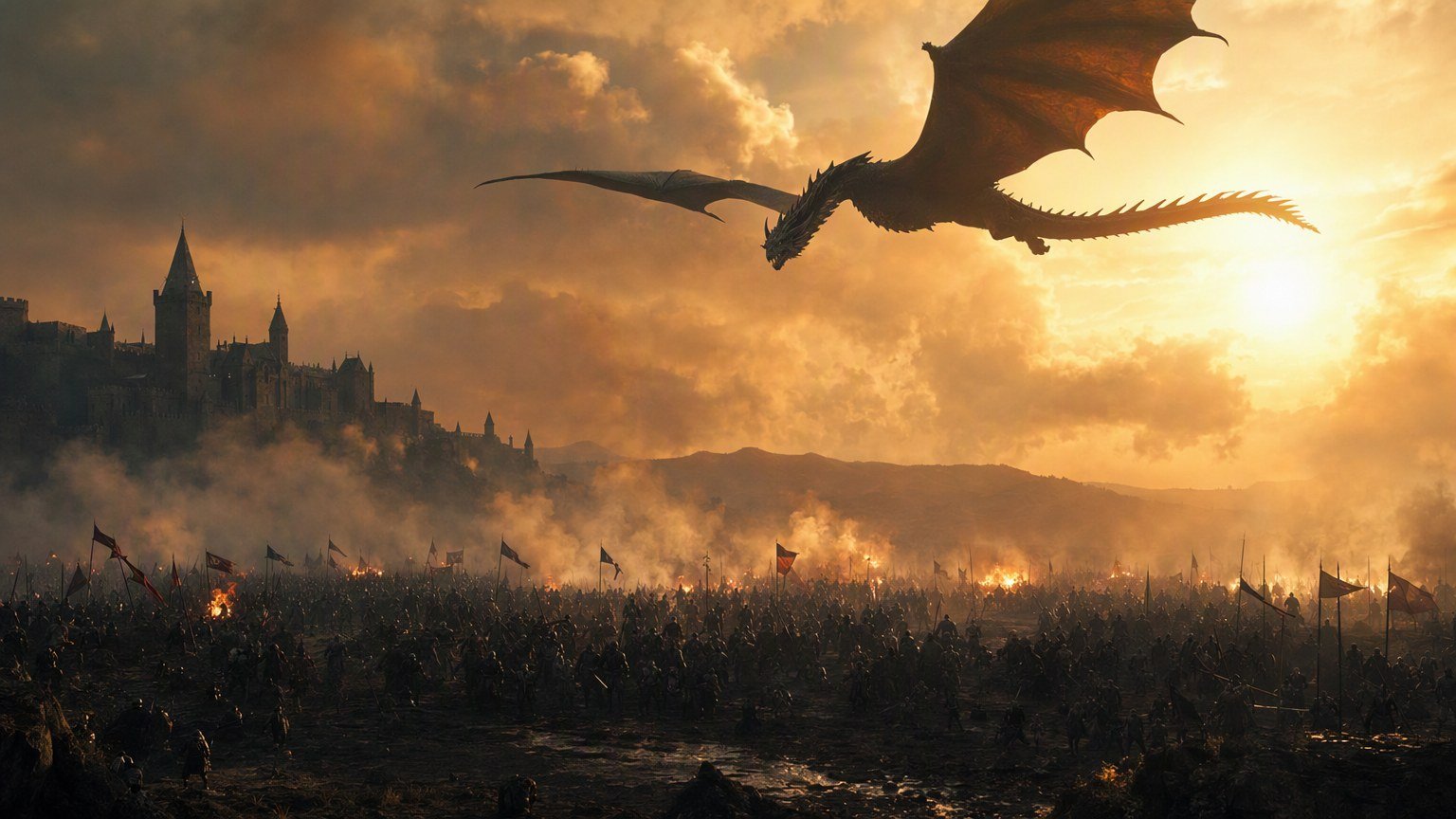
This is where I start to worry, not gonna lie. The Lord of the Rings trilogy had roughly nine hours (longer if you’re a real one and watch the extended cuts) to tell one continuous, forward-moving story. Aegon’s Conquest is reportedly a single film trying to cover the entire war that unified Westeros under House Targaryen. That’s three regions, multiple kingdoms, dozens of noble houses, and a timeline that in the books spans a couple of years. Cramming that into two hours is like trying to fit a Thanksgiving dinner into a lunchbox.
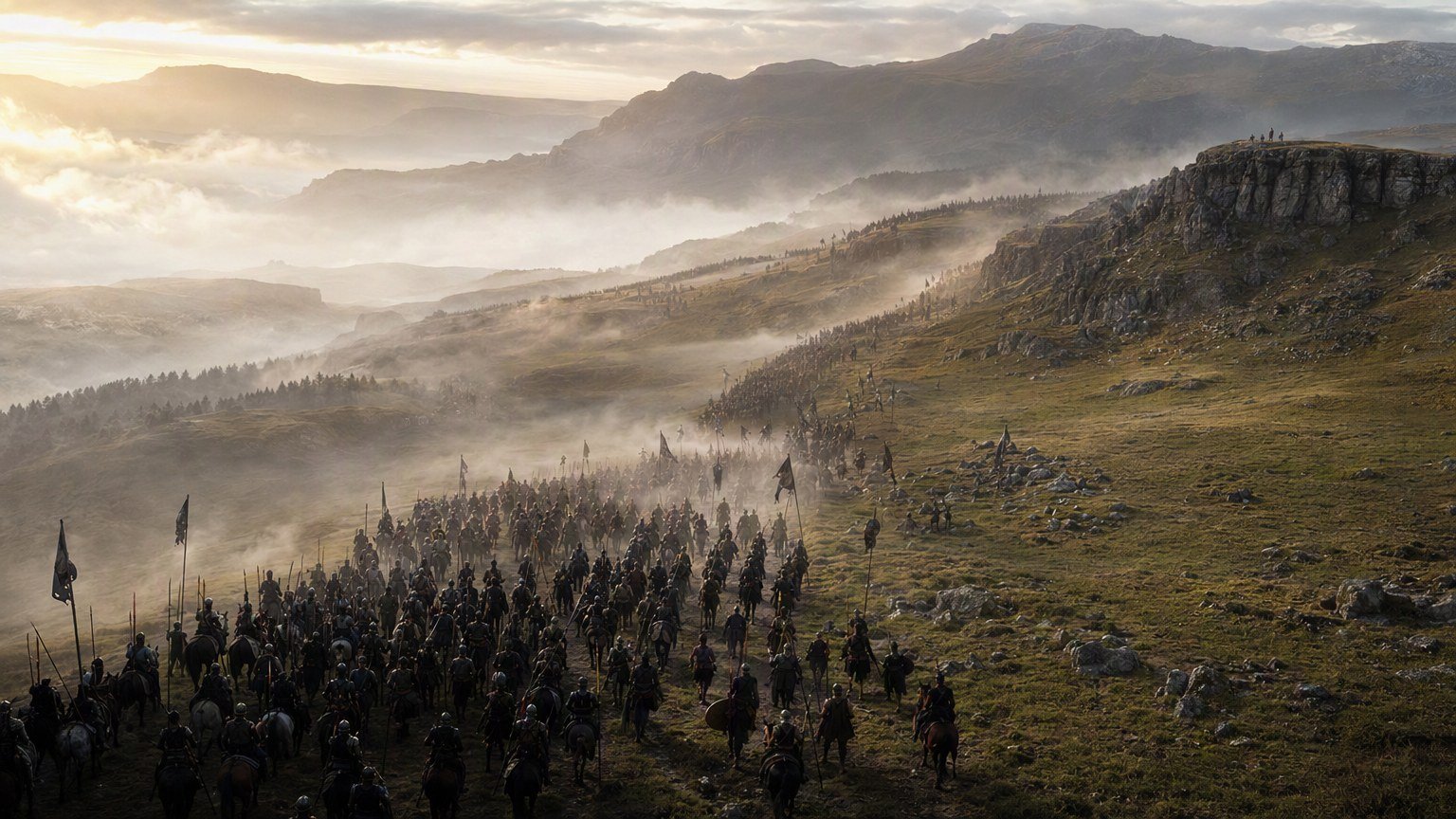
Jackson’s trick, and it really was a trick, was pacing that never felt rushed even when enormous amounts of plot needed to happen. The Battle of Helm’s Deep takes up almost an entire act of The Two Towers, and it works because we spent real time beforehand with Theoden, with the Rohirrim, with the stakes of what losing would actually mean for these specific people we’d come to know. Compare that to a lot of modern blockbusters where the big battle happens and you kind of shrug because you don’t know who half these soldiers are or why you should care if they die.
“The battle you remember isn’t the one with the most CGI. It’s the one where you’re scared for someone specific.”
If Aegon’s Conquest wants its battles (and there will be battles, obviously, dragons don’t just sit around) to actually land emotionally, it has to resist the urge to rush. Pick two or three key moments in the war and give them weight instead of trying to montage through the entire conquest like a historical highlight reel.
Stop Explaining Everything to Us
This one’s maybe the most important lesson, and the one I think Hollywood fantasy adaptations fumble the most. Lord of the Rings trusted its audience. Nobody sits down and explains the entire history of the Rings of Power in dialogue during the first act. We get it in bits, through Gandalf’s expression, through Bilbo’s unease, through what’s shown rather than told. The prologue narration exists, sure, but after that, the film lets the world speak for itself.
Game of Thrones based properties have a bad habit of over-explaining. House of the Dragon occasionally fell into this trap, with characters basically narrating the political situation to each other like they’re reading from a Wikipedia summary. “As you know, the Velaryons control the largest fleet in Westeros.” Yeah, we know, you don’t need to say it out loud, show me the ships.
Aegon’s Conquest is dealing with source material that’s basically a history book, Fire & Blood reads like an actual historical text, dry and clinical on purpose. The temptation is going to be enormous to just translate that into exposition dumps. Resist it. Trust that audiences can follow a map, trust that visuals can establish political tension without a character spelling it out, trust silence sometimes. Some of the most powerful scenes in Lord of the Rings have barely any dialogue at all. Think about Boromir’s death. Think about the lighting of the beacons sequence, no words needed, just fire jumping from mountain to mountain and a swelling score telling you everything.
What This Actually Means
Look, I want this movie to be good. I think there’s a genuinely great story buried in the Targaryen conquest, dragons uniting a continent through fear and fire is inherently cinematic, that’s not the issue. The issue is whether HBO and whoever’s steering this ship understand that spectacle without soul is just noise. Lord of the Rings proved, over twenty years ago now, that you can have the biggest battles ever put to film and still make audiences cry over a hobbit’s friendship. That’s the needle Aegon’s Conquest has to thread.
I’m cautiously optimistic. Cautiously. House of the Dragon has shown this franchise can still produce great character work when it slows down and lets people actually talk to each other instead of just plotting against each other. If Aegon’s Conquest borrows even half of what made Jackson’s trilogy a generational achievement, patient character building, earned battles, and faith in its audience, it could be something special. If it doesn’t, well, we’ll just have another expensive dragon movie nobody remembers in five years. We’ve seen that movie before too.