
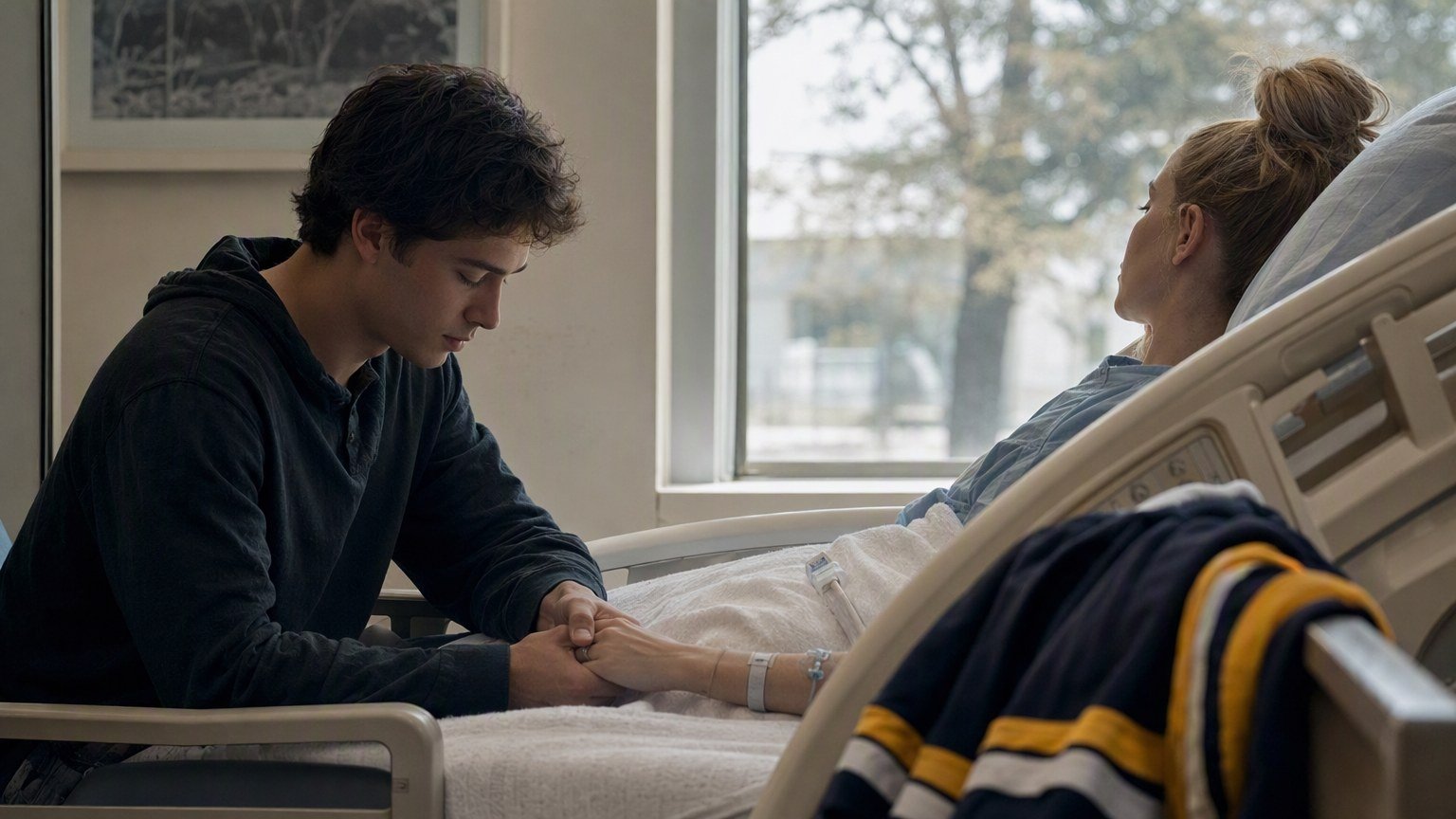
Milly Okabe spent six weeks believing she had pneumonia. The scan that proved otherwise, and the GoFundMe that followed, say more about young adult cancer care than the diagnosis itself.
Milly Okabe went to the hospital with flu-like symptoms and was sent home with a flu diagnosis. A second opinion produced antibiotics for pneumonia. For six weeks, by her own account, she “lived my life completely fine.” Then a follow-up scan showed the pneumonia hadn’t cleared, a CT scan found masses in her lungs and chest, and the 22-year-old was told she has stage IV adenocarcinoma. It is, in her words, incurable.
Her boyfriend, Nashville Predators draft pick Austin Roest, marked one month since that diagnosis with an Instagram post on September 30. The post is the visible part of a story that is really about everything that happened before anyone said the word cancer.
The six weeks between flu and stage IV
Okabe’s path to diagnosis is a short case study in how early cancer symptoms get absorbed into more ordinary explanations. Flu-like symptoms read as the flu. A second look reads as pneumonia. Antibiotics are prescribed, symptoms seem to resolve enough to resume normal life, and the underlying disease keeps moving. It took a scheduled follow-up, not a new symptom, to reopen the question.
That sequence is not unusual for younger patients. Clinicians weighing probability over possibility will reach for the common explanation first, and stage IV disease in a 22-year-old is not the common explanation. The cost of that math shows up later, in scans that find “a couple of masses” where a chest X-ray once showed scar tissue from something else.
An instinct that moved faster than the workup
Roest told Us his “gut instinct” told him something was wrong well before the imaging confirmed it. “When we went to the first doctor and he said it was a flu, I knew for sure it wasn’t that,” he said. Okabe credited him directly: “Austin looked at me and said, ‘This might be something else. I want you to get looked at further.'” The diagnosis still took the standard route through scans and specialists. His read on her just got there first.
A relationship, timestamped in public
Roest’s anniversary post is part of a pattern that has become routine for people living through a medical crisis in public: the dated milestone. One month. One hundred days. One year. Each post functions as both an update and a ritual, a way of making an unfolding private emergency legible to an audience without requiring a new explanation every time.
“Throughout all of this, you have been the most fearless person I’ve ever seen,” Roest wrote. “You showed composure in moments people would never expect you to.” Okabe answered in the comments: “Couldn’t do it without u!” The exchange is small, but it is also doing work: it tells thousands of people exactly where things stand without either of them having to say it twice.
What the audience gives back
Okabe said the response to going public has included outreach from cancer survivors offering advice and encouragement. That kind of unsolicited support, arriving from strangers rather than a care team, is one of the clearer upsides of narrating illness in real time. It does not replace treatment, but it changes who shows up around the person receiving it.
The GoFundMe detail that matters
A fundraiser organized for Okabe’s treatment costs has raised close to $70,000. That figure is worth sitting with. Roest is a sixth-round NHL draft pick, a tier of prospect for whom a professional contract is possible but far from guaranteed, and nowhere near the income associated with established players. A GoFundMe becoming the primary financial backstop for stage IV cancer treatment, even in a household adjacent to professional sports, is a quiet reminder that crowdfunding has become the default answer to cancer costs for a lot of people who would not look, from the outside, like they need it.
Okabe said she has started treatment and plans to “keep fighting.” The diagnosis has not changed. What has changed, over one month, is how visibly she and Roest have chosen to carry it.