
One unscripted interview is a moment. Two in a week is a pattern, and it says something about how quickly a 121-loss team found a new identity.
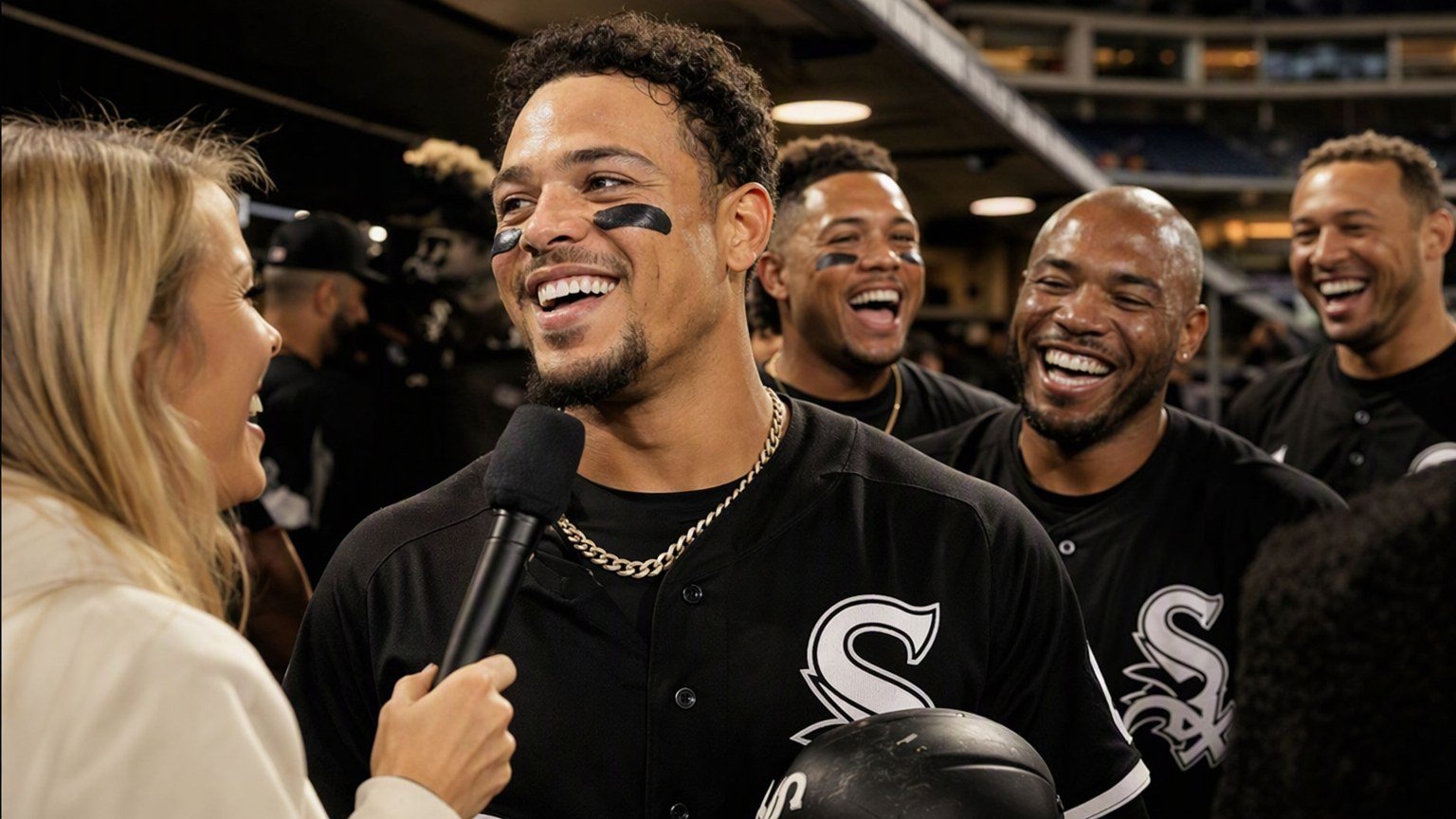
Munetaka Murakami grabbed the microphone from NBC Sports’ Britney Eurton in the Chicago White Sox clubhouse on Wednesday night and declared, unprompted, that he was drunk. Then he tried to explain the hangover timeline. Then he gave up. “Sorry, I don’t speak English!” he yelled, in English, after the White Sox beat the Houston Astros 7-3 to win their American League Wild Card Series.
It was funny. It was also the second time in a week that Murakami turned a routine clubhouse interview into a viral clip, and that repetition is the actual story.
A pattern, not a moment
Six days earlier, when the White Sox clinched their postseason berth on September 24, CHSN reporter Brooke Fletcher asked Murakami to rate his feelings on a scale of 1 to 10. He screamed back, “No 10. 100!” Asked how many champagne bottles he’d opened, he gave the same answer: “100!” Asked what it meant to celebrate with his team, he shouted into the mic, “I’m Japanese!”
Murakami typically works through an interpreter with White Sox media. He is 26, a four-time NPB All-Star in Japan before arriving in the United States in December 2025. The translator exists for a reason: structured, deliberate answers. What keeps breaking through in these clubhouse scrums is something the interpreter can’t manage in real time, pure adrenaline, delivered straight into a live microphone with no filter and no handler. One instance of that is an outlier. Two in the same postseason is a performer who has figured out that the chaos of a clinching celebration is the one setting where the usual media training doesn’t apply, and he’s leaning into it.
The team underneath the clip
The viral interviews are landing because of what they’re attached to. Two years ago, the White Sox lost 121 games, an American League record. Last year they lost 100 and missed the postseason for a fourth straight season. Now they’ve won a Wild Card Series and are headed into the American League Division Series against the division-rival Cleveland Guardians, starting Saturday, October 3.
That turnaround is the context that makes Murakami’s screaming celebrations land differently than they would on a team that’s used to winning. A historically bad roster doesn’t get to be loose and loud by accident. Manager Will Venable described the Astros series as “emblematic” of how the team has won all season, pointing to “contributions from everywhere,” from Sammy Antonacci “setting the tone” to pitchers “getting the job done” in whatever role they’re handed. The culture Murakami keeps shouting about in his interviews is the same thing Venable is describing in his, just translated into a different register.
What Murakami says when he’s not shouting
Before the Wild Card Series began, Murakami was more measured, speaking through his interpreter about joining a team that had just come off back-to-back historically bad seasons. “Obviously I don’t really know what kind of team atmosphere was here the last two years when we did lose 100 games, but I’m right here at this moment in time, so this is our culture,” he said. “It’s a winning culture, as you can see, and that’s how we have been proceeding. This is not the end. This is just the start of our, let’s say, postseason run.”
That quote matters because it shows Murakami is aware of the gap between where this franchise was and where it is now, and he’s choosing to frame himself as part of the fix rather than a bystander to it.
Why this travels beyond the box score
A clip of a player yelling “I’m drunk” into a national broadcast doesn’t need context to be shareable. But the reason it keeps happening, and the reason it keeps getting picked up, is that Murakami has become the emotional shorthand for a team whose on-field turnaround is still hard to summarize in one sentence. A 121-loss roster becoming an ALDS roster in two years is a bigger story than any highlight package can carry efficiently. A newly arrived NPB star screaming into a microphone because he’s too happy to stay composed does the same job in six seconds.
The series against Cleveland starts Saturday. If the White Sox keep winning, expect more interviews like these, not because Murakami is chasing the moment, but because the team now has a reason to hand him the microphone.