Nathan Fielder moved in with Elizabeth Holmes. Let that sink in for a second. Not “interviewed her.” Not “sat across from her in a sterile conference room for a Netflix special.” He apparently lived in her orbit long enough to make her cry on camera and grill her husband like a guy who owes him money. If that sounds insane, well, that’s kind of the point.
Wait, He Did What Now?
The trailer for “You Can See Everything” dropped and honestly, I had to watch it twice because I wasn’t sure I was parsing it correctly. This is the guy from “The Rehearsal” and “Nathan For You,” a man whose entire career is built on making people so uncomfortable they forget the cameras are rolling. And now he’s turned that particular skill set on Elizabeth Holmes, the Theranos founder who’s currently serving an 11-plus year prison sentence for defrauding investors out of hundreds of millions of dollars.
I’ve watched a lot of Fielder’s work over the years, and there’s always been this question hanging over it: is this comedy, is this documentary, is this some third thing we don’t have a name for yet? With Holmes as the subject, that question gets a lot heavier. This isn’t a guy pranking a coffee shop owner into rebranding. This is one of the most notorious white-collar criminals of the last decade, someone who literally faked blood tests that real patients relied on for real medical decisions. People got hurt by this. Not metaphorically. Actually hurt.
So Why Does This Feel Different From Every Other Holmes Doc?
Because we’ve had the Holmes content already, right? There was the HBO documentary. There was “The Dropout” with Amanda Seyfried doing that eerie deep-voice impression. There was basically an entire cottage industry built around dissecting how one woman in a black turtleneck convinced the world’s smartest investors she’d invented a medical miracle. So what’s left to say?
Turns out, maybe a lot. Because none of those projects got this close. None of them had the subject literally in the room, unguarded, for what sounds like an extended period. And knowing Fielder’s whole deal, “unguarded” is the operative word here. He doesn’t do gotcha journalism in the traditional sense. He builds a strange, slow-burn kind of trust, or the appearance of it, and then just… waits. Lets people incriminate themselves with their own silence, their own weird tangents, their own defensiveness.
The Husband Angle Is Where It Gets Really Interesting
Billy Evans, Holmes’s partner, is apparently also in the crosshairs here, and this is where I think the documentary gets its teeth. Evans has mostly stayed out of the spotlight compared to Holmes, which, fair, he wasn’t the one convicted of fraud. But he’s been by her side through the trial, the sentencing, all of it, and from what I can tell, Fielder isn’t letting him off easy just because he wasn’t the one holding the fake blood analyzer.
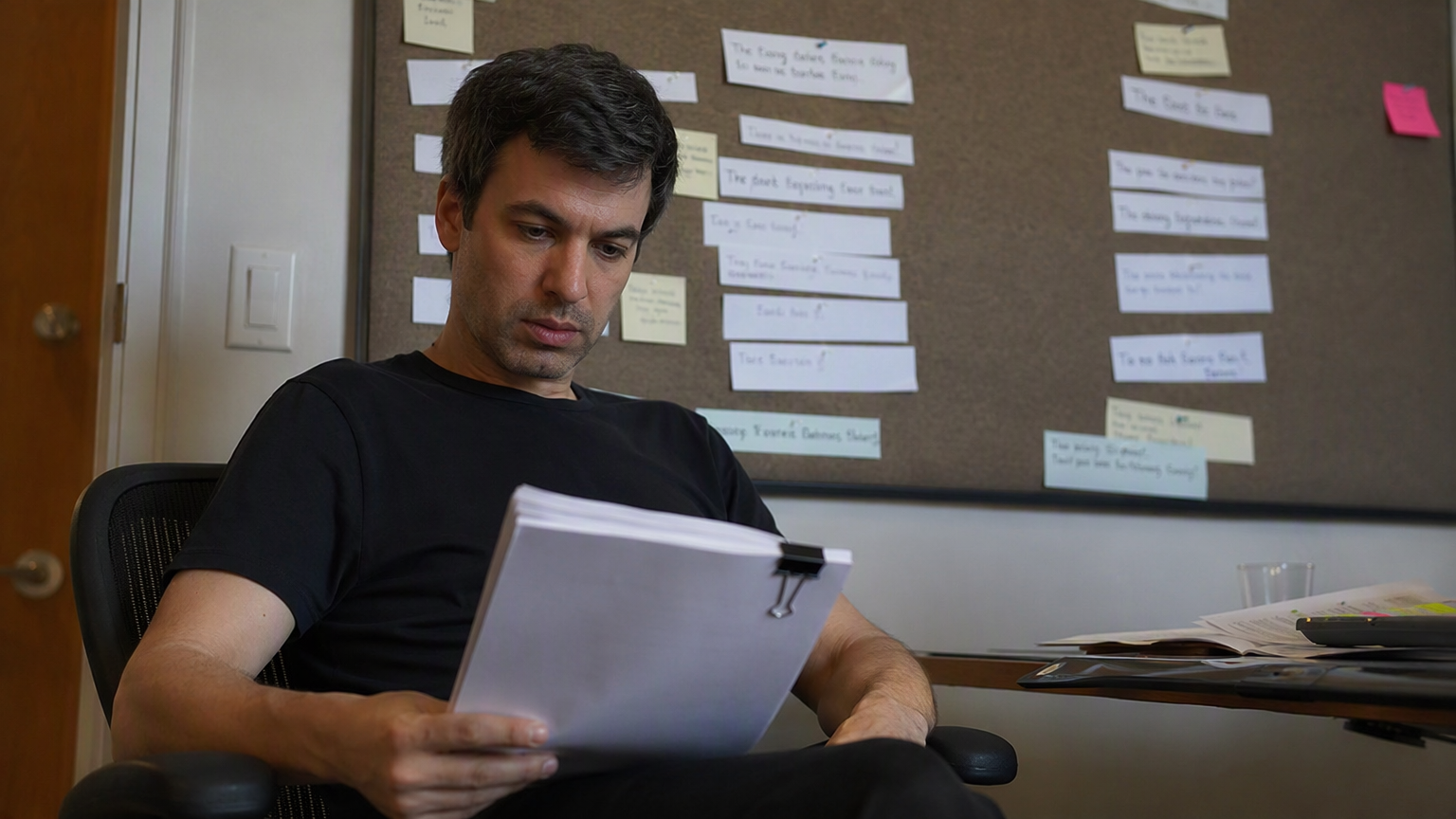
“I make her cry” is not a sentence you expect to see in a trailer description for a documentary about a convicted fraudster, and yet here we are.
Look, I have complicated feelings about this. On one hand, Holmes has shown approximately zero real accountability in most of her public appearances since the conviction. She’s talked about her “vision,” about being misunderstood, about the pressures of Silicon Valley culture, in ways that always felt a little too rehearsed for my taste. So if Fielder’s approach cracks through that shell even a little, genuinely, not for shock value, that’s compelling television. On the other hand, I’ve seen this pattern before where a documentary gets marketed on the promise of an emotional breakdown, and then the actual moment is way less revelatory than the trailer made it look. We’ll see.
Is This Actually About Holmes, Or Is It About Us?
Here’s the thing that’s nagging at me. Fielder’s best work has never really been about the people he’s filming. It’s about the audience, about our appetite for watching people squirm, about how thin the line is between empathy and exploitation when there’s a camera involved. “The Rehearsal” wasn’t really about the guy who wanted to practice telling his friend the truth about a bet. It was about how far we’ll let someone go in the name of “helping,” and how uncomfortable that gets when you really sit with it.
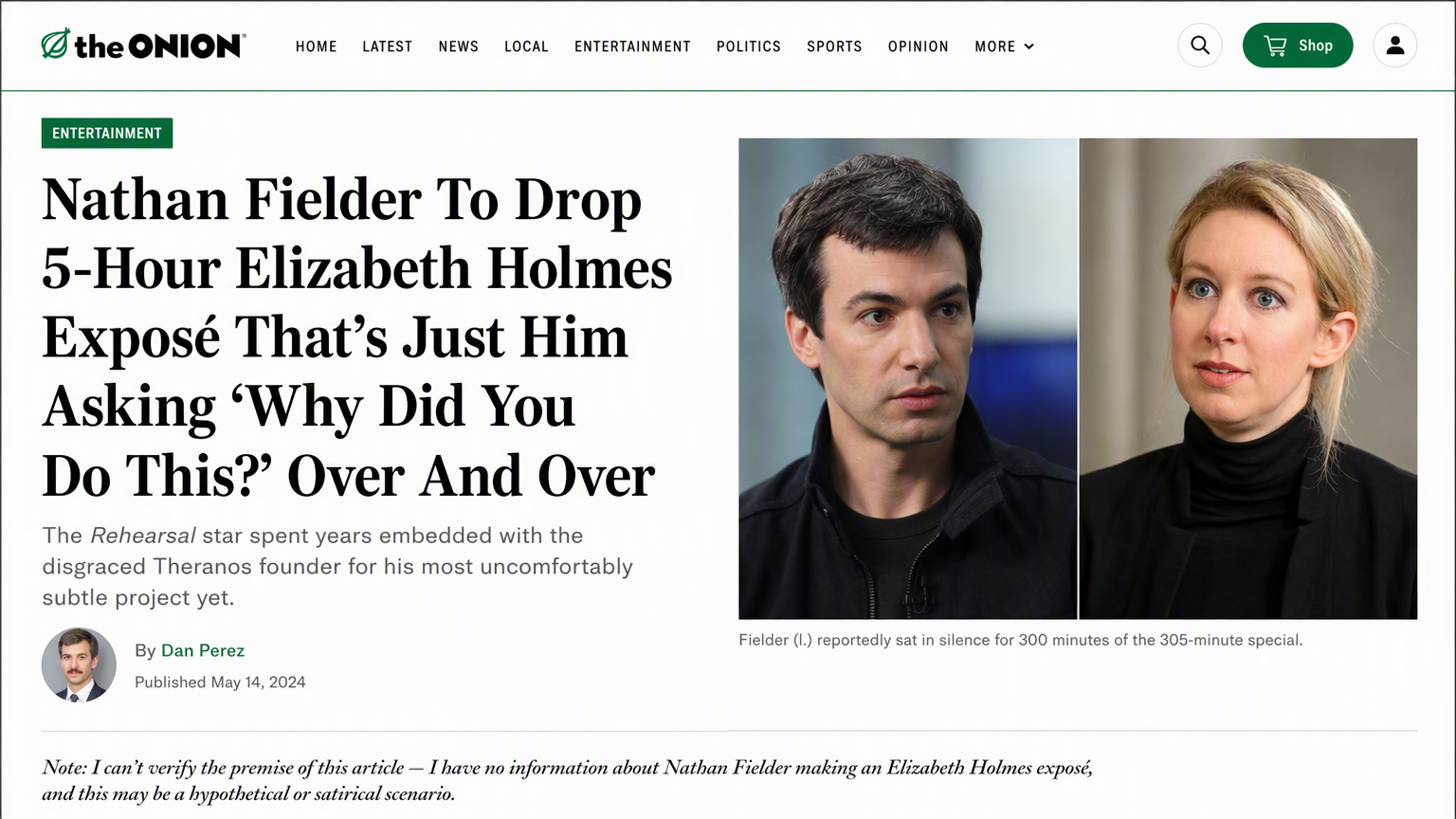
So when I watch this trailer, I’m not just wondering what Holmes says or how she reacts. I’m wondering what Fielder is trying to say about all of us who can’t stop being fascinated by her. Because let’s be honest, the Theranos saga became a genuine cultural obsession not just because the fraud was massive, but because Holmes herself was such a bizarre, magnetic figure. The voice. The turtlenecks. The unblinking stare in interviews. We turned her into a character before this documentary even existed. Fielder just might be the first person willing to point the camera back at that whole phenomenon and ask, kind of, what exactly is wrong with us.
Not gonna lie, that’s a much more interesting documentary than another straightforward “here’s how the fraud happened” retelling. We already know how the fraud happened. There have been podcasts, books, a whole miniseries. What we don’t know is what happens when someone genuinely strange, in his own right, spends real time with someone genuinely strange, and neither of them is performing exactly what we expect.
What This Actually Means
I think this documentary is going to be divisive in a way most true crime content isn’t, and honestly, I think that’s a good sign. Some people are going to watch this and feel like Fielder humanized a woman who doesn’t deserve it, who scammed sick people and lied to a board full of billionaires and still somehow avoided real reflection on camera for years. Other people are going to watch it and feel like they finally saw something real crack through, however uncomfortable that is to sit with.
My honest prediction? It’s probably going to be both. Fielder rarely gives you a clean moral takeaway, and I don’t think that’s an accident. It’s not entirely clear yet what “unflinching” really means here until the full thing drops, but based on the trailer alone, it seems like nobody involved gets to walk away looking simple. Not Holmes, not Evans, and maybe, if Fielder’s doing his job right, not us either.