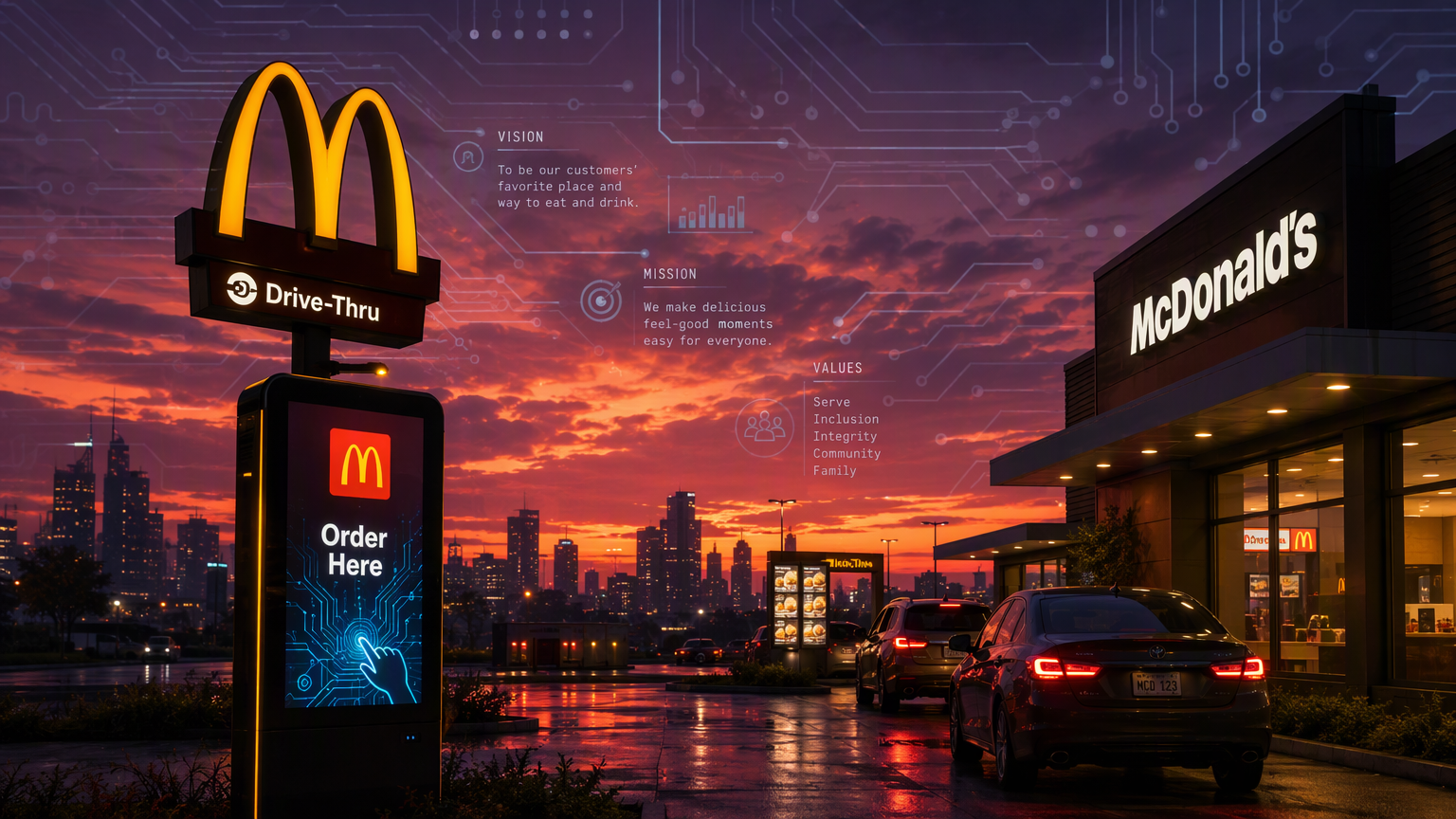
Eight point five billion dollars. Let that number sit for a second. That’s what McDonald’s just told investors it’s dropping on technology over the next few years, and if you’re picturing some sleek little app update, think bigger. Way bigger. This is a company that’s basically declaring war on the drive-thru lane itself, and the target on the wall has “Burger King” written all over it.
Okay, So What’s Actually Happening Here
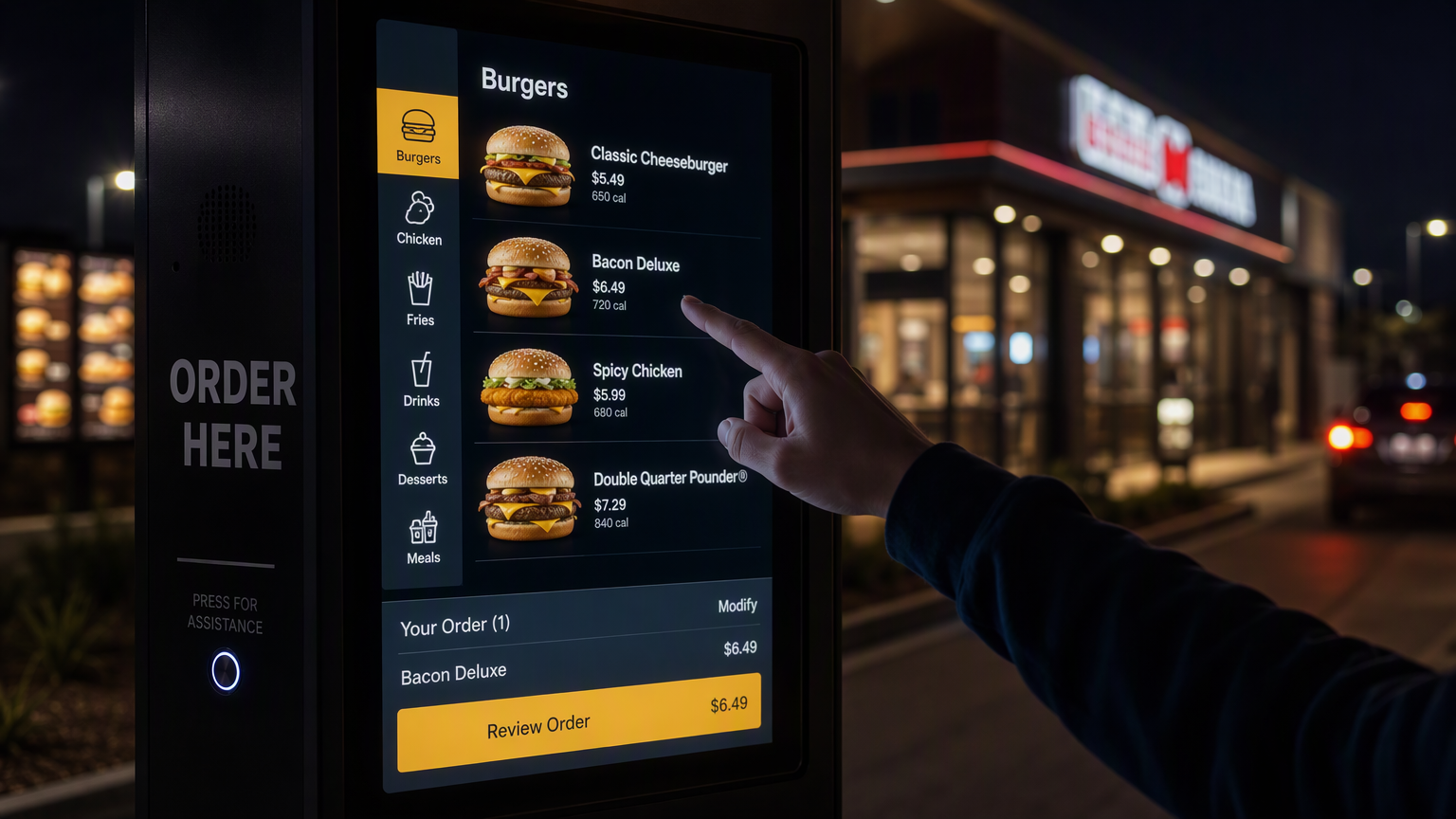
McDonald’s held its investor day and dropped this number like it was nothing – $8.5 billion earmarked for tech through the next several years. We’re talking AI-powered kitchens, digital menu boards that supposedly learn what you want before you do, loyalty app overhauls, and drive-thru systems that are apparently going to make ordering faster than you can say “can I get a number 4 with a Coke.” Ambitious? Sure. A little much? Also sure, but stick with me here.
Here’s the thing though – this isn’t really about McDonald’s chasing some shiny new toy because Silicon Valley told them to. It’s about market share, plain and simple. Burger King’s parent company, Restaurant Brands International, has been quietly (and not so quietly) clawing back ground with renovated stores, better app promos, and honestly just… trying harder than they used to. And McDonald’s, who’s been the undisputed king of fast food for what feels like forever, apparently felt that heat enough to write a check the size of a small country’s GDP.
The Drive-Thru Obsession
I have to admit, the drive-thru focus makes sense when you think about it. Something like 70% of McDonald’s orders in the US come through that little window, not the counter, not the app (yet). So if you’re going to spend billions trying to out-tech a competitor, that’s exactly where you’d throw the money. AI voice ordering, predictive suggestions based on weather or time of day, dynamic menu pricing… it’s basically Amazon’s playbook but for cheeseburgers.
But Is This Really About Burger King, Or Something Bigger?
Look, I don’t totally buy that this is just a Burger King problem. Yeah, that’s the headline everyone’s running with (myself included, clearly), but if I’m being honest, this feels like it’s about the entire fast food landscape shifting under McDonald’s feet. Chipotle’s been eating into younger demographics for years. Wendy’s has gotten genuinely funny and clever with its marketing. And don’t even get me started on how much ground delivery apps have carved out of what used to be pure McDonald’s territory.
So sure, Burger King’s the convenient boogeyman in this story because they’re the direct, decades-old rival. Coke versus Pepsi energy. But I’d bet money this $8.5 billion is more of a “we need to modernize before we get left behind entirely” move than a “let’s specifically crush Burger King” move. Companies rarely admit the boring truth in investor presentations though – “we’re scared of becoming irrelevant” doesn’t exactly inspire confidence the way “we’re taking market share from our rival” does.
“This is McDonald’s trying to buy its way back into being the default choice, not just a choice.”
The Part Everyone’s Glossing Over
What’s interesting here – and something I haven’t seen enough people talking about – is what this actually means for the people working these jobs. Every time a fast food chain announces some massive tech investment, there’s this unspoken subtext about labor. AI-driven kitchens and automated ordering systems don’t need as many hands. McDonald’s isn’t going to come out and say “we’re investing billions to eventually need fewer employees,” but c’mon. That’s part of the calculus. It has to be.
I’ve seen this pattern before with self-checkout at grocery stores, with automated kiosks at fast food joints already, with basically every “efficiency” upgrade retail and food service has rolled out over the past decade. It starts as “enhancing the customer experience” and it usually ends with fewer people on the clock. Not always! But usually.
And here’s another wrinkle – can McDonald’s even execute on this at the scale they’re promising? This is a company with something like 40,000 locations worldwide, most of them franchised, not corporately owned. Getting a franchisee in rural Ohio to adopt the same AI kitchen system as a flagship location in Chicago is… complicated. Historically, McDonald’s tech rollouts have been kind of a mixed bag. Remember when they tried the AI drive-thru voice ordering thing with IBM a couple years back? They quietly killed that partnership after it kept mishearing orders and going viral for all the wrong reasons (there’s a whole genre of TikToks dedicated to that chaos, honestly go look it up, it’s pretty funny).
Franchisees Might Not Be Thrilled
This is the part that doesn’t get enough attention in these big flashy headlines. Franchise owners are the ones who actually have to pay for a lot of this tech, at least in part. McDonald’s corporate can announce $8.5 billion all day long, but if that cost trickles down to individual restaurant owners who are already dealing with rising beef prices, labor costs, and rent, you’re going to get some pushback. Not gonna lie, I’d be curious to sit in on some of those franchisee association meetings right about now.
What This Actually Means
So where does this leave us? McDonald’s is making a massive, very public bet that technology – not new menu items, not clever ad campaigns, not even price cuts – is what’s going to keep it on top. And maybe they’re right. Maybe in five years we’re all ordering Big Macs through some AI system that knows our order better than our own family does, and Burger King’s playing catch-up the whole way.
Or maybe this ends up being one of those cautionary tales business schools use later – a company that spent billions trying to out-tech a problem that was never really about technology in the first place. Fast food success has always come down to speed, consistency, and honestly, nostalgia. You don’t go to McDonald’s because the app is slick. You go because you know exactly what that fry is gonna taste like before you even order it.
Can $8.5 billion buy back that kind of trust and habit if it starts slipping? That’s the real question here, and it’s not one an investor day slideshow can answer.