





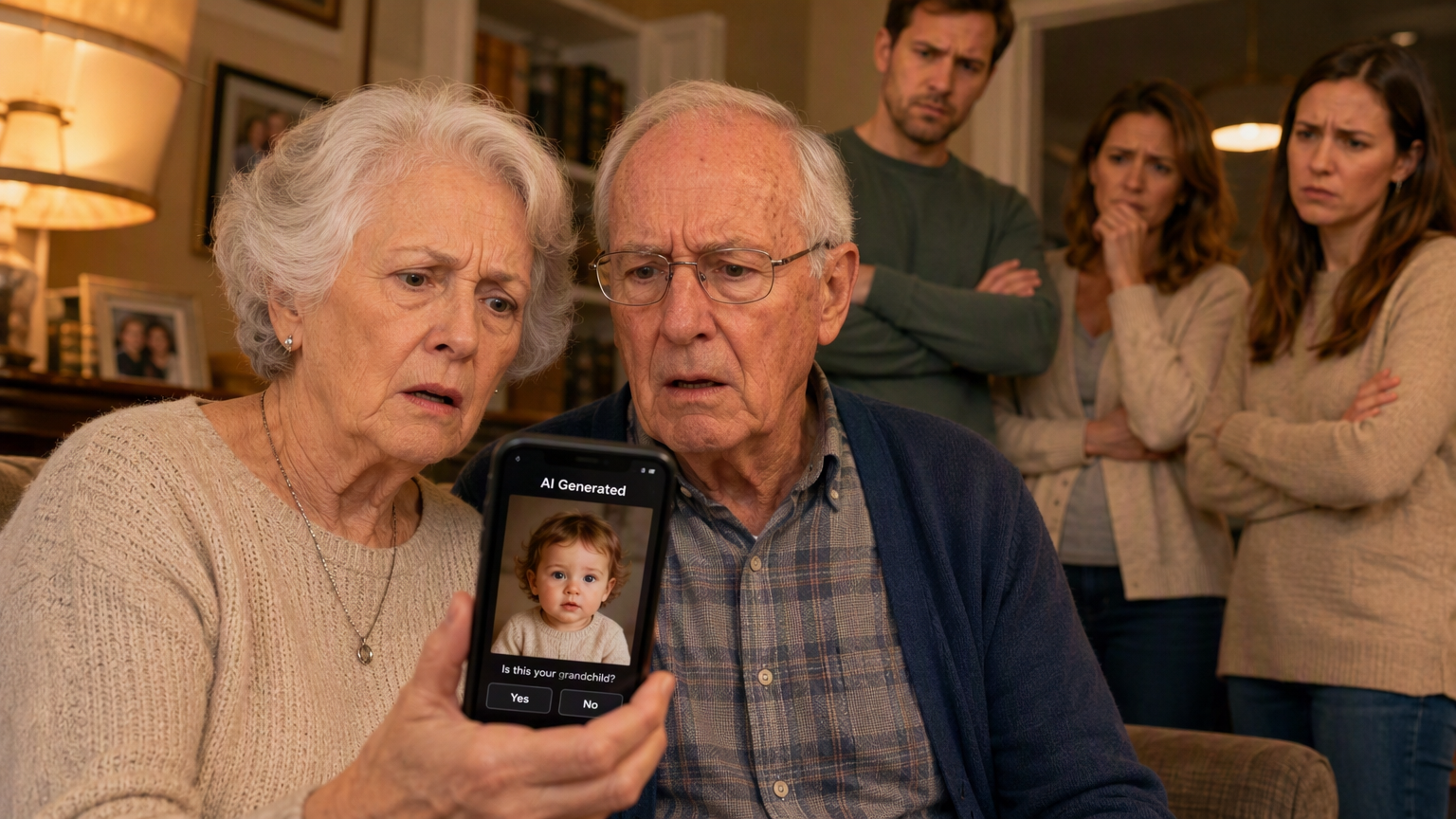
My mother-in-law texted my wife an AI-generated photo of our daughter last month. Except it wasn’t our daughter. It had her face, sort of, stretched over some uncanny-valley toddler body wearing a dress she’s never owned, standing in a garden we’ve never been to. My wife stared at it for a solid ten seconds before showing me. “Is this… is this supposed to be Emma?” Yeah. Apparently it was.
Wait, People Are Actually Doing This?
Turns out this is a whole thing now. Grandparents – boomers specifically, though I hate lumping an entire generation together like that – have discovered AI photo generators and they are having the time of their lives. Feed it a few real pictures of the grandkids, type in a prompt like “grandson as a superhero” or “granddaughter at Christmas in Paris,” and boom. Instant fantasy photo. No actual trip to Paris required.
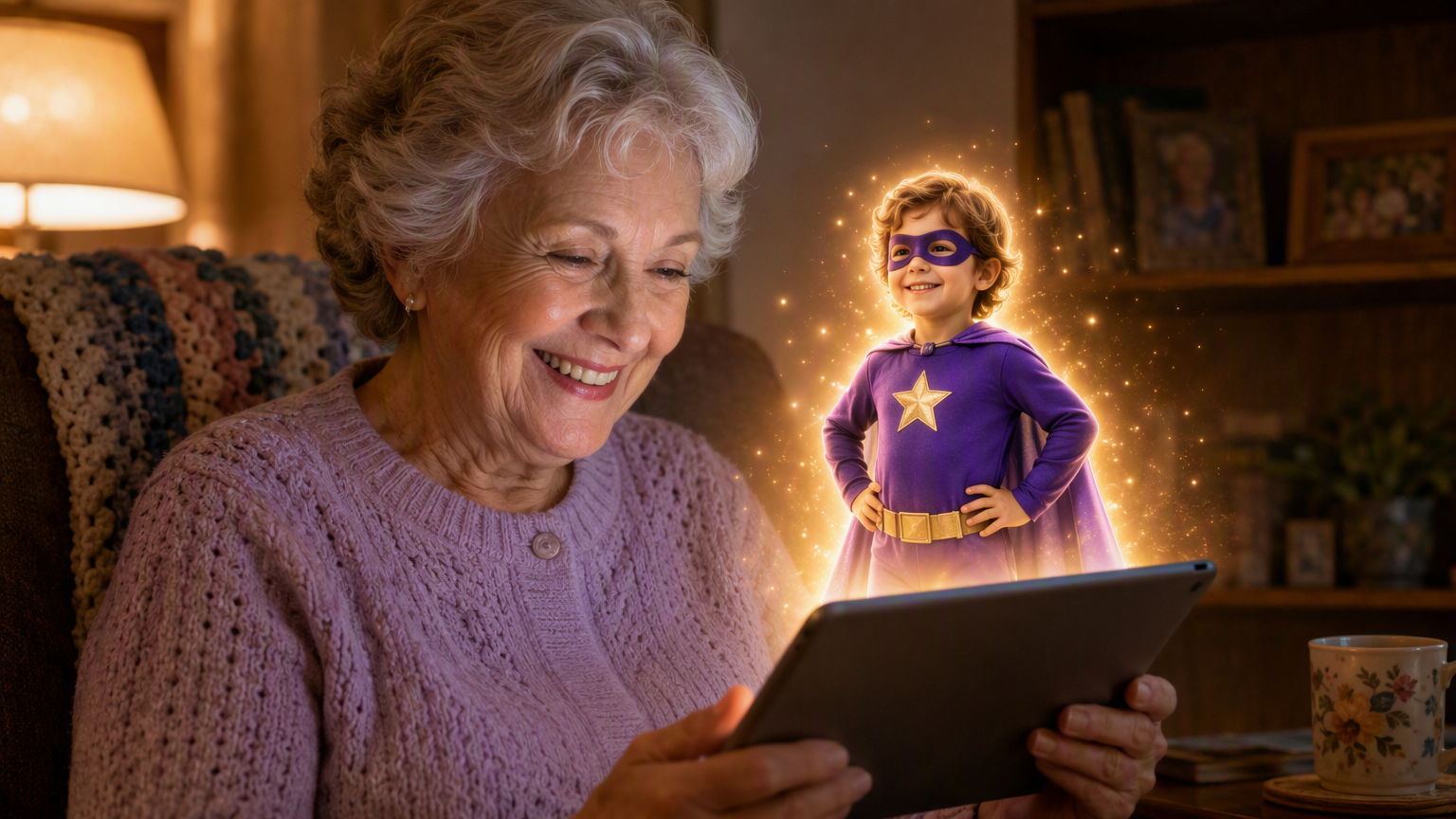
And here’s the thing, I get the appeal. Grandparents want more photos, more moments, more of their grandkids doing cute stuff. AI just… hands it to them. No waiting for the parents to actually take the kid somewhere photogenic. No begging for updates. Just type a sentence and get a picture that looks kind of like your grandchild doing something adorable. It’s basically instant gratification for people who spent decades waiting for photo prints to develop at the drugstore.
But Millennial Parents? Not Having It.
Meanwhile the parents – mostly millennials, based on what I’ve seen floating around online – are reacting like someone photoshopped their kid into a crime scene. And look, I understand the reaction even if it seems a little dramatic on the surface. There’s something deeply weird about seeing your actual child’s face grafted onto a fake body in a fake place doing a fake thing. It’s not a memory. It’s not real. It’s basically a deepfake of your three-year-old, and once you say it that way, the discomfort makes a lot more sense.
So Why Does This Bother People So Much?
I think it comes down to what a photo actually means to different generations. For a lot of grandparents, a photo is just… a nice image. Something to put on the fridge or send to their friends at bridge club. The truth of it matters less than the feeling it gives them. For millennial parents though, we’ve grown up documenting basically everything, and I think that’s made us weirdly protective of what’s real versus what’s manufactured. We’ve watched deepfake scandals, AI scams targeting grandparents (ironic, right?), and endless debates about consent and digital identity. So when Grandma sends an AI image of your kid riding a unicorn that never happened, it doesn’t feel cute. It feels like a tiny violation.
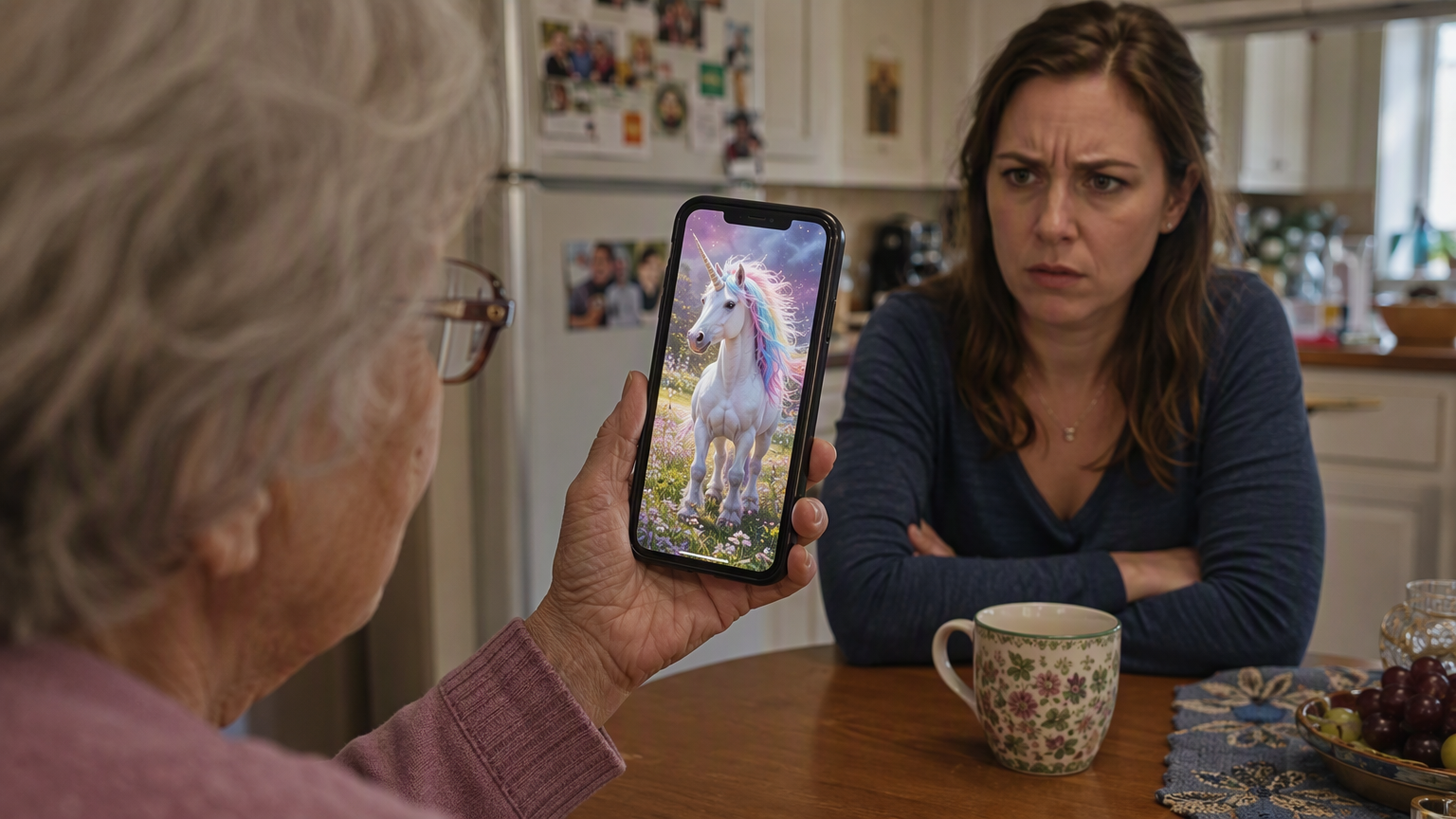
“I didn’t get so upset because it looked bad – I got upset because it wasn’t her. It felt like my mom created a version of my daughter that doesn’t exist, and now that fake version is floating around in group chats.”
That quote (paraphrased from one of the Reddit threads blowing up about this) sums up the whole conflict pretty well, honestly. It’s not really about image quality. It’s about ownership. Whose face is it? Whose story gets told? And who gets to decide what’s real enough to share?
The Consent Problem Nobody’s Talking About
Here’s what’s actually bugging me about all this, and it’s not really the AI part. It’s the consent part. These are little kids. They can’t consent to having their faces uploaded into an AI tool, manipulated, and then shared out to who-knows-how-many family group chats and probably Facebook too (let’s be honest, it’s ending up on Facebook). Once that image exists, it exists. It could get used to train more models. It could get reposted somewhere weird. And the kid never got a say in any of it.
Not gonna lie, this is where I land firmly on the parents’ side. I know that probably makes me sound like an uptight millennial dad, and fine, maybe I am. But we’re at this weird inflection point where grandparents are early, enthusiastic adopters of a technology that has genuine risks nobody’s fully mapped out yet. There have already been scam cases where AI-generated voice and image tools were used to trick grandparents into thinking a grandchild was in trouble. So it’s not like this technology exists in some harmless bubble. It cuts both ways.
It’s Not All Doom, Though
I’ll admit there’s a sweeter version of this story too. Some grandparents live far away, can’t travel much anymore, and use these tools to imagine milestones they’ll never physically witness – a graduation, a wedding, whatever. There’s something almost touching about an 80-year-old grandmother generating an image of her granddaughter in a wedding dress just because she wants to picture it, even knowing she probably won’t be around to see the real one. That’s not malicious. That’s just grief and love tangled up together, expressed through a tool that happens to be new and unfamiliar to a lot of us.
What This Actually Means
So where does this actually go from here? I think we’re heading toward some awkward family conversations that nobody wants to have but everyone’s going to need to have anyway. Parents are going to have to set boundaries (“please don’t upload photos of my kid to AI tools”) and some grandparents are going to feel hurt or confused by that, because from their perspective they’re just being creative and loving. Neither side is really wrong here, they’re just operating from completely different relationships with technology and trust.
My guess? This gets messier before it gets better. More families are going to hit this exact conflict as these tools get easier to use and more grandparents get comfortable with them. And honestly, I don’t think there’s a clean resolution coming. Some families will land on “absolutely not, ever.” Others will shrug and let Grandma have her fun. Most will probably end up somewhere in the uncomfortable middle, doing the thing families do best – not really resolving it, just kind of tolerating it while quietly rolling their eyes in the group chat.
As for us? We had the conversation. My mother-in-law wasn’t thrilled, but she gets it now. Mostly. I think. We’ll see what shows up in the group chat next week.


