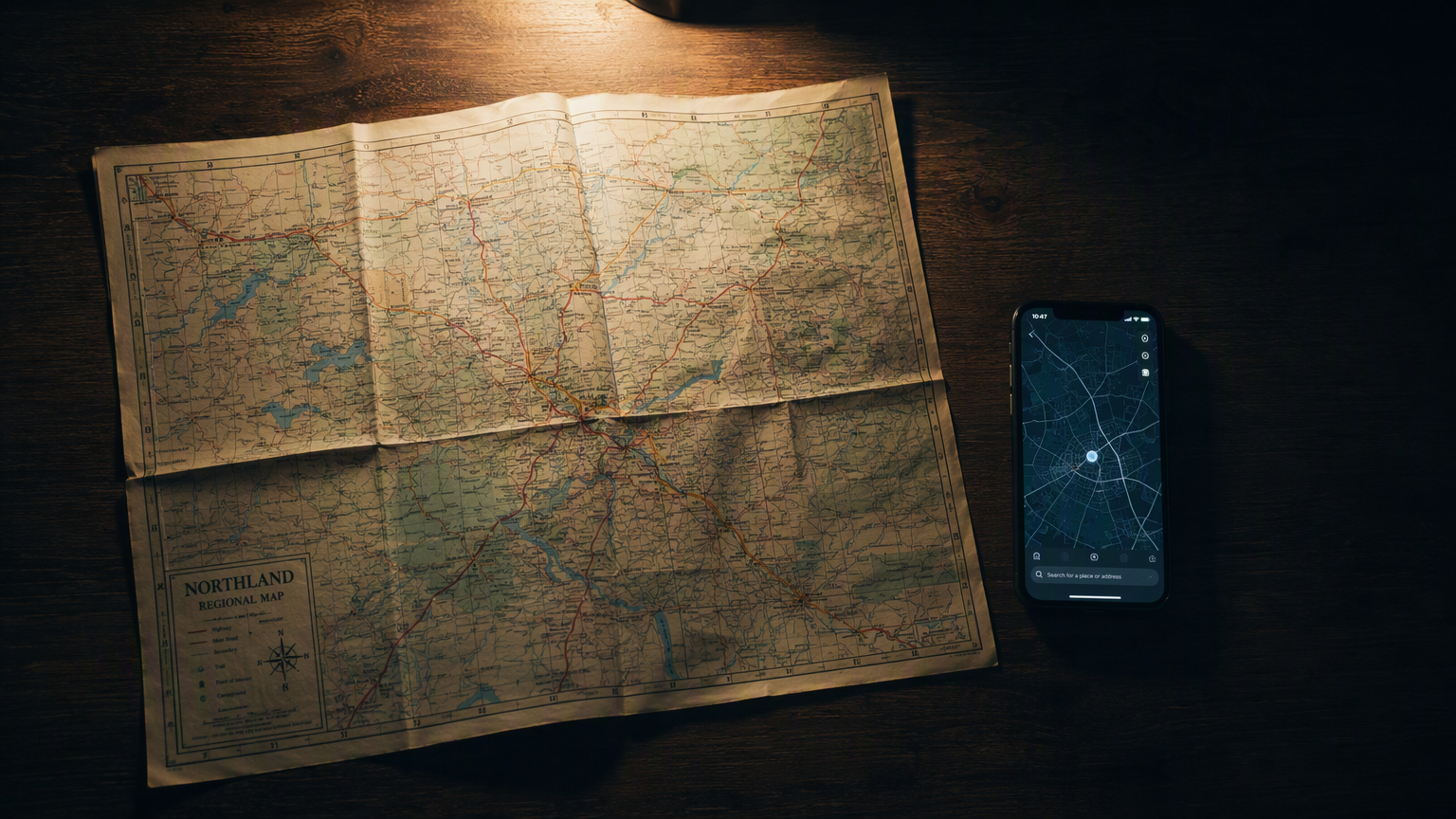
MapQuest is back. Actually back – like, number one on the App Store back. And the reason is so delightfully petty it made me laugh out loud at my desk. While Apple and Google Maps went along with renaming the Gulf of Mexico to “Gulf of America” after the executive order came down, MapQuest just… didn’t. Kept it as is. And apparently a whole lot of people noticed, because downloads spiked hard enough to knock this supposedly dead app back to the top of the charts.
Wait, MapQuest Is Still A Thing?
I know, I know. For a lot of us MapQuest is basically a fossil – something you printed out directions from in 2004 before your mom’s Buick had a nav system. It’s the app equivalent of a flip phone showing up at an iPhone launch party. But here’s the thing: it never actually went away. It’s owned by System1 now, quietly chugging along, mostly forgotten. Until this week.
What happened is pretty simple, if you squint. When the Trump administration pushed to rename the Gulf of Mexico “Gulf of America,” the big mapping platforms folded pretty fast. Google Maps changed it for US users. Apple Maps did too. And look, I get the business logic there – these are massive companies with government contracts and lobbying concerns and a million reasons to just comply and move on. But MapQuest said no. Left it alone. Gulf of Mexico stays Gulf of Mexico.
Small Company, Big Statement
Not gonna lie, I did not expect the “refuses to rename a body of water” energy to be what saves MapQuest’s reputation in 2026, but here we are. Sometimes the smaller player with less to lose ends up being the one with the spine to just… not change anything. There’s something almost funny about it. The scrappy old app nobody thinks about anymore turning into the accidental hero of a culture war skirmish it never asked to be part of.
So Why Does This Actually Matter?
Because map names aren’t neutral, even though we act like they are. Geographic names carry history, carry politics, carry decades of agreements between countries. The Gulf of Mexico has been called that for, what, centuries? Renaming it isn’t just a UI tweak, it’s a statement. And when huge platforms like Google and Apple – platforms that most Americans use without even thinking about it – just quietly flip that switch, most people never even clock that it happened. That’s the part that gets me. Millions of people are looking at a renamed body of water and have zero idea a decision was made on their behalf.
“People are downloading an app they haven’t thought about in fifteen years because it wouldn’t play along. That says a lot about where we are right now.”
I’ve seen this pattern before, honestly – it’s not really about maps. It’s about trust, and about people wanting to feel like at least one company out there isn’t just bending whichever way the political wind blows. MapQuest didn’t do some grand campaign here. From what I can tell, they just… left it alone. Didn’t make a big announcement, didn’t do a press tour. The silence is almost more effective than if they’d made a big deal out of it.
The Lake Ontario Wrinkle
Now, if you saw the headlines specifically mentioning Lake Ontario, that’s a slightly separate thread tangled into the same story – basically the same principle, different body of water, different attempt at a rename that MapQuest also just shrugged off. It’s a smaller lake and a smaller controversy, sure, but it fits the pattern. MapQuest isn’t cherry-picking which renames to resist based on how much attention they’ll get. They just seem to be sticking with what’s on the record, geographically speaking, regardless of who’s asking them to change it.
Is that principled? Is it just inertia and nobody at MapQuest bothered updating the database? Honestly, it’s probably somewhere in between. But intent kind of doesn’t matter here – the outcome is the same, and the outcome is what people are rewarding with downloads.
What This Actually Means
Look, I don’t think MapQuest is about to dethrone Google Maps. Nobody’s ripping out their turn-by-turn navigation habits over this. But this whole episode is a pretty clean little case study in what happens when a company – even a mostly-forgotten one – does the opposite of what everyone expects. Consumers noticed. Consumers rewarded it. That’s rare enough these days that it’s worth sitting with for a second.
Maybe the lesson here isn’t really about maps at all. Maybe it’s that people are exhausted by watching every platform they use fold the second there’s political pressure, and they’re desperate for literally anything that feels like it didn’t. Even if that “anything” is an app most of us haven’t opened since the Bush administration.