
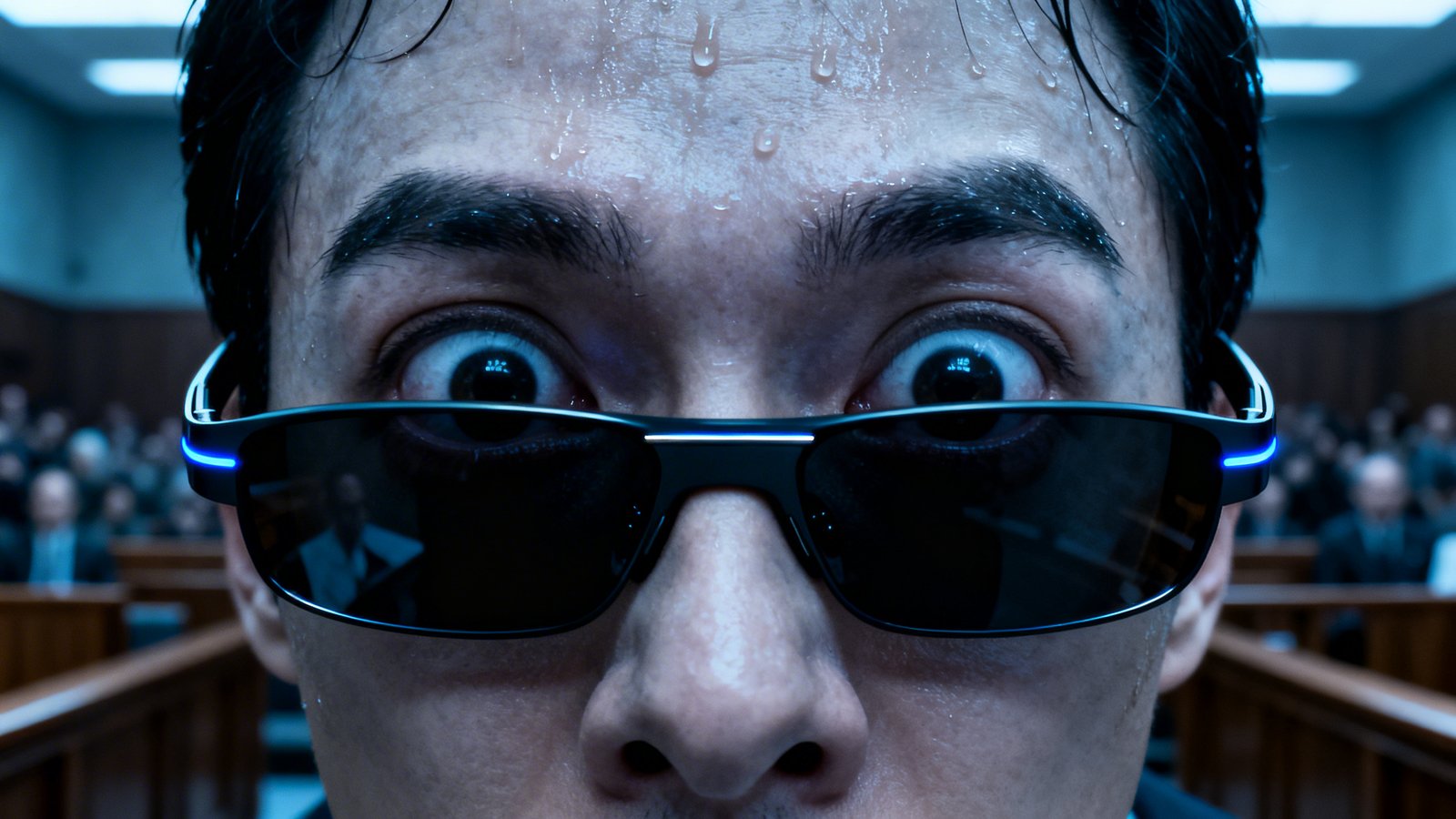
Okay, so get this: Mark Zuckerberg is on the stand, right? In a Meta trial – because of course he is, that’s where he lives these days, in courtrooms – and the judge, a very serious human being presumably, has to issue a stark warning. Not about a phone going off. Not about someone live-tweeting (which, honestly, feels like old news). Nope. The judge had to tell people, point blank, that wearing smart glasses in the courtroom would be considered CONTEMPT. Contempt of court! Because apparently, some folks thought it was a brilliant idea to show up to a high-stakes tech trial, with the tech giant himself testifying, wearing… recording eyewear. I mean, you can’t make this stuff up.
Seriously, Who Thought This Was A Good Idea?
Look, I get it. We live in a world where everyone’s got a camera in their pocket. And a microphone. And a whole internet. But there are still some places, some sacred cows, where you just don’t pull out the gizmos. A courtroom is, like, the prime example. It’s not a TikTok stage. It’s not a YouTube vlog opportunity. It’s where actual justice (or at least, the pursuit of it) is supposed to happen. And yet, here we are, in the year of our Lord, discussing whether someone might try to secretly record a trial with their face-mounted computer. What even is happening?
The thing is, it’s not just about recording. It’s about presence. It’s about respect. When you’re in a courtroom, you’re supposed to be present. Listening. Observing. Not squinting at a tiny HUD in your peripheral vision, probably getting notifications about your steps or, God forbid, trying to send a text with a subtle head tilt. I mean, come on. This isn’t a Black Mirror episode where you’re gathering evidence for a dystopian future. This is real life, in a very traditional, very serious setting.
The Audacity, Honestly
And it’s not like smart glasses are exactly inconspicuous, are they? We’re not talking about some tiny, hidden spy cam. We’re talking about Ray-Bans (or whatever brand Zuckerberg’s latest venture is pushing) that clearly look… different. They’ve got little lights, little bulk. You’d think someone would notice. Or, maybe, that someone would expect to be noticed, and just not care. That’s the truly infuriating part, isn’t it? The sheer audacity.
But Wait, Doesn’t This Undermine Everything?
This whole incident, as silly as it sounds, actually highlights a much bigger issue. It’s the constant, relentless push of technology into every single facet of our lives, without a second thought for the boundaries it’s crossing. We’ve seen it with phones in movie theaters, drones over private property, AI in job interviews. And now, smart glasses in court. It’s like we’ve forgotten that some spaces demand a different kind of engagement, a different level of respect for privacy and process.
“A courtroom is not a playground for your gadgets. It’s a place where fundamental rights are decided, and that demands a certain solemnity and focus.”
You know, for decades, we’ve had rules. No cameras, no recording devices. Simple, clear. The idea was to protect the integrity of the proceedings, the privacy of witnesses, and the decorum of the court. But now, every new piece of tech comes along and just… ignores those rules? Or tries to skirt them? It’s exhausting. And judges, bless their hearts, are left playing whack-a-mole with every new invention that Silicon Valley dreams up.
The Meta-Irony of it All
And the absolute kicker? This is happening during a trial involving Zuckerberg and Meta. The company that, let’s be real, is constantly pushing the boundaries of what’s acceptable in terms of data collection, privacy, and digital immersion. So, to have people trying to use their smart glasses – a product category Meta itself is heavily invested in – to potentially record court proceedings while Zuckerberg is testifying… well, the irony is just dripping, isn’t it? It’s almost poetic in its absurdity. It’s like the universe is trying to make a point, very loudly, about the very things Meta is often criticized for.
It’s a symptom, really. A symptom of a culture that’s been trained to document everything, share everything, and live through a screen, even when it’s completely inappropriate. And Meta, with its push for the metaverse, for “always-on” tech, for seamless integration of the digital into the physical, is basically the poster child for this mindset. So, when a judge has to tell people to take off their smart glasses, it’s not just about a few clueless individuals. It’s about the clash between an ancient institution and the relentless march of a tech industry that often doesn’t quite grasp (or perhaps, doesn’t care about) the nuances of human interaction and established societal norms.
What This Actually Means
Honestly, this isn’t just a funny anecdote about tech bros being clueless. It’s a wake-up call. It means our institutions – legal, educational, medical – are going to have to get seriously smart, and seriously fast, about how they deal with technology. Because it’s not going away. The smart glasses, the AR headsets, the discreet recording devices – they’re only going to get smaller, more powerful, and harder to detect. And if we don’t start having some serious conversations, some serious regulations, about where these things belong and where they absolutely do NOT belong, we’re going to end up in a world where there are no private spaces left. Not even a courtroom, which, to me, is pretty terrifying.
So, yeah. Zuckerberg testifying. Smart glasses = contempt. It’s a headline that’s both hilarious and, if I’m being brutally honest, a little bit depressing. Because it shows just how far we still have to go to figure out how to live with all this amazing, intrusive tech without losing our damn minds… or our basic respect for each other.