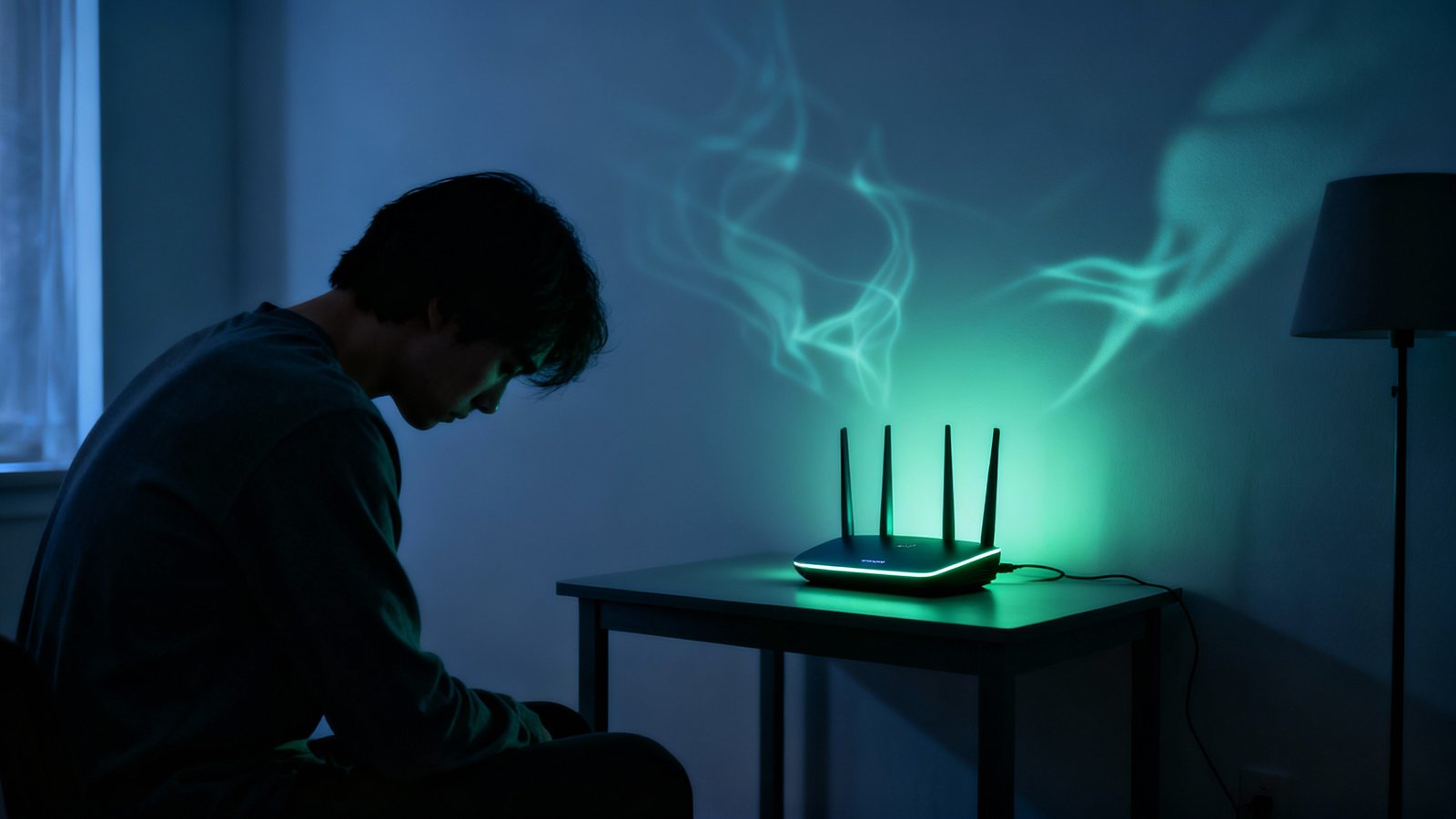
Okay, so you know that little blinking box in your living room? The one you probably haven’t thought about since you set it up, maybe five years ago, after wrestling with the instructions and calling tech support three times? Yeah, your WiFi router. Turns out, it’s not just there to stream your Netflix and make sure your phone gets those endless TikToks. Nope. According to some smart folks – you know, researchers, the kind who actually understand how radio waves work – that unassuming box could be the next big thing in mass surveillance. Like, invisible mass surveillance. And if I’m being honest, it just makes my skin crawl.
So, Your Router’s a Stalker Now? Great.
Here’s the thing: we’ve been told for ages that our WiFi is just, well, WiFi. It sends signals, it receives signals, it makes the internet happen. Pretty straightforward, right? But these researchers, they’re looking at something called “WiFi sensing.” And it’s exactly what it sounds like. Your router, or really any device that puts out a WiFi signal, can detect changes in those radio waves as they bounce around your house. And guess what? Those changes aren’t just random static. They’re caused by you.
Think about it. Every time you move, every time you breathe – yeah, they can pick up your breathing patterns, no joke – you’re subtly messing with those waves. And a smart enough system can interpret that. It’s like having sonar, but instead of pinging subs in the ocean, it’s pinging you on your couch. This isn’t some far-off sci-fi nightmare anymore, people. They’re talking about it now. Like, right now. It’s already possible to track someone’s movement through walls. Through walls! Just using your regular, garden-variety WiFi.
And it’s not just about knowing if you’re home or not. Oh no, that would be too simple. We’re talking about systems that could, theoretically, tell if you’re sitting, standing, walking. If you’re alone or with someone else. They’re even talking about using it for health monitoring – detecting falls, tracking sleep patterns, maybe even catching early signs of illness by noticing changes in your breathing or heart rate. Which, okay, sounds a little helpful on the surface, I’ll grant you that. But it’s also a slippery slope, isn’t it?
From Smart Home to Spy Home, Real Quick.
We’ve already invited the digital ears and eyes into our homes, haven’t we? Alexa’s listening for our commands, Google Home’s waiting for its cue, smart cameras are watching the front door. We rationalized it. “It’s for convenience!” we said. “It’s making my life easier!” But at least with those, there’s a microphone or a lens you can (in theory) cover or unplug. With WiFi sensing, it’s… invisible. It’s the very air around you. It’s the fundamental way your internet works. How do you turn that off without turning off, well, everything?
This isn’t like a rogue app secretly using your camera. This is the infrastructure itself. The very thing designed to connect us is now capable of observing us. And let’s be real, if it can be done, it will be done. And then it’ll be scaled. And then it’ll be commercialized. And then, well, then we’ll be wondering how we got here, again, like we always do.
But Seriously, Who Actually Cares About This?
I know what some of you are thinking. “So what? I’ve got nothing to hide. Let ’em watch me binge-watch reality TV. Who cares?” And honestly, I get that sentiment. It’s exhausting to be constantly worried about privacy. We’re bombarded with privacy notices we don’t read, data breaches that feel inevitable. We’ve thrown up our hands so many times, we’re probably getting shoulder cramps.
But here’s the kicker: it’s not about what you’re doing. It’s about who knows you’re doing it, and what they can infer from it. Imagine an insurance company using your WiFi data to determine your activity levels, or if you’re home alone too much (hello, depression red flag). Or advertisers knowing exactly when you’re looking at a screen, or when you’re pacing anxiously. Or, hell, what about landlords using it to track occupancy or unauthorized pets? The possibilities, for those with less-than-noble intentions, are endless. And terrifying.
“The truly frightening thing about ubiquitous surveillance isn’t just that someone is watching, it’s that the watcher is invisible, and the rules of engagement are entirely opaque.” – A guy I heard complain at a coffee shop once, probably. But he was right.
The Creeping Normalization of Being Watched
We’ve gone from cameras on every street corner to cameras in every pocket, and now, it seems, to invisible eyes in every wall. It’s a slow, steady creep. Each new “innovation” is presented with a shiny wrapper of convenience or safety. “Elderly care!” they’ll say. “Smart energy management!” And sure, some of that might even be true. For a bit. But history tells us what happens when powerful surveillance tools get into the wrong hands, or even just into the hands of a profit-driven corporation with a loose definition of “ethical data use.”
The biggest problem with WiFi sensing, from my perspective, is that it’s passive. You don’t interact with it. You don’t explicitly grant permission in the same way you might for an app. It’s just… there. Part of the fabric of your digital life. And because it’s invisible, it’s incredibly difficult to detect, let alone defend against. You can put tape over your webcam. You can turn off your mic. But what are you going to do, put aluminum foil around your entire house? Sounds like a fun way to lose your internet, that’s what.
And let’s not forget, this isn’t some fringe technology. The source I’m looking at, it’s from Scitechdaily.com, not some conspiracy theory blog. These are legitimate researchers, at places like the University of Massachusetts Amherst, sounding the alarm. They’re basically saying, “Hey, we can do this cool, kinda scary thing with WiFi. And people should probably know about it before it just… happens.”
What This Actually Means
Honestly? It means we’re probably already past the point of no return on privacy. It’s not just about what you click anymore, or what you say to your smart speaker. It’s about your very presence, your physical being, being turned into data. And that data, like all data, will be collected, analyzed, bought, and sold. It’ll be used for things we can’t even imagine yet, for better and probably for much, much worse.
We’ve accepted the trade-off for so long: a little less privacy for a little more convenience. But this feels different. This feels like the ultimate, insidious invasion, because it uses the very thing we rely on for connection against us. It makes our homes, our last bastions of privacy, into potential surveillance zones without a single camera or microphone. So, next time you’re scrolling on your phone, remember that your router isn’t just serving up cat videos. It might just be watching you scroll, too. And breathing. Definitely breathing.