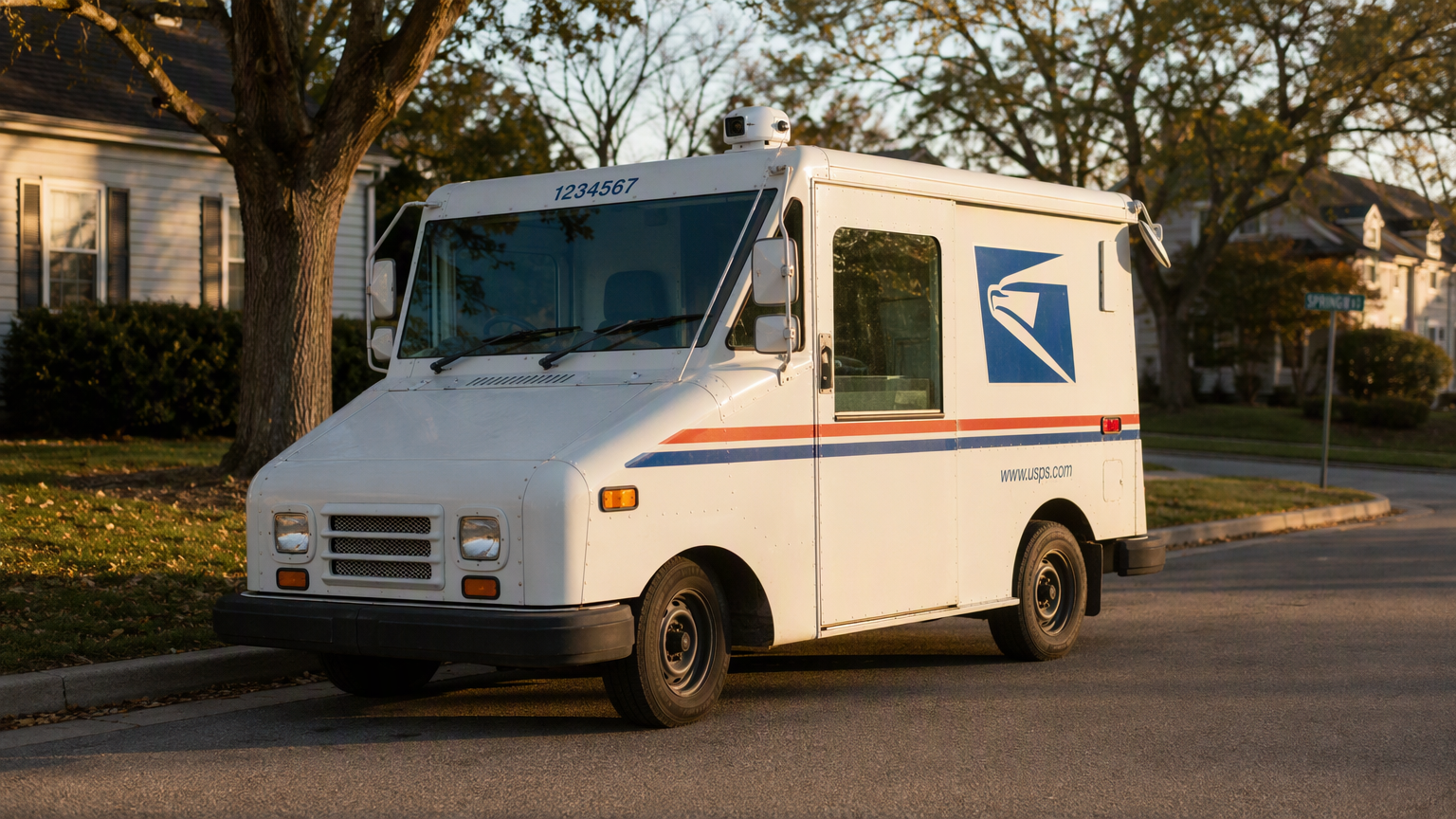
There’s a mail truck idling outside your house right now, and depending on where you live, it might be running software that can read your license plate, log your face, and quietly ship that data somewhere you’ll never see. That’s not a conspiracy theory from some guy on a forum. That’s reportedly where USPS is headed with its delivery fleet, and honestly, I don’t think most Americans have clocked it yet.
Wait, My Mailman Is a Surveillance Camera Now?
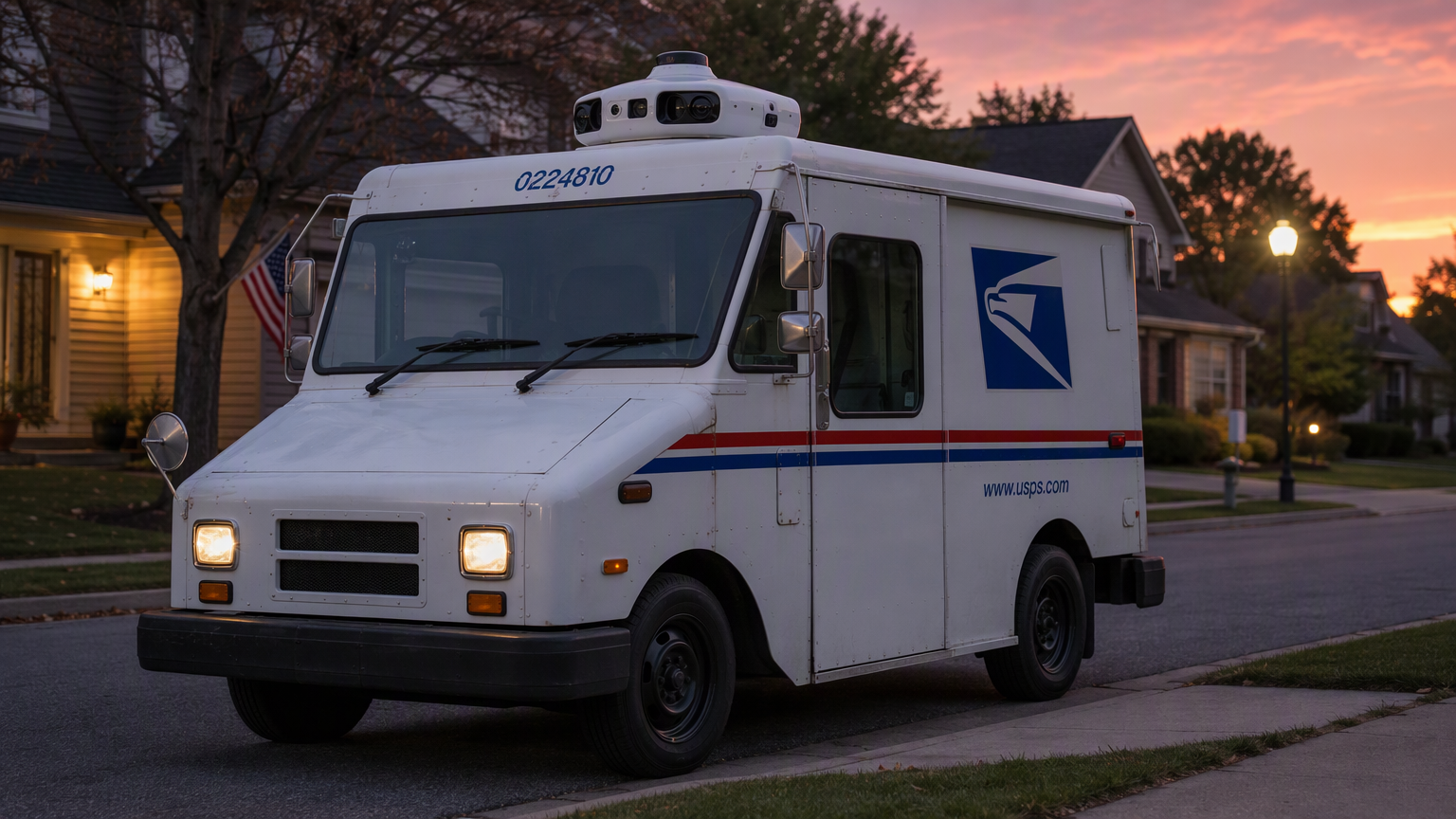
Kind of, yeah. The reporting that’s been making the rounds (shoutout to the Reddit thread that put this back on my radar) lays out how USPS has been quietly outfitting its newer delivery vehicles with AI-powered camera systems. We’re talking about the Next Generation Delivery Vehicles, the boxy, kind of goofy-looking trucks that have been slowly replacing those old Grumman LLVs you’ve seen rusting on routes since the Reagan administration. Those new trucks come loaded with tech. Backup cameras, sure, that makes sense. But also systems capable of license plate recognition and object detection, rolling through your neighborhood every single day.
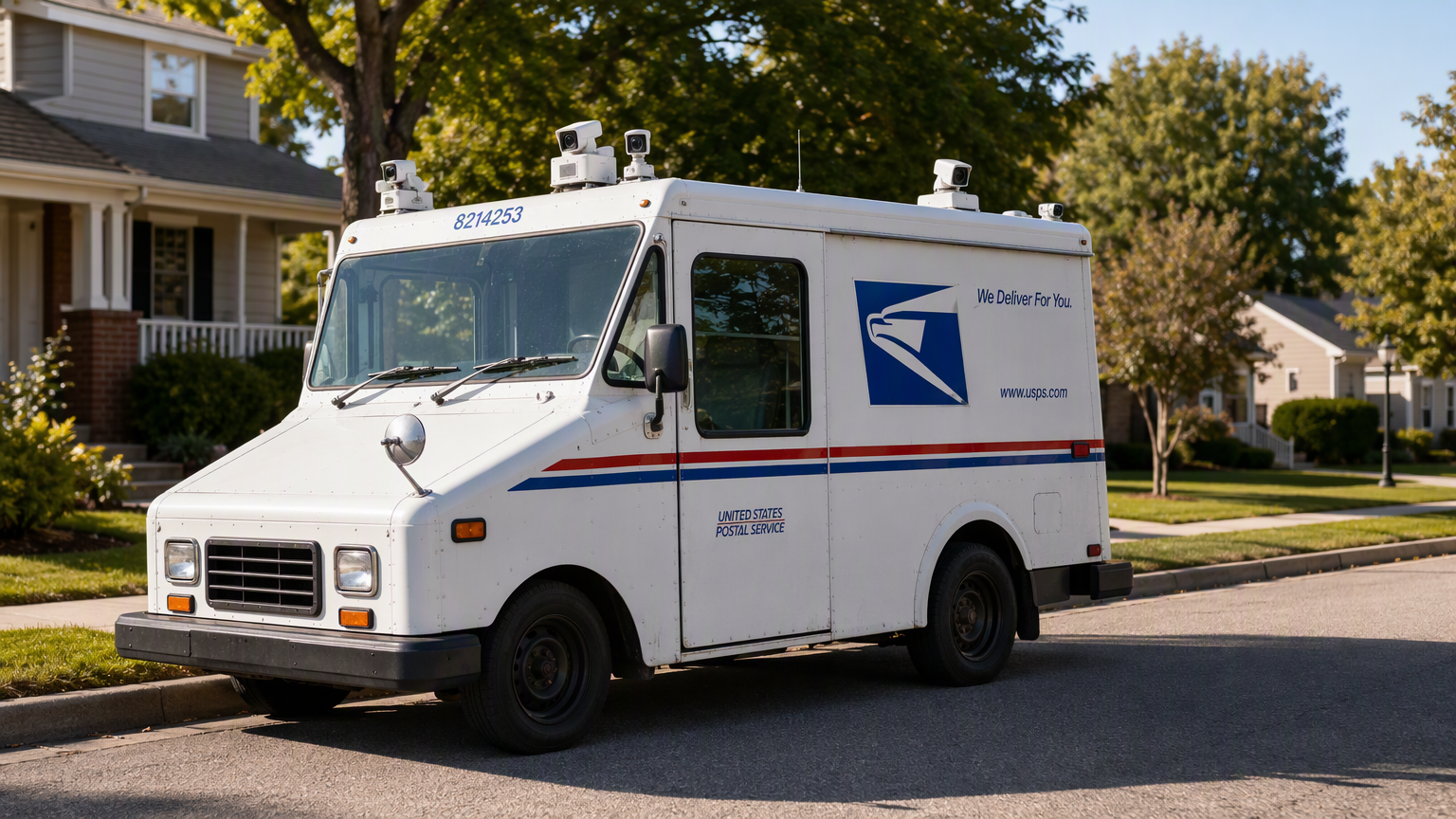
And look, I get the pitch. Delivery vehicles get backed into mailboxes, dogs chase carriers, packages get stolen off porches. Cameras help with liability, with safety, with insurance claims. Nobody’s crying over a backup camera. But that’s not really what’s got people uneasy here. It’s the scale. USPS runs something like 230,000 vehicles. That’s not a handful of test units in a pilot program somewhere in Ohio. That’s basically a nationwide fleet of government-operated cameras hitting every zip code, every day, multiple times a day in a lot of places.
This Isn’t Exactly New Behavior for the Government
I’ve covered enough surveillance tech stories at this point to recognize the pattern immediately. It always starts the same way. Something gets introduced for a boring, practical reason (safety, efficiency, fraud prevention) and then slowly, almost by accident, it becomes an intelligence-gathering tool. We saw this with Ring doorbells partnering up with police departments. We saw it with Flock Safety’s ALPR cameras spreading into basically every HOA and small town in the country. We saw it with license plate readers mounted on toll booths that were “just for billing” until suddenly they weren’t.
So when I hear that mail trucks, of all things, are getting this treatment, I’m not shocked. I’m just tired. Because USPS has this weird cultural status as the most boring, trustworthy part of the government. It’s the one agency that still feels kind of neutral, kind of folksy even. Your letter carrier knows your dog’s name. That’s the vibe. Turning that fleet into a camera network messes with that, whether or not that was anyone’s intention.
So What Happens To All This Footage?
Here’s where things get murky, and I want to be upfront that it’s not entirely clear yet exactly how far this data travels once it’s collected. From what I can tell, USPS has its own law enforcement arm, the Postal Inspection Service, and there’s a long and honestly pretty wild history of postal inspectors using mail-related surveillance for things that go way beyond “did someone steal a package.” The USPS has run license plate and mail cover programs for years, often without much public scrutiny, because, again, who’s thinking about postal surveillance? It doesn’t have the same menace as, say, the NSA.
“We keep building surveillance infrastructure one ‘reasonable’ justification at a time, and then acting surprised when it gets used for something nobody voted for.”
That quote isn’t from some official, it’s basically the thesis of every privacy reporter I know, and I happen to agree with it completely. Nobody sits down and says “let’s build a mass surveillance network.” It happens in pieces. A camera here for safety. A plate reader there for parking enforcement. Before you know it, there’s a system capable of tracking movement patterns across entire cities, and it was never debated, never voted on, just… installed.
The Privacy Angle Nobody’s Talking About Enough
What’s interesting here is how little friction this kind of rollout tends to get, at least at first. People will absolutely lose it over a private company’s doorbell camera program, but a government vehicle doing something similar barely registers. Maybe it’s because mail trucks feel so mundane. Maybe it’s because most of us don’t actually know what these systems are capable of until a journalist or a privacy researcher pulls back the curtain.
But think about what a nationwide fleet of plate-reading cameras actually means in practice. These trucks go everywhere. Rural roads, dense cities, your weird cul-de-sac that doesn’t show up right on GPS. That kind of coverage is honestly something police departments would pay a fortune for (and in some cases, through companies like Flock, they already do). If USPS vehicles are capturing that kind of data as a byproduct of daily delivery, the question becomes who gets to use it, under what rules, and with what oversight. From everything I’ve seen reported so far, those answers are pretty thin.
And I’ll be honest, the timing doesn’t help. We’re living through a moment where immigration enforcement, local policing, and private data brokers are all leaning harder into automated surveillance tools than they were even five years ago. Dropping a plate-reading camera fleet into that environment, even unintentionally, feels like handing over a pretty powerful tool without anyone really agreeing to it.
The Pushback Is Already Starting
Not everyone’s just shrugging this off, to be fair. Privacy advocates have been raising flags, and some lawmakers have started asking USPS pointed questions about what data gets collected, how long it’s stored, and whether it’s shared with other agencies. That’s the right instinct. These are exactly the questions that should’ve been asked before the cameras went in the trucks, not after reporters started digging.
What This Actually Means
Here’s my honest take: this probably doesn’t stop. Not because it’s necessarily malicious, but because the infrastructure is already rolling out, literally, street by street, and once something like this exists, agencies find reasons to use it. That’s just how these things go. I’d bet money that within a couple years we’re reading stories about postal camera footage showing up in unrelated investigations, used by other law enforcement agencies, maybe even sold or shared through some data-sharing agreement nobody read closely.
Maybe that sounds cynical. I’d argue it’s just pattern recognition. We’ve watched this exact movie with doorbell cameras, with license plate readers, with facial recognition creeping into retail stores. The mail truck version is just the newest chapter, and it’s got a wider reach than almost anything that’s come before it because, well, the mail touches literally every address in the country.
So next time that boxy new delivery truck rolls past your house, maybe wave. Or maybe just wonder, for a second, what exactly it’s seeing.