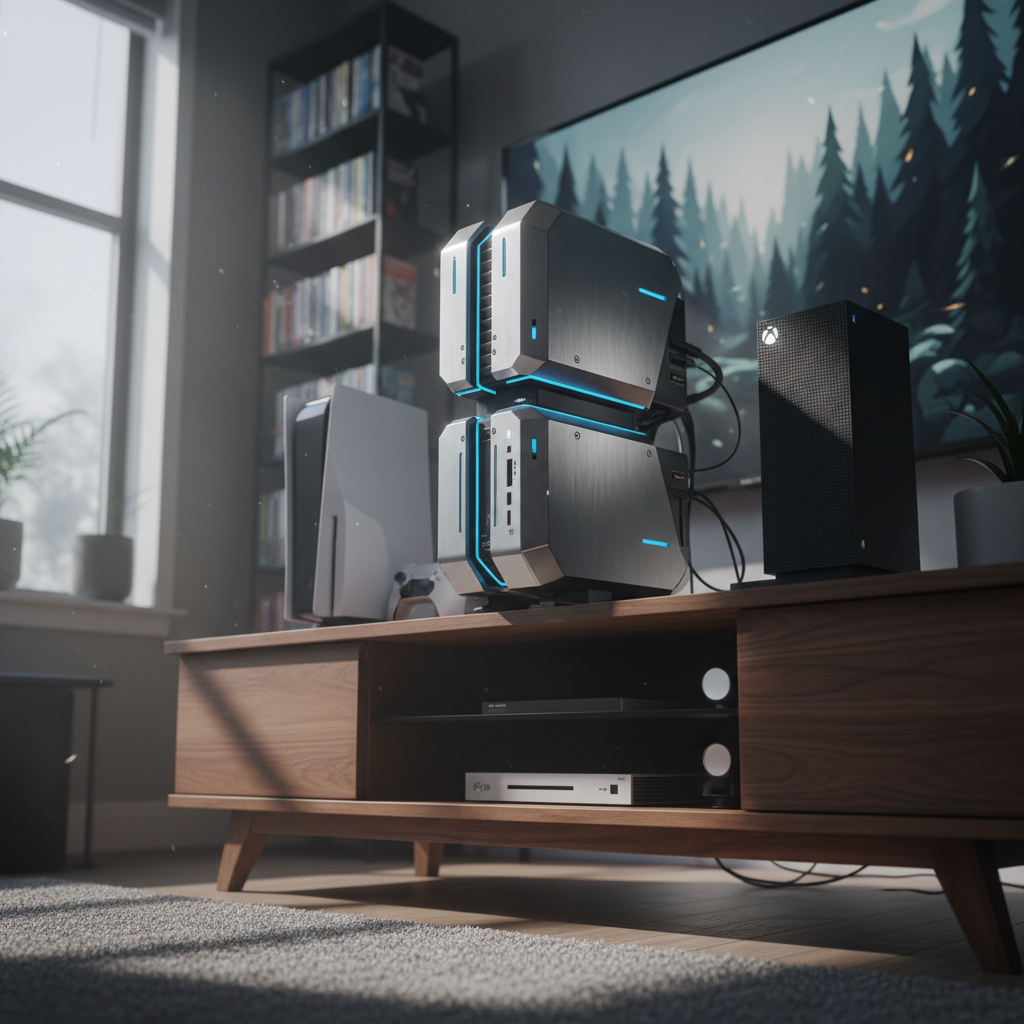
Valve just confirmed something that’ll probably make a lot of people roll their eyes: the Steam Deck’s successor – let’s call it what it is, the new Steam Machine – won’t be playing the usual console pricing game. You know the one. Sony and Microsoft take a hit on every PlayStation or Xbox they ship, banking on making it back through game sales and subscriptions. It’s been the model for decades now. But Valve? They’re essentially saying “nah, we’re good” and pricing their hardware like, well, a PC.
Here’s the kicker. Michael Douse, the publishing director over at Larian Studios (yeah, the Baldur’s Gate 3 folks), chimed in on this whole situation. His take? It’s not stupid, but it is “peculiar.” Which is probably the most diplomatic way of saying “this is weird and I’m not entirely sure what they’re thinking.”
And honestly? He’s not wrong. In an industry that’s literally built on selling hardware at a loss to lock you into an ecosystem, Valve’s doing something completely different. The question is whether it’s brilliantly contrarian or just stubbornly idealistic.
The Console Playbook Valve Won’t Touch
Let’s talk about how this usually works, because it’s kind of wild when you actually think about it. Every time Sony ships a PS5 out the door, they’re losing money on the hardware itself. Sometimes a lot of money – we’re talking potentially $100 or more per unit in those early days. Microsoft does the same thing with Xbox. Nintendo’s a bit different (they actually turn a profit on Switch hardware), but they’re the exception that proves the rule.
The math works out because they know you’re going to buy games. Lots of games. And they’re getting a cut of every single one – usually around 30%. Plus there’s PlayStation Plus, Xbox Game Pass, online subscriptions, all that recurring revenue that makes accountants very happy. It’s a long game, basically. Take the hit now, print money later.
Why Valve’s Breaking the Mold
So why isn’t Valve doing this? They’ve got Steam, which is literally a money-printing machine at this point. They could absolutely afford to subsidize hardware if they wanted to. But here’s where it gets interesting – Valve’s in a fundamentally different position than Sony or Microsoft.
- Steam already exists everywhere: You can play Steam games on literally any PC. Valve doesn’t need to sell you hardware to get you into their ecosystem – you’re probably already there.
- No exclusives to leverage: Unlike PlayStation with Spider-Man or Xbox with Halo, Valve isn’t gatekeeping games behind their hardware. The Steam Machine plays the same games as your desktop.
- The PC gaming mindset: PC gamers are kind of used to paying more upfront for better hardware. It’s a different culture than console gaming, where $500 is already considered expensive.
Valve’s also got this whole open ecosystem thing going on. SteamOS is Linux-based and free. You can install Windows on the Steam Deck if you want (though why would you, honestly). They’re not trying to lock you down the way traditional console makers do.

What “Peculiar” Actually Means for Gamers
When Douse calls Valve’s strategy peculiar, he’s pointing at something that genuinely doesn’t fit the normal patterns. And for consumers, this creates a weird situation. The Steam Machine is probably going to cost more than a PlayStation 5 or Xbox Series X at launch. Maybe significantly more, depending on the specs Valve goes with.
That’s a tough sell. Or is it?
The Value Proposition Problem
Here’s where my brain starts going in circles. On one hand, yeah, paying $700 or $800 for a Steam Machine (I’m speculating here, but it’s not unrealistic) seems steep compared to a $500 PlayStation 5. But you’re also getting a PC, essentially. A PC that can do PC things – mod games, access the entire Steam library including decades of older titles, run emulators, whatever.
The Steam Deck proved there’s a market for this approach. People bought those things knowing full well they cost more than a Switch and had worse battery life. Because the value proposition was different. You weren’t buying a Nintendo device – you were buying portable PC gaming.
But (and this is a big but), the Steam Deck had the portability angle. It was genuinely offering something consoles couldn’t. A new Steam Machine that sits under your TV? That’s competing more directly with traditional consoles, and the pricing difference becomes harder to justify for most people.
“It isn’t stupid, but it is peculiar” – Michael Douse’s assessment kind of nails the cognitive dissonance here. It makes sense from Valve’s perspective, but it creates this odd market position.
The Economics of Not Caring About Market Share
You know what I think is really going on here? Valve just doesn’t care about winning the console wars. They’re already winning their war – the PC gaming platform war – and they won it years ago. Steam is so dominant in PC game distribution that Epic’s been burning literal billions trying to make a dent, and they’re still basically a rounding error.
So the Steam Machine isn’t really about converting PlayStation gamers or stealing Xbox customers. It’s more like… an option for people already in the Steam ecosystem who want Valve-blessed hardware.
The Sustainability Angle Nobody’s Talking About
There’s another thing here that’s kind of flying under the radar. By not selling at a loss, Valve’s basically saying they’re only going to make these devices if they actually make business sense as standalone products. Which means they won’t be dumping millions of units into landfills if they don’t sell.
Sounds almost quaint, right? A tech company that only makes hardware they can actually profit from? But it also means they’re not going to be fighting for shelf space at Walmart or running Super Bowl ads. This is going to be a niche product, and Valve seems totally fine with that.
The question is whether that niche is big enough to matter. The Steam Deck found its audience – it’s sold millions of units, which is genuinely impressive for what’s essentially a handheld Linux PC. But the living room gaming space is more crowded, more competitive, and more defined by those traditional console economics.
What This Means for the Gaming Industry
Here’s what fascinates me about all this. Valve’s essentially testing whether the console model is actually necessary, or if it’s just how things have always been done. Can you build a successful gaming platform without the loss-leader hardware strategy? Without exclusive games? Without trying to lock people into your walled garden?
The Steam Deck suggests maybe you can. But it’s also riding on Steam’s existing success and the novelty of portable PC gaming. A home console version is a different beast entirely.
If Valve pulls this off – and that’s a big if – it could actually shift how other companies think about hardware. Imagine if Microsoft decided they didn’t need to lose money on every Xbox. What if they just made premium PC hardware with a console-like experience and charged what it actually costs? Would anyone buy it when PlayStation is cheaper?
Or maybe this whole thing is just Valve being Valve. They’re a private company that doesn’t answer to shareholders, so they can do weird experiments like this without Wall Street having a meltdown. They did the same thing with the Steam Controller (RIP), the Steam Link, the Index VR headset. Some work out, some don’t, and Valve just keeps being Valve.
The peculiar thing, really, is that in an industry obsessed with growth and market share and beating the competition, Valve seems content to just make products they think are cool and see what happens. Whether that’s visionary or just the luxury of being privately held and already ridiculously profitable – well, probably both.
Either way, we’re about to find out if console gamers are ready for PC pricing. My guess? Some will be, most won’t. But Valve probably doesn’t need most. They just need enough.