





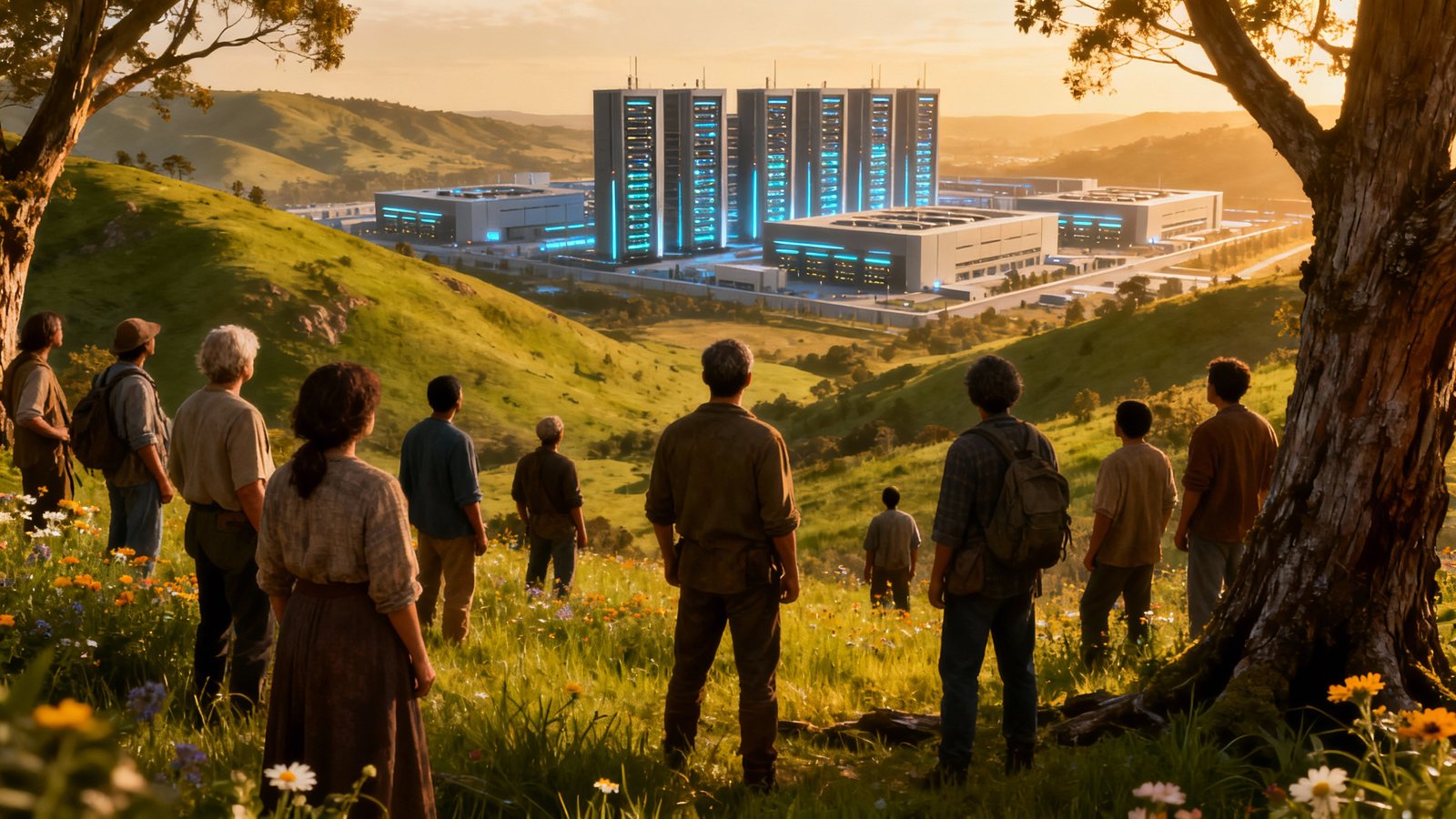
Okay, so picture this: You’ve got these mega-corporations, right? The ones that basically run our digital lives. They’re sitting on mountains of cash, literally billions, and they want to build these massive, hulking data centers. We’re talking sprawling complexes that suck up power like a thirsty vampire and drink water like it’s going out of style. They roll into town, usually some quiet little place, thinking they’re gonna just drop a few billion, get their way, and everyone will clap. But here’s the kicker, the thing that honestly, if I’m being honest, made me do a double-take: Local residents. Regular folks. They’re actually stopping them. Blocking those multi-billion-dollar projects cold. And it’s not just one or two places. This is happening all across America.
Hold Up, Who’s Actually Winning Here?
Look, for years, it felt like Big Tech was this unstoppable force. They want something? They get it. They need land? They buy it. They need a tax break? Poof, it appears. But this whole data center thing? It’s different. It’s like these companies, with their endless pockets and their fancy powerpoint presentations, completely underestimated the power of a pissed-off community meeting. And that’s pretty wild, isn’t it?
I mean, think about it. We’re talking about projects worth an absolute fortune. Like, “we could solve world hunger with this money” fortune. And these big wigs just get told, “Nope. Not here. Not in our backyard.” It’s not just a minor setback for them, it’s a significant roadblock. This was big. Really big.
The thing is, these data centers aren’t just big, they’re loud. And they’re thirsty. Super thirsty. They need insane amounts of power, which means new power lines, sometimes new power plants. They need a ton of water for cooling. And let’s not even start on the noise from all those servers and cooling fans. Imagine living next to that. Your quiet little suburb or rural town suddenly has this humming, throbbing behemoth on its doorstep. And you know, they tell you it’ll bring jobs, but honestly, how many jobs does a highly automated server farm really create? A few technicians? A security guard? It’s not exactly bringing back the manufacturing industry, is it?
Not Just NIMBY, It’s… Something Else
Now, some folks will just shrug and say, “Oh, it’s just NIMBYism. Not In My Backyard.” And yeah, sure, part of it is that. Who wants a giant, humming industrial complex next to their home? But it’s more than that, I think. It’s about people finally pushing back against the idea that progress, or whatever Big Tech calls it, has to come at any cost. It’s about preserving a way of life, preserving the character of a town, preserving the environment. People are actually thinking about the long-term impact, not just the short-term promise of a few extra tax dollars that probably won’t even cover the strain on local infrastructure.
So, What’s Big Tech Even Doing?
Why do they need so many of these things, anyway? Well, it’s all the stuff we can’t stop doing online, isn’t it? AI, the cloud, all that streaming video, the metaverse (remember that? Still kinda a thing, I guess?). All of that needs physical space, physical machines, and physical power. Our digital lives are built on a very real, very physical infrastructure. And it’s growing exponentially. They’re building these things faster than ever before because the demand for computing power is just… bonkers. It’s a never-ending appetite, frankly.
“You can’t just drop a giant industrial complex into a residential area and expect people to be thrilled. We live here. This isn’t just some abstract line item on a quarterly report for us. This is our home.”
That sentiment, I’ve heard it echoed in different ways, in different towns, over and over again. It’s not about being anti-tech. Most people use their phones and laptops just like everyone else. It’s about saying, “Hey, there’s a limit. There’s a human cost to all this digital growth.”
The Power Dynamic is Shifting, Folks
This whole thing feels like a real moment. For so long, we’ve seen communities bend over backwards, offering insane incentives, just to get a fraction of a big corporation’s business. And these companies, they’ve gotten used to it. They expect it. But now, you’ve got these local planning boards, these small-town councils, saying, “Nah. We’re good.” And it’s working!
It’s making these tech giants actually think about where they put their stuff, or at least it should be. It’s forcing them to confront the very real, tangible consequences of their insatiable hunger for data and power. Because when you’re talking about noise, traffic, water consumption, and changing the entire feel of a community, that’s not just a local issue. That’s a quality of life issue. And people are starting to realize they have more power than they thought to protect that quality of life.
What This Actually Means
Here’s the honest truth: This is a win for grassroots activism. It’s a win for people who actually show up to those incredibly boring, ridiculously long town hall meetings. It shows that even against the biggest, richest companies in the world, local voices can make a difference. It’s not always easy, and it takes a lot of persistence, but they’re doing it.
Will Big Tech change its ways? Probably not entirely. They’ll just find new, quieter places to try and build, or they’ll get savvier about their PR campaigns. They might even lobby harder at the state level to override local decisions. But for now, for this moment, it’s a pretty powerful reminder that sometimes, the little guys actually do win. And that, my friends, is something worth paying attention to, because it means we, the regular people, still have a voice. And sometimes, just sometimes, that voice is loud enough to stop a multi-billion-dollar project dead in its tracks…

