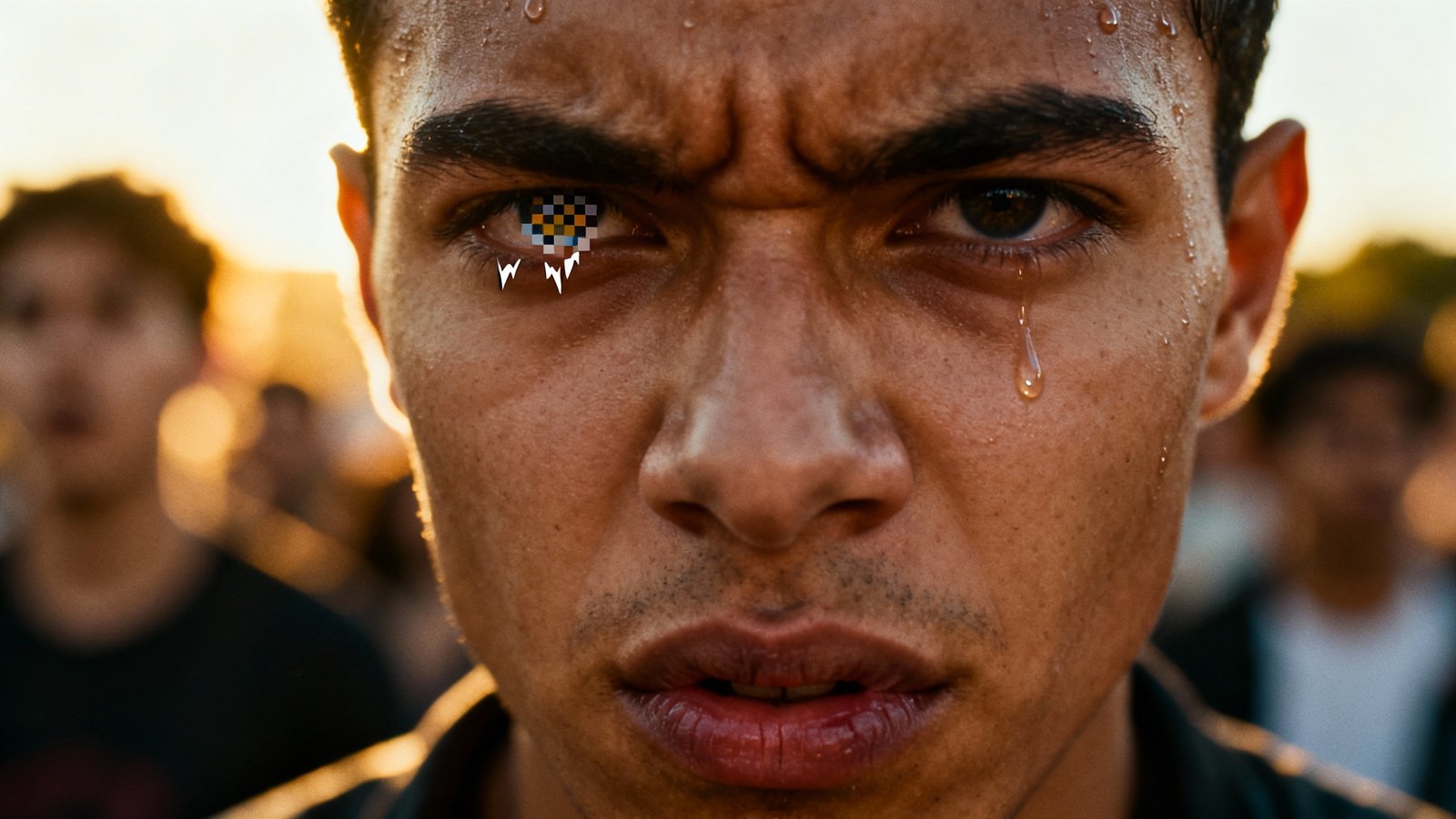
Okay, so get this. The White House, the actual White House, posted an AI-altered photo. Not some random dude on TikTok, not your cousin’s weird Facebook feed, but the official account of the U.S. government. And it wasn’t just some blurry background or a slightly brighter smile on a diplomat. No, no, no. They apparently messed with a photo of an arrested protester. I mean, seriously? Are we actually doing this now?
“Oops, Our AI Did It!” – The New Dog Ate My Homework?
Look, when I first saw the headline, I actually laughed. A nervous, “this can’t be real” kind of laugh. Because for years, we’ve been talking about the dangers of deepfakes and AI-generated imagery, right? The potential for misinformation, for propaganda, for just plain old screwing with reality. And then, boom. The White House, the folks who are supposed to be, you know, setting an example for truth and transparency, just walks right into it. Or, more accurately, wades in head-first, apparently without a life vest.
The story, which popped up over on the Intelligencer section of NYMag – you know, the place that usually covers politics and tech stuff with a bit more… gravitas – detailed how this image, allegedly showing an arrested protester, had been fiddled with. And it wasn’t exactly subtle, from what I can tell. We’re talking about alterations that make you squint and go, “Wait a minute, something’s off here.”
Now, I’m not gonna lie, part of me wants to just throw my hands up and say, “Well, what did we expect?” We’re living in a world where everyone’s got filters on their selfies, and half the news you see on your feed is curated by algorithms. But this is different. This isn’t a Kardashian smoothing out a wrinkle; this is the literal seat of power, the people we elect to run the country, playing fast and loose with photographic evidence. And honestly, it drives me absolutely nuts. Because it’s not just a photo; it’s trust. It’s the foundation of how we understand what’s real and what isn’t when it comes to official communications.
The Slippery Slope Just Got a Lot Slicker
Think about it. Once you start altering images, even if it’s “just” a protester, where does it stop? Does a bad angle on the President get fixed? Does a less-than-flattering crowd shot suddenly look more enthusiastic? And who decides what’s “acceptable” to change? Because if you can alter the context of an arrest, you can alter pretty much anything. It’s a Pandora’s Box, and someone just pried it open with a crowbar, apparently for a pretty dumb reason.
Who Actually Thought This Was a Good Idea?
This is the question that keeps circling in my head like a confused fly. Who in the White House comms team, or wherever these decisions are made, looked at that altered photo and thought, “Yeah, this is fine. Ship it”? Did they not think anyone would notice? Did they assume we’re all just scrolling through life with our brains turned off? Or, and this is the more chilling thought, did they just not care? Did they figure, “Hey, it’s just a photo, what’s the big deal? It makes our narrative look better”?
“When the government starts tweaking reality, even in seemingly small ways, it chips away at the bedrock of public faith. And that’s a dangerous game to play.”
Because here’s the thing about government and public trust: it’s not something you can just switch on and off. It’s built up over time, painstakingly, with a lot of effort and transparency. And it can be eroded in an instant by something like this. One altered photo, one little manipulation, and suddenly every official image, every statement, every claim starts to look a little bit suspect. And that’s a problem, a really big problem, for a functioning democracy.
Third Section – The AI Conundrum
The whole “AI-altered” part is what really twists the knife, for me. Because we’ve been told, over and over, that AI is this powerful tool, capable of amazing things, but also needing careful regulation and ethical guidelines. And the White House itself has been talking about setting up guardrails for AI, right? They’ve been holding summits, releasing frameworks, generally acting like they’re on top of this rapidly evolving tech. And then they go and use it to, well, essentially create a slightly faked image of an arrest. The irony? It’s thick enough to cut with a butter knife.
It’s like they’re telling us, “Don’t worry, we’re handling the wild west of AI,” while simultaneously riding a horse with six legs and a cowboy hat that’s clearly Photoshopped onto a badger. It undermines their own message. It makes all their pronouncements about responsible AI look, frankly, a bit hypocritical. And that’s not just bad optics; it’s bad policy. Because if the government can’t even adhere to its own implied standards for digital ethics, who can?
This isn’t just a technical screw-up; it’s a fundamental misunderstanding of what AI means for public communication. It’s not a magic wand to make things look better. It’s a tool that, when misused, can destroy credibility faster than you can say “deepfake.” And the people running the country should know better. They really should.
What This Actually Means
So, what’s the takeaway here? Is it just a silly mistake? Maybe. Is it a sign of something more insidious? Possibly. But here’s my honest take: it’s a symptom of a larger problem, a growing disregard for objective truth in official spaces. It’s a casualness with reality that’s frankly terrifying when it comes from the highest office in the land. When the White House starts dabbling in digitally altered images, it sends a clear message: the line between what’s real and what’s manipulated is getting blurrier, and sometimes, they’re the ones doing the blurring.
And that, my friends, is a dangerous precedent. Because if we can’t trust the images and information coming from our own government, then what can we trust? It makes every argument, every debate, every piece of evidence a little bit shakier. It sows doubt. And doubt, when it’s widespread enough, can tear things apart. So yeah, it’s “just” an altered photo. But sometimes, the smallest cracks are where the biggest collapses begin. Keep your eyes open, folks. Seriously. Because from what I’m seeing, you’re gonna need to.