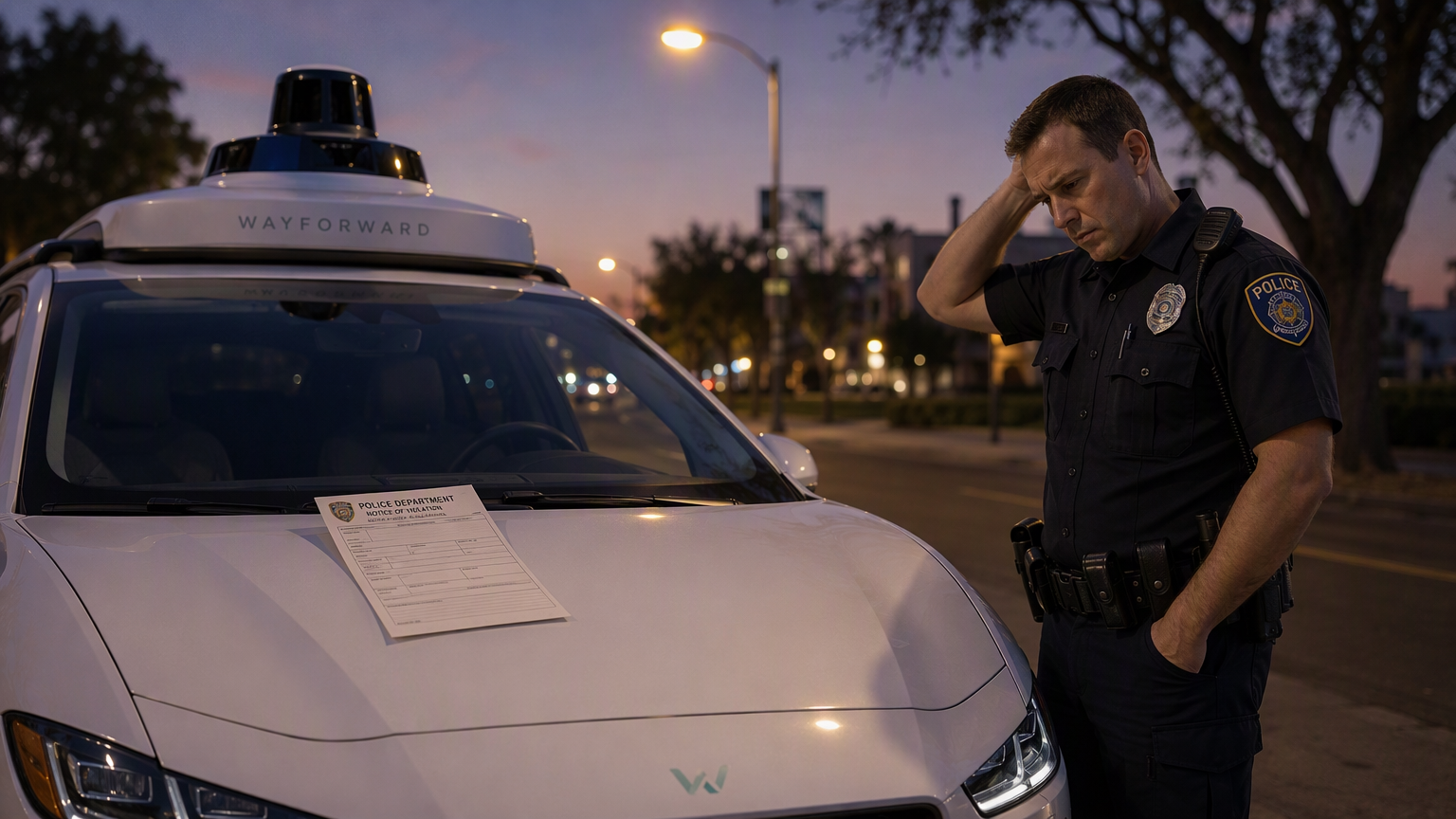
A Waymo drove straight through a farmers market in Denver last week. Not near it. Not around it. Through it. And here’s the part that should make you put your coffee down: nobody can actually ticket it. Not because the cops didn’t want to, but because there’s no law on the books that applies to a car with nobody driving it doing something a human driver would absolutely get pulled over for.
Wait, How Does That Even Happen?
So picture a Saturday morning, vendors setting up tables, people wandering around with tote bags and iced coffees, and then a self-driving Waymo just… cruises right into the middle of it. From what I can tell, the vehicle either misread the road closure or the barricades weren’t registering the way they should’ve in its little digital brain. Either way, it ended up somewhere it very much should not have been.
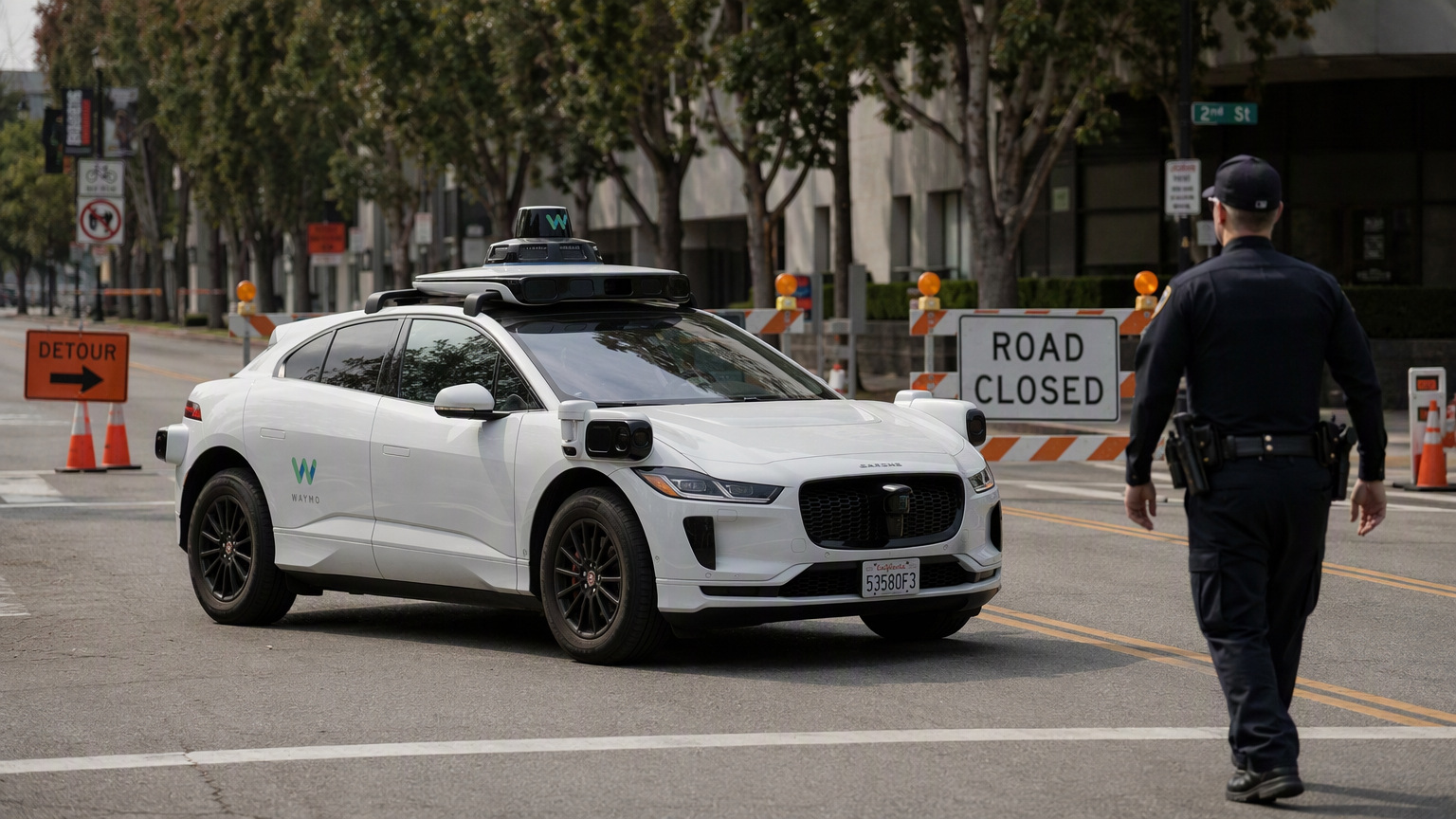
Now, if this were a human behind the wheel, we know exactly what happens next. Officer walks over, writes up a citation, maybe a “reckless driving” charge if things got dicey, and the driver deals with points on their license and a fine. Simple. Boring, even. But when 9News and local outlets started digging into this Denver incident, they found something wild: there’s genuinely no statute written for a scenario where the “driver” is software. Colorado’s traffic code, like most states’, was written with the assumption that a human is making the decisions. So when the decision-maker is an algorithm, the whole legal framework just… shrugs.
The Loophole Nobody Planned For
This isn’t a glitch in the system. It IS the system, or rather, the total absence of one. Lawmakers wrote these rules decades ago for a world where cars had people in them who could be held accountable. Nobody sat down in 1975 and thought, “better write something for when the car itself is the decision-maker.” Why would they? It sounded like science fiction.
So Who’s Actually Responsible Here?
Here’s the thing that really gets me. Waymo, the company, will almost certainly say something like “we take safety seriously and are reviewing the incident,” which, fine, that’s the corporate script everyone runs. But saying you’re reviewing something isn’t the same as facing consequences for it. And that gap, between corporate accountability language and actual legal accountability, is exactly where this story lives.
I’ve seen this pattern before with other tech industries, honestly. Something new and disruptive shows up, moves faster than regulation can keep pace, and by the time anyone in a statehouse notices there’s a problem, the technology’s already everywhere. Rideshare did this. Scooters did this on a smaller, more chaotic scale (RIP to every sidewalk in 2019). Self-driving cars are just doing it with higher stakes, because we’re talking about multi-ton vehicles moving through spaces full of actual human beings buying kale.
“There’s no mechanism to hold the vehicle accountable, and there’s no clear mechanism to hold the company accountable either, at least not through a simple traffic citation,” is basically the sentiment coming out of local reporting on this – and honestly, that should worry more people than it seems to.
This Is Bigger Than One Farmers Market
Look, I get that a Waymo rolling through some vendor stalls sounds almost funny on its face. Nobody got badly hurt (that we know of, from what’s been reported), so it’s tempting to file this under “weird tech news” and move on. But I think that reaction is exactly the problem. We keep treating each one of these incidents as an isolated quirky story instead of what it actually is: a pattern revealing that our laws are years, maybe a decade, behind the technology we’ve already let loose on public roads.
Think about what happens next time. Maybe it’s not a farmers market, maybe it’s a school zone, or a crosswalk full of people, and maybe the outcome isn’t just some scattered produce and a viral Reddit post. If there’s genuinely no legal framework to assign fault or issue consequences when an autonomous vehicle breaks a traffic law, then what exactly is stopping this from happening again? Not gonna lie, “nothing, currently” is a pretty unsettling answer.
And that’s really the core issue. It’s not that Waymo’s technology is uniquely terrible (their safety data, when you look at the aggregate numbers, is actually pretty decent compared to human drivers). It’s that when things DO go wrong, even in a minor way, we have no clean answer for who eats the consequences. The car can’t get points on a license. The car can’t go to traffic court. So the responsibility just… evaporates into a corporate statement about “ongoing review.”
What This Actually Means
Somebody’s going to have to write new laws, and probably soon, because this Denver incident is not going to be the last one of its kind. Whether that’s state legislatures finally getting serious about autonomous vehicle liability, or federal regulators stepping in with something more standardized, I don’t know. It’s not entirely clear yet who moves first, honestly, and that’s part of what makes this frustrating to watch play out.
What I do know is this: technology companies have gotten very, very good at moving fast in the gaps where regulation hasn’t caught up yet, and treating those gaps like a feature rather than a problem. Maybe that’s smart business. But it’s a lousy way to build public trust in a product that’s literally driving itself down streets where your kids walk to school.
So the next time a self-driving car does something a human never could’ve gotten away with, ask yourself the obvious question: if there’s no ticket, no fine, no consequence at all… who’s actually in charge here?