
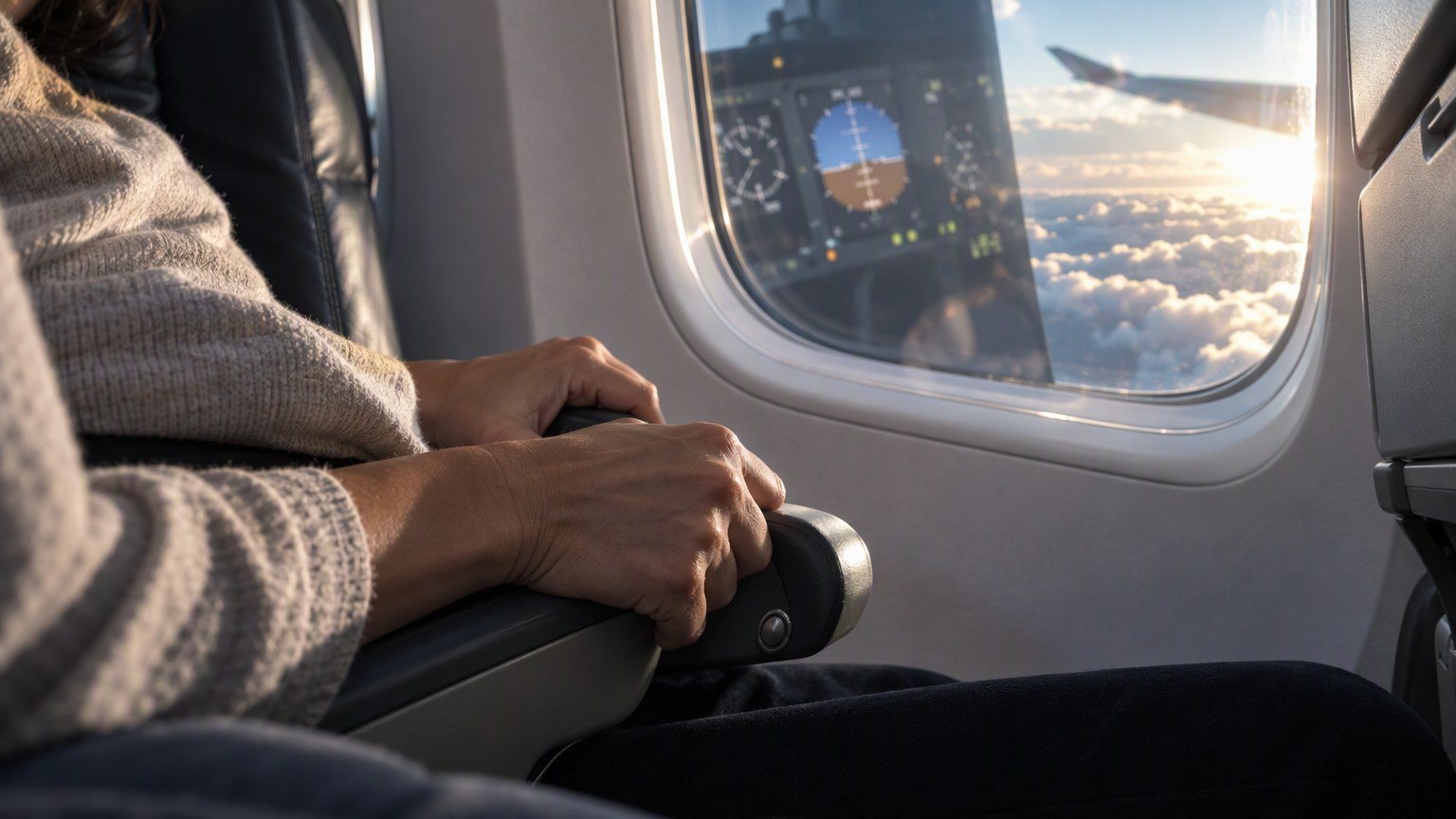
So here’s something you don’t hear every day: a guy watches a bunch of plane crash documentaries on TV, and then – I’m not making this up – he actually uses that knowledge to help save a real flight from disaster. Yaniv Hayoun was on FlyDubai Flight 981 when the co-pilot allegedly stabbed the…
So here’s something you don’t hear every day: a guy watches a bunch of plane crash documentaries on TV, and then – I’m not making this up – he actually uses that knowledge to help save a real flight from disaster. Yaniv Hayoun was on FlyDubai Flight 981 when the co-pilot allegedly stabbed the captain mid-air, and while everyone else was probably freaking out (understandably), Hayoun ran into the cockpit and helped take control of a nosediving aircraft bound for Tel Aviv from Dubai. His secret weapon? Years of watching “Mayday,” that Canadian documentary series that breaks down every aviation disaster you’ve ever heard of and plenty you haven’t.
When Binge-Watching Actually Pays Off
Look, I’ve spent countless hours watching true crime docs and cooking shows, and the most useful thing I’ve gotten out of it is knowing not to use cold butter in pie crust. But Hayoun? This guy turned his TV habit into an actual life-saving skill.

According to reports, Hayoun told Israeli Prime Minister Benjamin Netanyahu (yeah, the prime minister himself) that he knew how to take control of the aircraft specifically because he’d watched “Air Crash Investigation” – that’s what the show’s called outside North America, by the way. And honestly, when you think about it, it makes sense. “Mayday” doesn’t just show you planes going down in dramatic slow-mo. It walks you through the technical failures, the cockpit procedures, the split-second decisions that separate disaster from survival.
The show’s executive producer, Alex Bystram, had what might be the most satisfying moment of his career when he heard about this. “Whether it gave him the knowledge to do what he did or gave him courage to try to do something, or even just ensure that he didn’t do the wrong thing. It would be easy for him to go into that cockpit and then make things worse,” Bystram said.
And that last part? That’s huge. Because here’s the thing – most of us, if we’re being honest, would probably make things catastrophically worse if we tried to “help” fly a plane. The fact that Hayoun didn’t panic, didn’t grab the wrong controls, didn’t accidentally put the aircraft into an even steeper dive… that’s almost as impressive as knowing what to do in the first place.
More Than Just One Hero
But let’s be clear: Hayoun wasn’t alone in that cockpit. Other crew members who were traveling on the flight jumped in to help subdue the co-pilot and get the aircraft under control. This wasn’t a solo mission – it was a group effort, the kind of coordinated chaos that somehow, miraculously, worked out. The plane landed safely in Saudi Arabia with more than 170 passengers on board, all of them alive because a handful of people did exactly the right thing at exactly the right moment.
What Are the Odds?
I mean, really. What are the actual chances that a passenger with this specific knowledge would be on this specific flight during this specific nightmare scenario? It’s the kind of coincidence that feels almost scripted, except it’s not. It’s real life, which is messier and stranger than anything you’d see in a movie.
The thing about “Mayday” – and I’ve watched my fair share of episodes, usually at 2 AM when I can’t sleep – is that it’s kind of obsessive about detail. Every episode reconstructs an actual aviation disaster using interviews, cockpit recordings, technical analysis, the works. You learn about hydraulic failures and windshear and what happens when ice builds up on the wings. You see pilots making impossible decisions under impossible pressure. And apparently, if you watch enough of it, some of that knowledge sticks around in your brain, waiting for the one-in-a-million chance you might actually need it.
“It’s nice to get that kind of publicity, and it’s nice to be associated with a story with a happy ending like that.”
That’s Bystram again, and you can hear the relief in those words. Because let’s face it – “Mayday” is a show about disasters. Crashes, hijackings, bombings, near-misses that still ended badly. Episode after episode of things going horribly wrong at 30,000 feet. It’s not exactly uplifting content. So yeah, being connected to a story where everyone lives, where the knowledge actually prevented a tragedy instead of just documenting one? That’s got to feel good.
The Uncomfortable Questions We’re Not Asking
But here’s what’s bugging me about this whole thing. How did a co-pilot allegedly stab a captain on a commercial flight? What happened to cockpit security protocols? I know we’re all focused on the heroic ending – and we should be, because it’s genuinely incredible – but there’s a pretty serious security failure hiding underneath this feel-good story.
Commercial aviation is supposed to be one of the most secure, regulated, fail-safe industries on the planet. Multiple redundancies, constant training, psychological evaluations for pilots. And yet somehow this situation happened. I’m not saying we shouldn’t celebrate Hayoun and the crew members who stepped up. We absolutely should. They’re heroes, full stop. But we should also be asking how this got to the point where passengers needed to become heroes in the first place.
What This Actually Means
Look, I don’t think we’re all going to start watching “Mayday” as some kind of disaster preparedness course (though honestly, you could do worse). But there’s something kind of profound here about paying attention, about actually learning from the experiences – even the catastrophic ones – that other people have lived through. Hayoun didn’t just zone out in front of the TV. He absorbed information that seemed completely academic, completely removed from his daily life, right up until the moment it wasn’t.
And maybe that’s the real takeaway. Not that watching documentaries will turn you into an emergency pilot. But that curiosity, knowledge, even the seemingly useless kind, has value. Sometimes it just takes a while to find out what that value is.
Everyone on Flight 981 made it home because a passenger watched too much TV and a handful of people were brave enough to act when it mattered. That’s not a neat lesson. That’s not something you can package into a safety protocol. That’s just… life. Weird, improbable, occasionally miraculous life.