





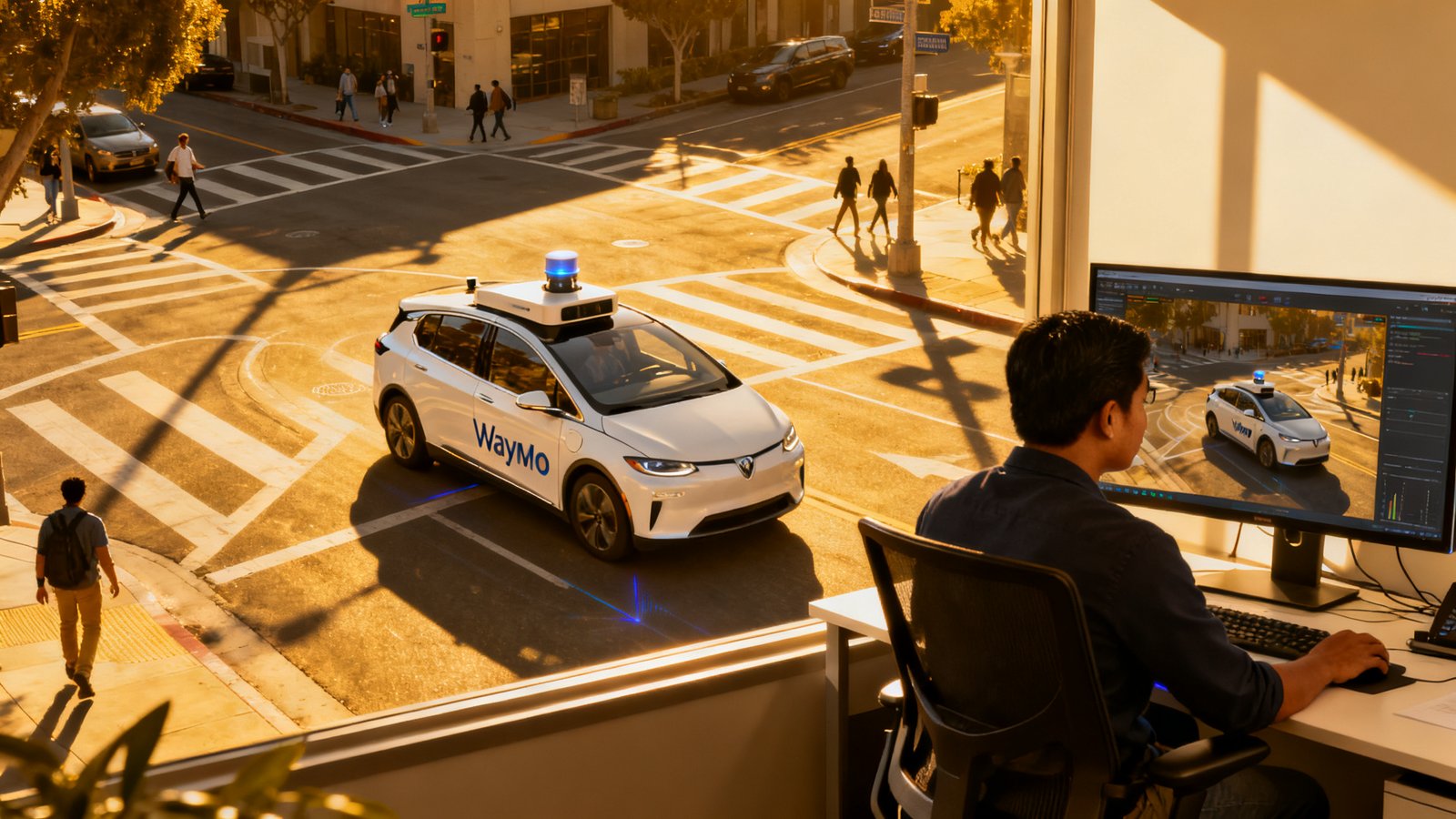
So, you thought self-driving cars were, you know, self-driving? Like, totally on their own, a marvel of silicon and code, cruising down the highway with no human hands involved, right? Yeah, me too. For a minute there. But here’s the thing about those shiny, futuristic promises from Silicon Valley: sometimes, actually, a lot of times, there’s a whole lot of smoke and mirrors. A big, fat, digital curtain. And behind that curtain? Turns out it’s not a wizard, but a bunch of folks in the Philippines, working their butts off to keep the whole illusion going. And not gonna lie, it kinda makes my blood boil.
The Wizard of Oz Had Nothing On This
Look, I’ve been covering tech for a while now, and the hype cycle? It’s relentless. Every new gadget, every groundbreaking algorithm, it’s always “revolutionary,” “unprecedented,” “game-changing.” And Waymo, Google’s self-driving car division, has been one of the biggest hype machines out there. They’ve been telling us these cars are practically sentient, navigating complex city streets, handling unexpected situations with unparalleled precision. The dream, right? The future! Except, oops, turns out when one of these supposedly genius cars gets a little, shall we say, confused – which happens more often than they’d like you to believe – it phones a friend. And that friend is about 7,500 miles away, give or take, in the Philippines.
I mean, you gotta hand it to the Reddit user, MasterShadowLord, who posted about this. It’s like the internet always finds a way to pull back the curtain, isn’t it? The story, which has been bubbling up for a bit, is that Waymo vehicles, when they hit a truly perplexing situation – like a construction zone that’s moved, a rogue mattress in the road, or just some really weird double-parked car – they don’t just figure it out. Oh no. They basically stop, throw up their digital hands, and beam the problem over to a remote operator. A human being. In a call center. Probably working a graveyard shift to match the time zones.
It’s Not “Intervention,” It’s Hand-Holding
And what do these remote operators do? From what I can gather, they’re not exactly driving the car remotely like some video game. No, no, that’s too much responsibility, probably too much lag. Instead, they’re more like super-advanced GPS assistants. They look at the car’s surroundings, identify the problem, and then, get this, they tell the car how to proceed. “Go around that cone, Waymo.” “Yep, that’s a person, not a lamppost, you can totally wait for them.” They’re providing the context, the common sense, the human intuition that the AI, for all its billions of dollars in development, just doesn’t have. Yet. Or maybe ever, if we’re being honest.
So, Are They Really “Self-Driving”?
This is where my journalist brain just starts screaming. Because if your “self-driving” car needs a human lifeguard constantly watching over it, ready to jump in the second it starts drowning in data, then how “self-driving” is it, really? It feels like we’ve been sold a bill of goods. A very expensive, very futuristic-looking bill of goods.
“It’s not truly autonomous if there’s a human pulling strings behind the scenes. It’s just a really fancy, remote-controlled car that pretends to think for itself.”
And this isn’t just about Waymo, by the way. This kind of “human-in-the-loop” system is probably more common across the entire autonomous vehicle industry than any of them want to admit. They call it “tele-operation” or “remote assistance” or some other sanitized corporate jargon. But what it really is, is a recognition that the tech isn’t there yet. It’s not magic. It’s still mostly a clever illusion, powered by human labor that they’d rather you didn’t think about too much.
The Hidden Cost of “Innovation”
Here’s the kicker: the decision to use operators in the Philippines isn’t some random logistical choice. It’s about cost. Pure and simple. Labor is cheaper there. They can staff these centers 24/7, paying wages that would be impossible to justify for the same kind of work in, say, California. So, while Waymo gets to burn billions on R&D, and charge premium prices for rides in their “futuristic” cars, the actual heavy lifting – the common sense problem-solving that keeps these things from driving into a ditch – is outsourced to a workforce that’s largely invisible to the Western consumer. It’s like the digital sweatshop of the future, powering the utopian dreams of Silicon Valley.
And you know what? That kinda makes me mad. It’s not just the misleading marketing; it’s the underlying exploitation. These aren’t just data labelers or background support staff. These are people making real-time, safety-critical decisions that allow these vehicles to operate on public roads. They’re basically the uncredited, low-wage co-pilots of our “autonomous” future. And they deserve a hell of a lot more recognition, and frankly, a lot more pay, than they’re probably getting.
What This Actually Means
So, what’s the takeaway here? For me, it’s a few things. First, take all that “fully autonomous” talk with a grain of salt the size of a bowling ball. We’re not there. Not even close. These cars are still, in many critical ways, reliant on human intelligence and intervention. Second, it highlights a much broader trend in AI and automation: the “ghost work.” The idea that behind every smart algorithm, every slick piece of tech, there are often armies of low-paid, often invisible, human workers making it all function. They’re correcting the AI’s mistakes, training it, filling in the gaps where the machines fail.
And finally, it’s a reminder that true innovation should be transparent. If Waymo’s cars are so great, why hide the fact that they need a lifeline to the Philippines? Why not be upfront about the challenges, about the human element still required? Because that would burst the bubble, wouldn’t it? It would make the future seem a little less magical, a little less… autonomous. But maybe, just maybe, a little more honest. And honestly, that’s what we need a lot more of in tech, if you ask me.

