Somebody in the White House press shop is having a very bad Tuesday. The administration just launched a shiny new AI-powered version of America.gov, presumably to modernize how the federal government talks to the public, and within what feels like minutes of it going live, people found out the thing will just… tell you Trump lost the 2020 election. Flat out. No hedging, no “some say,” just the actual historical fact that Joe Biden won in 2020 and Donald Trump did not.
I don’t know how you launch a government AI tool in this political climate and not stress-test it for exactly this scenario first. That’s not a design flaw, that’s a whole department not doing its job.
Wait, What Actually Happened Here?
From what’s circulating online (this blew up on Reddit’s r/technology, and honestly I get why), users started poking around the new AI-powered America.gov site and asking it basic questions about recent U.S. history. Nothing exotic. And when the topic of the 2020 election came up, the chatbot did what any tool trained on, you know, reality tends to do – it said Trump lost.
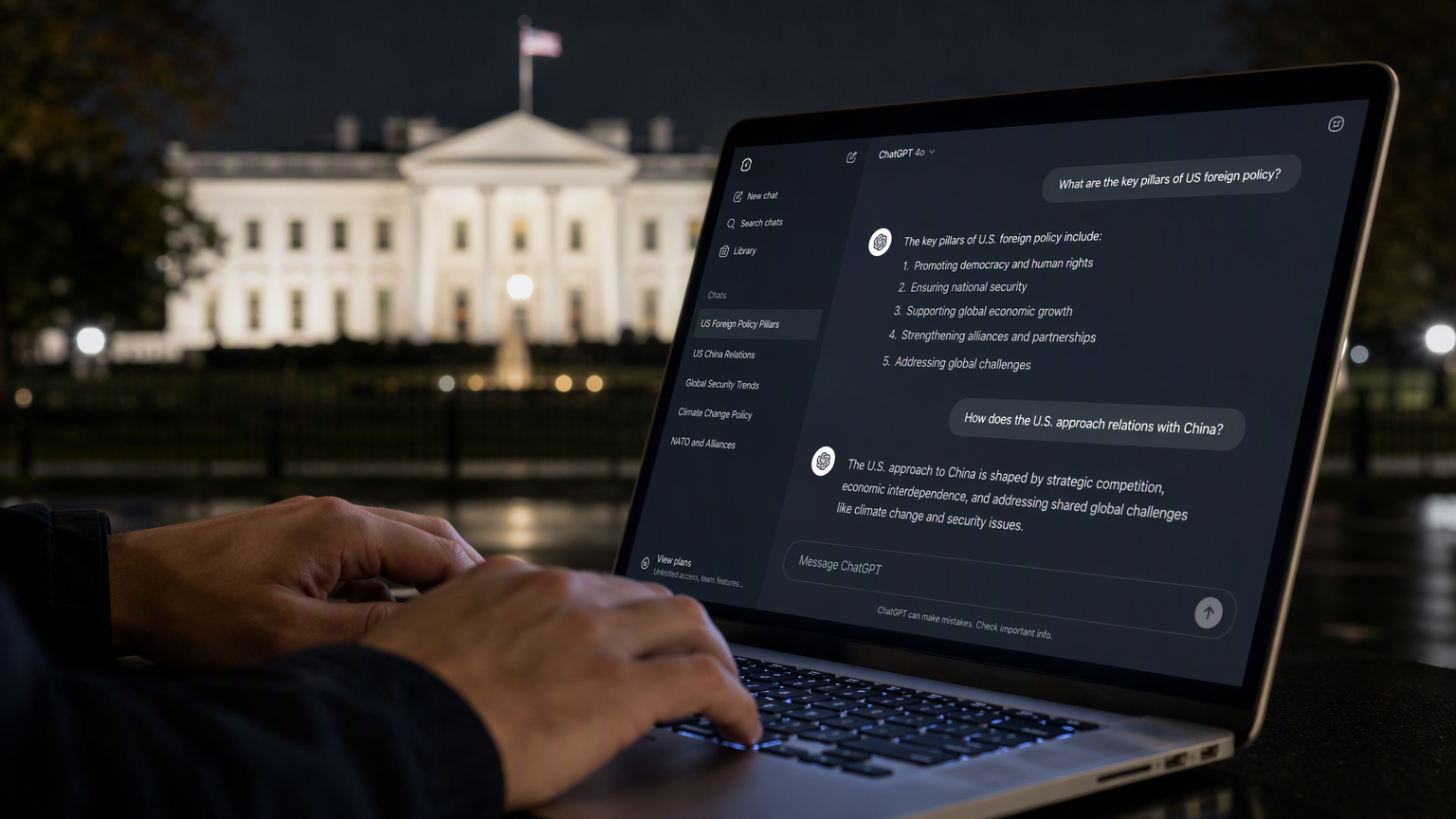
Not “it’s disputed.” Not “there are differing views.” Just the actual outcome, the one that’s been certified, litigated, recounted, and confirmed by roughly sixty different court cases that all went nowhere for the “stolen election” crowd. The AI apparently doesn’t care about the vibes, it cares about training data. And the training data says Biden won.
The Irony Is Almost Too Perfect
Here’s the thing that makes this so deliciously awkward – this is the administration’s own website. Not CNN, not some liberal think tank, not a late night monologue. A tool the White House itself stood up, presumably to make government info more accessible, is now the one contradicting years of rhetoric about a “rigged” or “stolen” election. You can’t really spin your way out of your own product disagreeing with you. That’s not fake news, that’s your own homework grading itself.
So Why Does This Keep Happening With AI?
This isn’t the first time an AI chatbot has stepped on a political landmine, and it definitely won’t be the last. I’ve seen this pattern before with Grok, with Gemini, with basically every large language model that’s been pushed out the door without someone thinking through what happens when you ask it about contested political topics. The pattern is always the same: company or agency launches AI tool, AI tool answers a question with the actual factual answer, backlash ensues, tool either gets “corrected” or quietly patched a few days later.

The thing is, these models are (mostly) trained on real information. News articles, court records, encyclopedic sources, government archives. And the real information about 2020 says Biden won 306 electoral votes to Trump’s 232, took the popular vote by about seven million ballots, and every single legal challenge to that outcome, dozens of them, got tossed. When you build a system to answer questions accurately and then ask it something that has a documented, verifiable answer, it’s going to give you that answer. Shocking, I know.
“You can’t build a tool designed to be truthful and then get mad when it’s truthful,” one commenter on the original Reddit thread put it, and honestly? Hard to argue with that logic.
The Bigger Problem Nobody Wants to Say Out Loud
Look, this drives me a little nuts, not because I think the AI is wrong (it’s not), but because it exposes a genuine tension nobody in government seems to want to deal with directly. You either build tools that tell the truth, or you build tools that tell people what they want to hear. Pick one. You cannot do both and expect it to hold together under scrutiny, especially not when literally anyone with an internet connection can go poke the thing and screenshot whatever it says.
And that’s exactly what happened here. Somebody asked, got an answer that didn’t match the administration’s preferred narrative, took a screenshot, and now it’s everywhere. This is basically the online equivalent of asking your smart speaker an awkward question in front of company.
What’s interesting here is how fast this stuff spreads once it happens. A few hours ago this was a screenshot on Reddit. Now it’s being written about (like, right now, by me) and probably getting quote-tweeted into oblivion by people on both sides, for very different reasons. Team “well yeah, obviously” is having a field day, and I’d bet money there’s already a cleanup effort underway to either retrain the model’s response on that specific topic or slap some kind of disclaimer wrapper around it so it stops giving people a straight answer.
Government AI Is Still the Wild West
We’re at this weird moment where federal agencies are rushing to bolt AI onto everything – websites, chatbots, internal tools, you name it – without necessarily having a plan for what happens when the AI does the one thing AI is supposed to do, which is answer questions using facts. It’s not entirely clear yet whether this was an oversight, a genuine “we didn’t think about it” moment, or just nobody in leadership actually testing the thing with politically sensitive prompts before launch. Probably a mix of both, honestly. Government IT projects have a long, proud history of shipping first and discovering problems later. This is just the most recent, and most viral, example.
What This Actually Means
Here’s my honest take: this is funny, but it’s also a preview of a problem that’s only going to get bigger. Governments, companies, campaigns, all of them are racing to put AI-powered stuff in front of the public, and every single one of them is going to run into this same wall eventually. You can’t fully control what a language model says once it’s trained on real information, not without either heavily restricting its answers (which people will notice and mock you for) or accepting that sometimes it’s going to say things that are inconvenient for whoever signed off on the launch.
My guess? This gets “fixed” within a week, quietly, probably framed as some kind of accuracy update or content moderation pass. The bigger question, the one that doesn’t get a neat answer, is what happens the next time a government AI tool tells an inconvenient truth. Because there will be a next time. There’s always a next time.