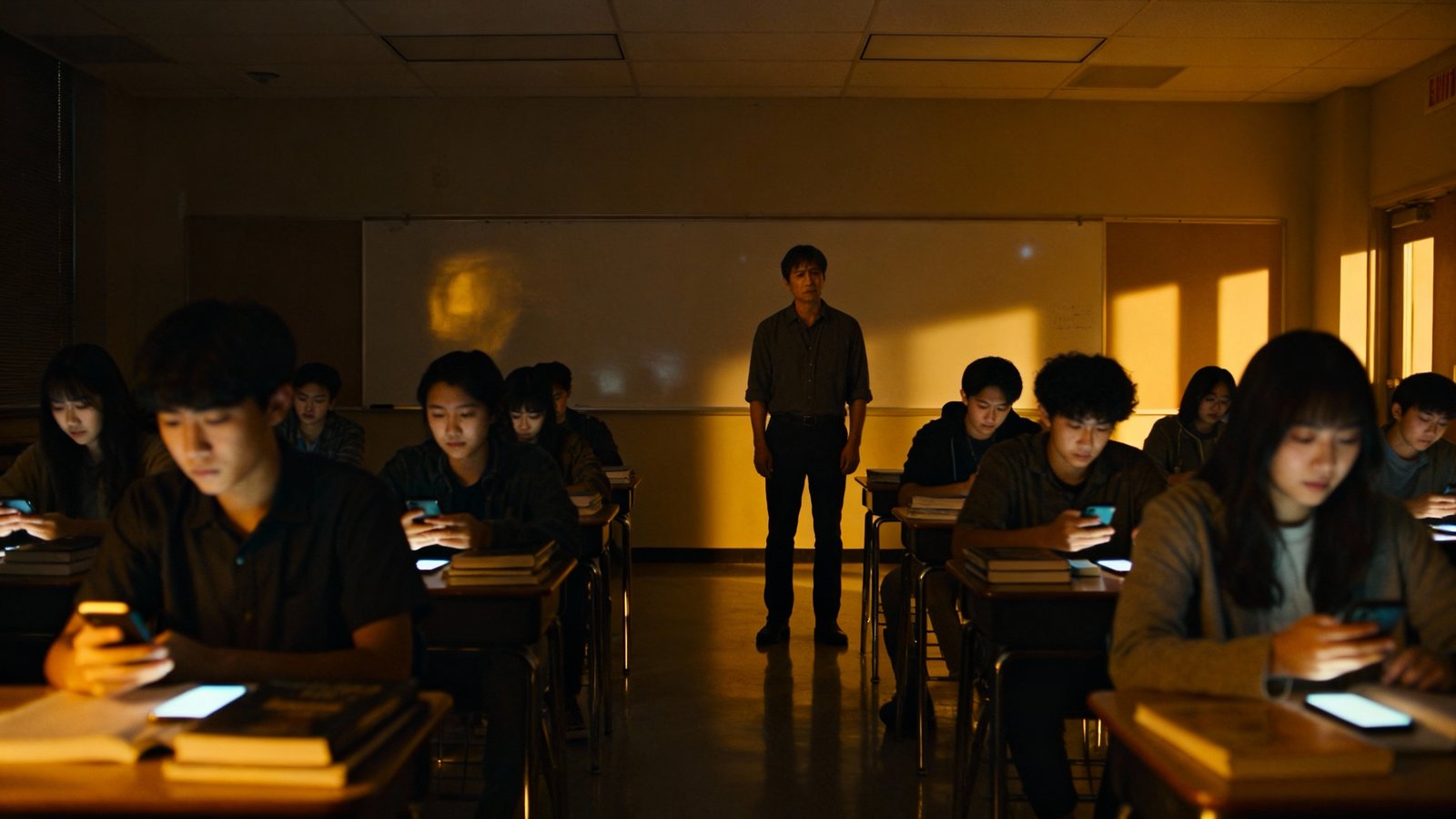
The “Duh” Moment Nobody Wants to Hear
So, here’s the deal. Studies, and I mean actual studies (not just some dude on Twitter), show that when you remove the digital pacifier, students actually engage. Imagine that. Kids looking at a teacher instead of down at a screen. It’s wild, I tell ya. Performance improves. Behavior improves. Mental health? Probably takes a tiny step back from the brink, too. There are schools, like one high school in Ohio, that went full ban – phones in pouches, locked up, only unlocked at the end of the day. And guess what? Not only did grades go up, but fights went down. And I’m not talking about some fringe, experimental school. This is happening. It works.
But you know, it’s like we’ve stumbled upon a cure for the common cold, but then everyone’s too busy arguing about the color of the pill. The evidence is overwhelming. We’re talking about actual, measurable improvements in academic outcomes and student well-being. This wasn’t some wishy-washy “maybe it helps a little.” This was big. Really big. Kids are less anxious, less distracted, and surprise, surprise, they actually remember what they learned in history class.
But the Noise, Oh God, the Noise
And yet, it feels like we’re stuck in this weird loop. Every few months, some new report comes out, some new school tries it, and we all collectively nod our heads and say, “Yeah, that makes sense.” Then… nothing. Crickets. Or worse, a flurry of excuses that make you want to bang your head against a wall. It’s like we know the answer, but we’re just too chicken to implement it.
So, What’s the Excuse This Time?
This is where my blood pressure starts to climb. Why aren’t all schools jumping on this? I mean, besides the obvious “change is hard” cop-out.
Parents: Ah, yes. The ever-present parental anxiety. “What if there’s an emergency?” they cry. “What if I need to reach my child?” And look, I get it. We’re parents. We worry. But we also survived school without a direct line to our folks 24/7. Schools have offices. They have phones. In an actual emergency, they’re calling you. Your kid probably wouldn’t even know there was an emergency until it was over because they’re too busy watching cat videos. It’s a convenience, not a necessity. And frankly, it’s often a crutch for helicopter parenting.
The Kids Themselves: Naturally, the kids are gonna hate it. They’re addicted. And let’s be honest, we’re addicted. Asking them to give up their phones is like asking a fish to live without water. But since when did kids get to dictate pedagogical policy? Since when did we let short-term discomfort trump long-term academic and social development? They’ll adapt. They always do.
“Digital Literacy”: This one makes me laugh-cry. Some schools argue they need phones for “digital literacy” or “learning tools.” Are you kidding me? Are we really pretending that scrolling Instagram during math class is a valuable digital skill? There are computers, tablets, and dedicated tech classes for that. The classroom is for learning the core stuff, not for becoming a TikTok influencer.
Logistics, Logistics, Logistics: “It’s too hard to enforce,” they whine. “Where do we put them?” “What if they get stolen?” And yeah, it’s not effortless. But nothing worth doing is. Schools have solved harder problems than collecting phones. They manage thousands of kids, complex schedules, and budgets that would make your head spin. A system for phones? That’s not rocket science. It requires leadership. It requires conviction.
“We’re so obsessed with giving kids what they want, we’ve forgotten to give them what they actually need: a moment to breathe and actually think.”
The Real Problem: Lack of Spine
Here’s the thing. I think a lot of school administrators and district officials are just plain scared. Scared of parent pushback. Scared of student protests. Scared of being seen as “old-fashioned” or, heaven forbid, restrictive. It’s easier to just let the status quo chug along, even if the status quo is a dumpster fire of distraction and declining mental health.
They want to be liked. They want to avoid conflict. But education isn’t about popularity contests. It’s about preparing kids for the future, and that means giving them the best possible environment to learn. And right now, for far too many students, their learning environment is constantly being sabotaged by a supercomputer in their pocket.
We’re in a weird place where the adults are almost more afraid of the technology than the kids are. We see the benefits of these devices in our own lives, and we project that onto our kids, even when the evidence screams that for K-12 education, the negatives far outweigh the positives. We’re letting a convenient communication tool become an educational wrecking ball.
What This Actually Means
Unless something drastic changes, we’re going to keep seeing this problem fester. We’ll have a handful of brave schools proving that phone bans work, and a vast majority of schools wringing their hands, making excuses, and watching their students struggle. It means another generation of kids growing up with shorter attention spans, higher anxiety, and less real-world social skills because they’re always plugged into a digital world.
This isn’t just about grades, people. It’s about mental health. It’s about developing resilience. It’s about teaching kids how to exist in the real world, not just a curated, filtered version of it. Schools have a responsibility to create the best possible learning environment, and right now, many are failing to do so because they’re unwilling to make a tough, but necessary, call. It’s time to grow a backbone and put the phones away. For real this time.