
The IOC’s Nazi T-Shirt: IP or Outrage?
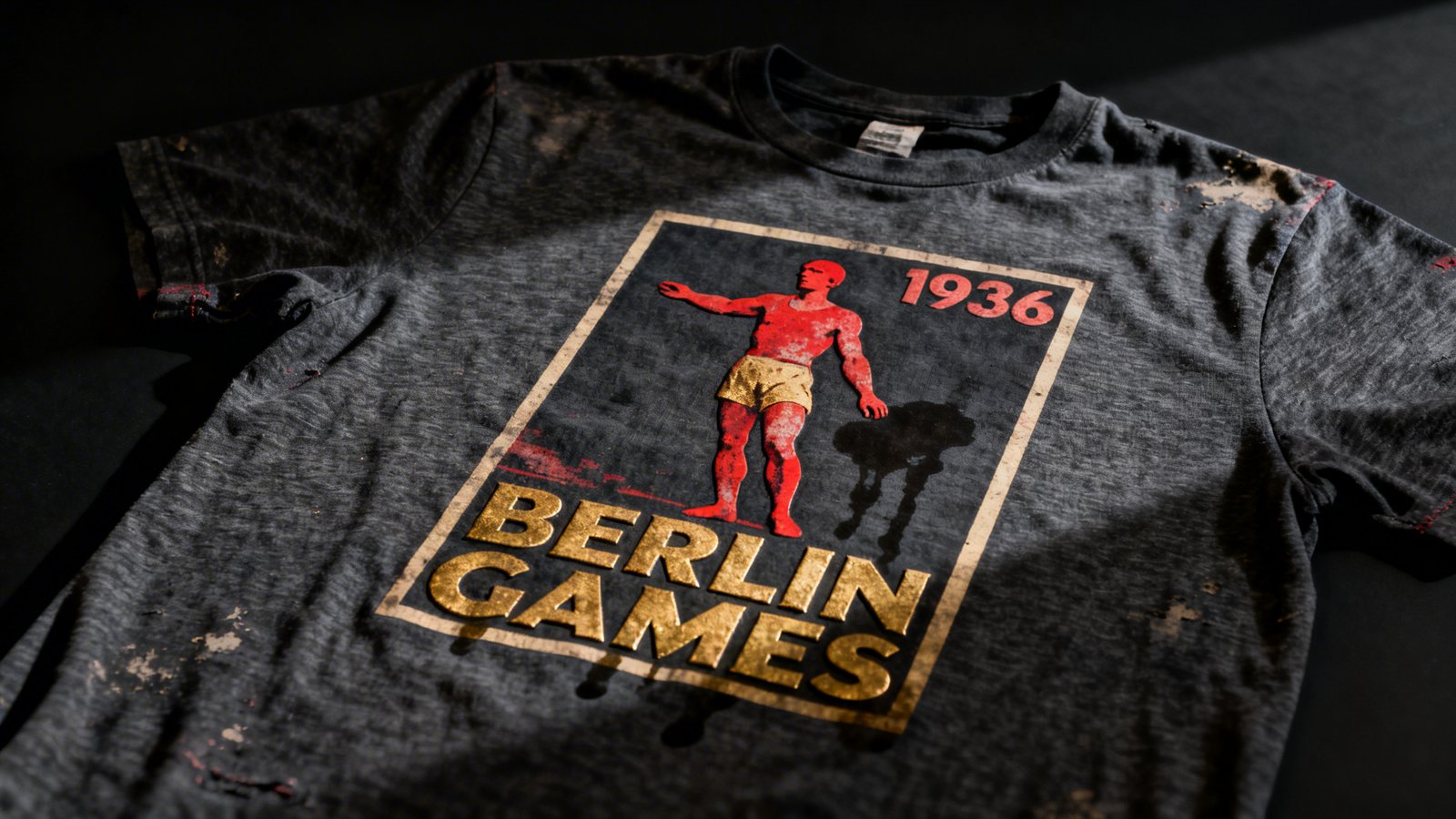
Alright, so the International Olympic Committee – the IOC, bless their hearts – decided it was a brilliant idea to sell a T-shirt featuring the official poster from the 1936 Berlin Games. Yeah. Those 1936 Berlin Games. The ones hosted by, you know, Hitler’s Nazi Germany. And they did it as part of their “Heritage Collection.” I mean, you can’t make this stuff up, can you? It’s like a bad parody of corporate tone-deafness, except it’s real.
So, They Thought This Was a Good Idea?
Look, when I first saw this, I actually had to do a double-take. Because my brain just couldn’t process it. The IOC, the very organization that’s supposed to embody ideals of peace and unity through sport, is out here hawking merchandise with imagery from an event that was basically a massive propaganda stunt for one of the most evil regimes in human history? Seriously?
The shirt (which, by the way, they’ve since pulled, but only after a massive outcry) featured that iconic, almost art deco-ish poster. You know the one. It’s got the Brandenburg Gate, an Olympic torchbearer, and the Olympic rings. And it looks kinda cool, right? If you completely, utterly divorce it from its context. Which, apparently, is exactly what the IOC tried to do.
Their defense, when this whole thing blew up, was something about how it’s part of their “historical collection” and represents their “intellectual property.” Intellectual property. On imagery directly tied to Nazi propaganda. That’s a bold move, Cotton. A really, really bold move. It’s almost like they’re saying, “Hey, that stuff Hitler used to promote his racist ideology? That’s ours now. And we’re gonna make a buck off it.” It’s mind-boggling, honestly.
History, But Like, Which History?
Here’s the thing about the 1936 Berlin Olympics: they weren’t just some regular Games where athletes competed and everyone had a jolly good time. Oh no. These were meticulously orchestrated by Hitler’s regime to showcase what they saw as Aryan supremacy and the supposed might of the Third Reich. Every single detail, from the grand opening ceremony to Leni Riefenstahl’s groundbreaking (and deeply problematic) film “Olympia,” was designed to project an image of a powerful, modern Germany. A Germany that was already persecuting Jews and Roma, a Germany that would soon plunge the world into a horrific war.
We’re talking about the Games where Jesse Owens absolutely obliterated Hitler’s racist theories of Aryan athletic superiority, winning four gold medals. And that’s the only truly redeeming part of those Games, the part where a Black American athlete stuck it to a dictator. But the imagery? That’s still steeped in the original sin of its creation. You can’t just slap “IP” on it and pretend it’s divorced from the context that made it infamous. It’s like saying a swastika is just a “historical symbol” and has nothing to do with Nazism. No. That ship sailed a long, long time ago.
Seriously, Who Signs Off on This Stuff?
This is what drives me absolutely nuts. How many layers of approval did this T-shirt go through? Did no one – no one – in their marketing department, their “heritage” department, their legal team, or their executive suite stop and say, “Hey, wait a minute. Maybe selling merch from the Nazi Olympics isn’t, you know, the best look for an organization dedicated to world peace?”
It begs the question of what exactly their vetting process is. Or if it exists at all. Because if this slipped through, what else have they considered? A “Stalin’s Five-Year Plan” mug? A “Mao’s Little Red Book” tote bag? It sounds ridiculous, but when you see something this monumentally boneheaded, you start to wonder if there’s any critical thinking happening at all.
“You’d think after a century of existence, an organization like the IOC would understand the difference between ‘heritage’ and ‘historical baggage that maybe you shouldn’t try to monetize.’ But apparently, some lessons are just too hard to learn.”
I mean, come on. This isn’t some obscure historical event. This is the 1936 Berlin Olympics. It’s iconic for all the wrong reasons. It’s in every history textbook. It’s a prime example of sports being co-opted for political propaganda. And to treat it as just another “heritage” item, like a poster from the 1984 LA Games or something, shows a shocking lack of awareness. Or worse, a deliberate disregard for historical sensitivity in pursuit of a quick buck.
It’s Not Just a T-Shirt, Is It?
No, it’s never just a T-shirt. This isn’t some isolated incident; it’s a symptom of a larger problem. It’s about how powerful organizations sometimes treat history – particularly the uncomfortable, painful parts – as something to be sanitized, commercialized, or simply ignored if it gets in the way of branding or profit.
When the IOC claims “intellectual property” on a poster from the Nazi Games, they’re not just asserting ownership over a design. They’re implicitly trying to decouple that design from its historical context, to strip it of its propaganda origins, and present it as neutral “heritage.” But that’s not how history works. You don’t get to cherry-pick the aesthetically pleasing bits of a genocidal regime’s propaganda and call it your property without also owning the horror it represents.
And what message does this send? To Holocaust survivors, to Jewish communities, to anyone who understands the atrocities committed by the Nazis, seeing an international body trying to profit from that era’s imagery is deeply offensive. It trivializes the past. It normalizes what should remain unequivocally condemned. It shows a profound disrespect for the millions of lives lost and the suffering endured. For an organization whose stated mission includes promoting “respect for universal fundamental ethical principles,” this is a spectacular own goal.
It also reminds us that the fight against historical revisionism and the commodification of painful history is a constant one. Every time a company tries to sell something that skirts too close to problematic imagery, it forces us to re-evaluate our collective memory and push back. And frankly, we shouldn’t have to. The IOC, of all organizations, should be leading the charge on historical sensitivity, not fumbling around in the dark trying to sell Nazi-era posters.
What This Actually Means
Here’s my honest take: This whole T-shirt debacle isn’t just a misstep; it’s a glaring failure of judgment, empathy, and historical understanding. It tells me that somewhere within the IOC, there’s a serious blind spot when it comes to the darker chapters of their own history and how those chapters resonate today.
It’s either profound ignorance – which is bad enough for an organization of this stature – or a cynical attempt to exploit a visually striking historical artifact without bothering to consider its loaded past. And I’m not entirely sure which one is worse. Probably the latter, if I’m being brutally honest.
They’ve pulled the shirt, which is the bare minimum they could do. And they’ll probably issue some boilerplate apology about “regrettable oversight” or “unintended offense.” But the damage is done. It’s another dent in their already shaky reputation, another reminder that sometimes, the institutions we expect to uphold certain values are the very ones that stumble over them in the most spectacular fashion.
What this actually means is we, the public, have to stay vigilant. We can’t assume that powerful organizations will always do the right thing or remember the difficult lessons of history. Sometimes, we have to remind them. Loudly. Because if we don’t, you can bet your bottom dollar they’ll try to sell us another “heritage” item that conveniently forgets the whole “genocide” part of the story… and that’s just not okay.