Alex Karp, the CEO of Palantir Technologies – you know, that data analytics company that works with governments and makes conspiracy theorists nervous – just bought himself a forest. Not a little grove in Upstate New York. We’re talking 37,000 acres of Swedish wilderness. That’s roughly 57 square miles of trees, trails, and apparently, a lot of very pissed-off hunters who just lost their leases.
Nobody Saw It Coming (Which Was Kind of the Point)
Here’s the thing: this wasn’t announced. There was no press release, no “I’m excited to share” LinkedIn post, no carefully worded statement about conservation and stewardship. The locals found out the way you find out your landlord sold your building – when suddenly the rules changed and someone new was calling the shots.
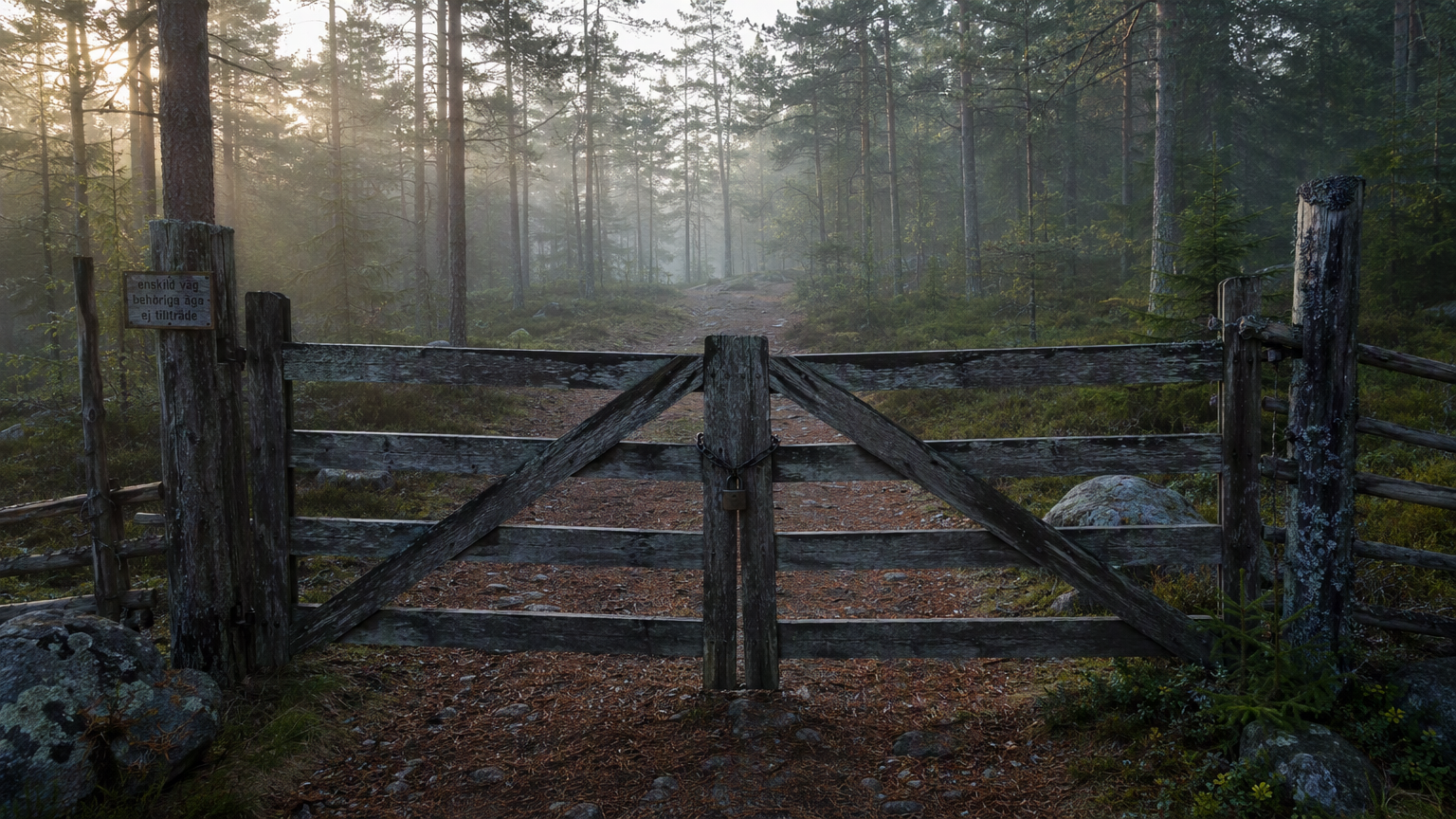
Swedish hunters had been leasing portions of this land for years. It’s a big deal over there – hunting’s woven into the culture, and these leases get passed down, planned around, respected. Then one day, boom. Leases terminated. New owner doesn’t want you here anymore. And that new owner? A billionaire tech CEO from California who they’d probably never heard of.
I mean, imagine that. You’ve been hunting the same forest for a decade, maybe two. You know the trails, the clearings, where the elk move in autumn. Then some guy who made his fortune building surveillance software for the CIA buys the whole thing out from under you and says thanks, but no thanks.
The Quiet Purchase
From what I can tell, Karp worked through intermediaries – which, look, is standard practice for high-profile purchases. You don’t want your name driving up the price or inviting scrutiny. But it also meant that by the time anyone realized what was happening, the deal was done. The forest had a new owner, and he wasn’t interested in maintaining the status quo.
So What’s He Actually Doing With It?
Good question. Karp hasn’t exactly been forthcoming. There’s speculation – always speculation with these guys – that it’s a personal retreat, maybe a doomsday bunker situation (because of course), or possibly some kind of conservation project. But here’s what bugs me: if it were really about conservation, wouldn’t you, I don’t know, say that? Wouldn’t you bring people along, explain the vision, maybe even keep some of those hunting leases in place under new sustainable terms?
Instead, we get silence. And evictions.
Karp’s known for being… let’s call it eccentric. He does his Palantir earnings calls while walking around in the woods, sometimes shirtless. He’s talked about wanting to live closer to nature, about the importance of physical space and disconnection. Which, fine. I get it. We’re all burned out. But there’s a difference between buying a cabin and buying an area larger than Manhattan.
“It feels like we’re just being erased from our own landscape. Nobody asked us, nobody told us – we just don’t matter anymore.”
This Isn’t Really About Hunting
Not gonna lie, my first reaction was: okay, some rich guy bought land, hunters are upset, tale as old as time. But the more I think about it, the more this feels like something bigger. Or maybe not bigger, but more… symptomatic?
Because this keeps happening. Tech billionaires keep buying massive chunks of land – Zuckerberg in Hawaii, Bill Gates becoming America’s largest farmland owner, Marc Andreessen fighting affordable housing in his neighborhood while preaching about building the future. There’s this pattern of accumulation that’s not just about wealth anymore. It’s about space. Control. The ability to just… opt out of normal society and build your own thing on your own terms.
And look, property rights exist. If you’ve got the money and someone’s selling, you can buy it. That’s how it works. But when it happens at this scale, when entire communities lose access to land they’ve used for generations because one person decided they wanted it, doesn’t that seem kind of – I mean, doesn’t that feel wrong? Or at minimum, worth talking about?
The Sweden Angle Makes It Weirder
Sweden has this concept called “allemansrätten” – the right to roam. It’s basically a cultural and legal principle that says you can access nature freely, even on private land, as long as you’re respectful. You can walk through forests, camp overnight, pick berries. It’s a cornerstone of Swedish life.
But that right has limits. And landowners can restrict certain activities – like hunting – which requires permission anyway. So technically, legally, Karp’s within his rights. But culturally? He’s trampling all over an unspoken contract about how land and community work in that part of the world.
It’s the tech mindset applied to physical space: I bought it, it’s mine, I’ll optimize it however I want. Never mind the externalities. Never mind what was there before.
What This Actually Means
I’ve been covering tech and power for long enough to know this story won’t end here. Either Karp will eventually say something – maybe he’ll spin it as environmental protection, maybe he’ll just own the privacy angle – or he won’t, and this’ll become one of those weird footnotes in the ongoing saga of billionaire land grabs.
But here’s what sticks with me: those hunters didn’t lose access to just any forest. They lost access to their forest. The one they knew. The one that was part of their lives. And they lost it not because the land was being destroyed or developed, but because one person – one very rich person – decided he wanted it more than they did.
That’s the thing about infinite money. It doesn’t just buy stuff. It buys absence. It buys the ability to make other people disappear from spaces they used to occupy. And maybe Karp has noble intentions. Maybe he’s going to turn this into some model of sustainable forestry or ecological preservation. But until he says something, all we know is that he bought 37,000 acres of forest and the first thing he did was kick people out.
That tells you something. I’m just not sure it’s anything good.