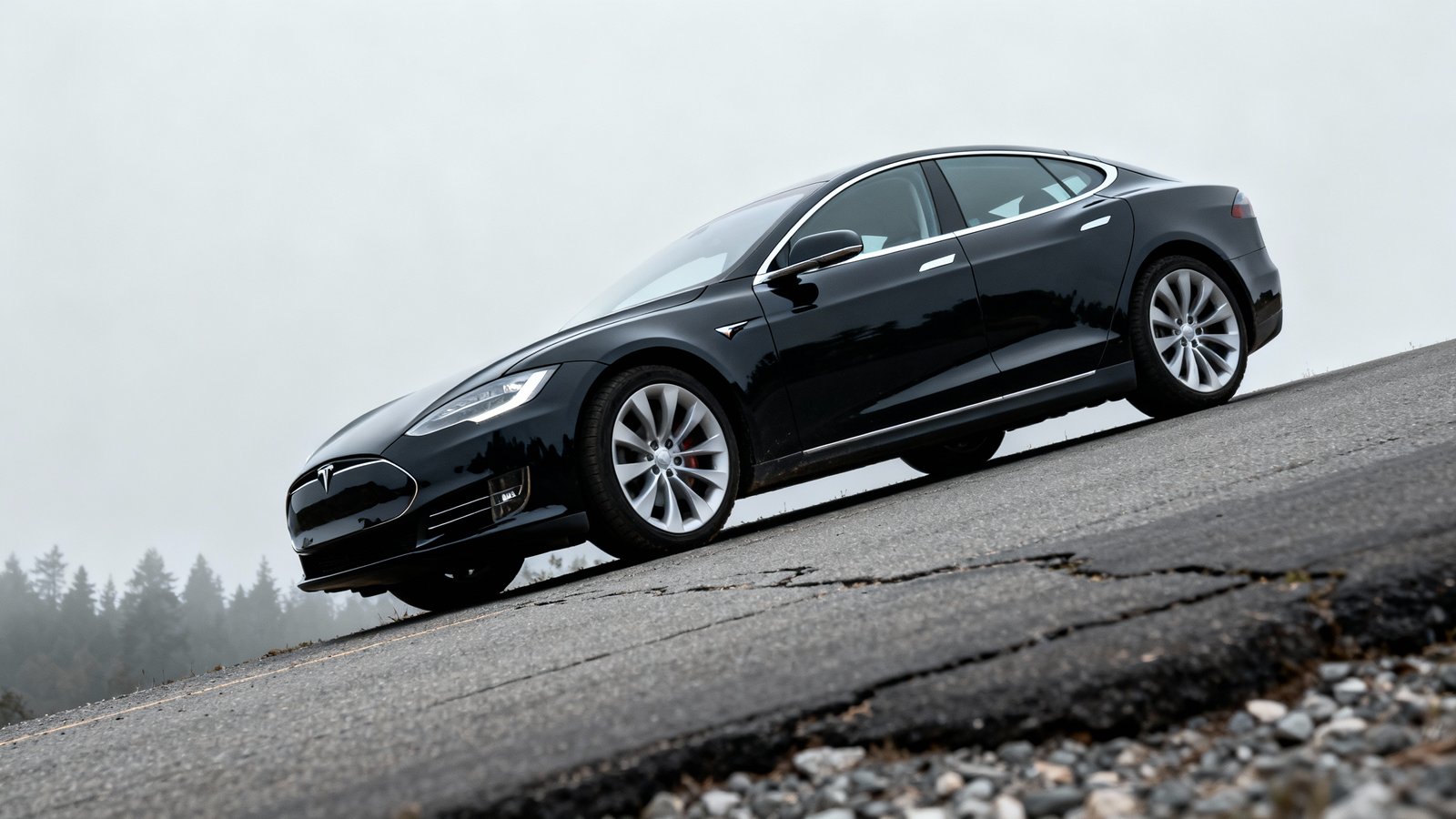
Okay, so get this: Tesla’s fourth quarter sales? They just took a dive. Like, a real nose-dive. We’re talking 418,227 vehicles, which, if you’re keeping score at home (and trust me, Wall Street is), is a whopping 15.6 percent drop year over year. Fifteen point six percent! That’s not just a little bump in the road; that’s like hitting a brick wall at 80 miles an hour. Whoa.
What in the Actual Heck Happened?
Look, I’ve been doing this gig for fifteen years, and I’ve seen some wild swings. But this? This feels… different. It’s not just “oh, a slow quarter.” This is a significant, double-digit slide for a company that, not too long ago, everyone (and I mean everyone) thought was unstoppable. The golden child of EVs, the company that basically invented the modern electric car, just hit a serious snag.
And let’s be real, a 15.6% drop isn’t just “more than expected,” which is what some of the headlines are gently saying. It’s a lot more than expected. It’s the kind of number that makes analysts spit out their coffee and institutional investors start sweating. This isn’t just about missing targets; it’s about missing them by a country mile. And frankly, it raises a ton of questions about where Tesla is headed.
Is the Magic Gone?
For years, Tesla was synonymous with innovation, with the future. Elon Musk was practically a deity to his most ardent fans. They could do no wrong. Every price cut, every weird tweet, every production delay – it was all part of the master plan, right? But you start seeing numbers like this, and you gotta wonder if the magic, that special Tesla aura, is starting to fade. I mean, c’mon. This isn’t a startup anymore; it’s a massive car company, and massive car companies don’t just “oops” their way to a 15.6% sales drop without some serious underlying issues.
But Seriously, Is Anyone Surprised?
If I’m being honest? Not really. Not entirely. I’ve been watching this space for a while now, and the signs have been there. Tesla’s gotten complacent, I think. While they were busy chasing robotaxis and sending rockets to Mars (cool, but not selling cars), the competition caught up. And not just caught up, in some areas, they blew past ’em. You’ve got legacy automakers finally taking EVs seriously, pumping out some genuinely good cars that don’t look like they’re from 2017. And they’re not all being run by a guy who seems to actively want to piss off half his potential customer base on social media. Just sayin’.
“It’s not enough to be first anymore; you have to keep being the best, or at least really, really good, and frankly, Tesla hasn’t been consistently hitting that mark lately.”
Plus, the economy, right? Interest rates are up, people are feeling the pinch. A brand new, expensive electric car, even a Tesla, isn’t exactly at the top of everyone’s shopping list when mortgage payments are through the roof. And while Tesla has been slashing prices like crazy – which, by the way, eats into their profit margins like nobody’s business – it’s clearly not enough to offset the slowing demand or the increased competition. You can only drop prices so many times before people start wondering if the car was overpriced to begin with, or if there’s a reason it’s suddenly so much cheaper.
The Elephant in the Room
Let’s talk about Elon for a second. Yeah, I know, everyone’s tired of talking about him, but you can’t ignore the guy when you’re talking about Tesla. His personal brand is inextricably linked to the company’s. And let’s just say, his public antics haven’t exactly been winning over new, mainstream customers. I mean, if you’re trying to appeal to a broad market, maybe don’t alienate huge swathes of it with, shall we say, unconventional behavior? It seems like every week there’s a new controversy, and it has to have some impact on people’s willingness to buy a premium product from a company so closely tied to it.
And then there’s the product line. Where’s the innovation? The Cybertruck is… well, it’s the Cybertruck. It’s niche. It’s weird. It’s not a mass-market savior. The Model 3 and Model Y are still good cars, but they’re not new. They’re not exciting in the way they once were. Where’s the next big thing? Where’s the affordable compact EV that everyone’s been waiting for? It feels like Tesla’s been resting on its laurels a bit too long, expecting the name and the hype to carry them through. Turns out, it doesn’t.
What This Actually Means
So, what does this 15.6% plunge actually mean? For starters, it means Tesla isn’t untouchable. It means they’re just another car company now, facing the same market realities and competitive pressures as Ford or GM or Toyota. And that’s a tough pill for a lot of people to swallow, especially those who had so much invested (emotionally, financially) in the “Tesla is different” narrative.
It means the EV market is maturing. It’s not just about who has an electric car; it’s about who has the best electric car, the most reliable, the one with the best features, the best price, and frankly, the least amount of drama attached to it. Tesla’s not automatically winning those fights anymore.
For investors? It’s a wake-up call. The growth story isn’t as simple or as guaranteed as it once was. For consumers? It means more choice, better cars, and hopefully, more competitive pricing across the board as everyone scrambles for a piece of the pie. Tesla’s shock isn’t just Tesla’s problem; it’s a sign of a much larger shift in the automotive world. And frankly, it’s about damn time.