
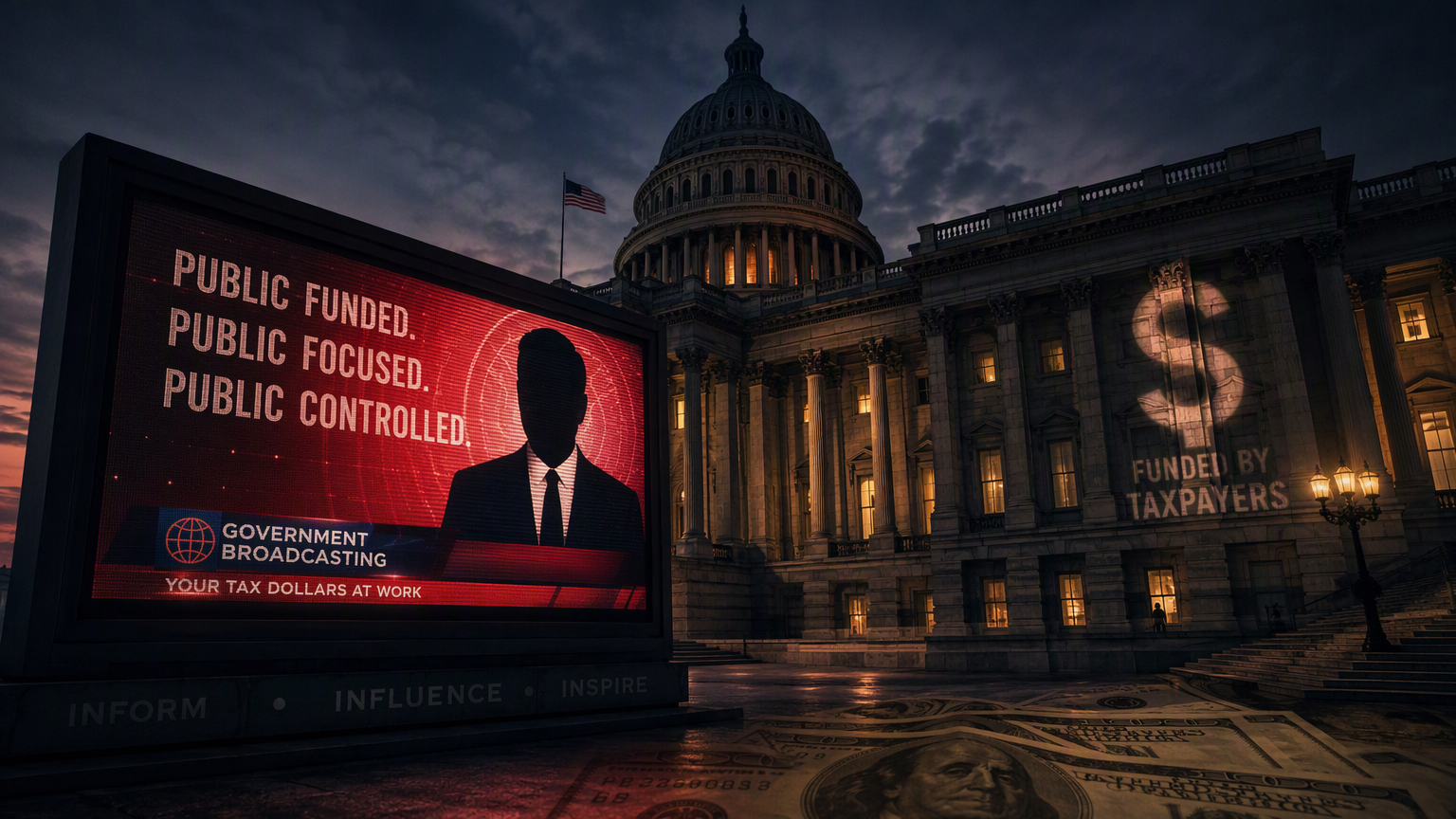
So here’s a fun little wrinkle in the “wait, who’s paying for this?” category: the federal government apparently footed the bill for a television ad pushing Trump’s midterm messaging. Not a campaign committee. Not the RNC. The government. As in, your tax dollars and mine, allegedly, went toward putting a political message on TV screens across the country. And nobody seems to have a clean answer for who signed off on it.
Wait, Back Up – What Actually Happened Here?
Reports started circulating that a TV spot carrying Trump’s midterm talking points was produced and aired using government funds. Not a super PAC, not a campaign fund, government money. The kind that’s supposed to go toward, you know, actual governing. Roads, agencies, whatever your particular grievance with federal spending happens to be this week.
I’ve covered a lot of budget stories over the years, and there’s always this moment where you have to double check you’re reading the numbers right. This felt like one of those moments. Because using taxpayer money to fund what is, by any reasonable definition, campaign-adjacent messaging isn’t some gray area technicality. It’s the kind of thing that usually gets somebody hauled in front of a committee.
The “Who Approved This” Problem
Here’s the thing that’s bugging me the most, honestly. Nobody’s stepping up to say “yep, that was me, I signed off on it.” That silence tells you something. When an ad campaign like this runs, there’s a paper trail. Somebody requested funds, somebody approved the request, somebody cut the check or authorized the spend. That person exists. We just don’t know who they are yet, or at least it hasn’t been made public in any clear way.
And look, government agencies produce informational content all the time. That’s normal. Public health messaging, safety campaigns, that kind of thing. But there’s a pretty bright line between “here’s how to sign up for Medicare” and “here’s why you should vote a certain way in November.” One is a public service. The other is politics wearing a government-issued windbreaker.
Why This Actually Matters (Beyond the Obvious)
Some people are going to read this and shrug. Politicians blur lines all the time, right? Sure. But there’s a reason we have rules – actual laws, not just vibes – about using appropriated federal funds for partisan political purposes. The Hatch Act exists. Anti-lobbying provisions exist. These aren’t obscure technicalities nobody’s ever heard of. They’re guardrails specifically built because, surprise, politicians in power have always been tempted to use the machinery of government to help themselves stay in power.
What’s interesting here is how normalized this kind of thing has become in the discourse. A few years ago this would’ve been the story for a week straight. Now it’s competing for attention with fifteen other controversies happening at the same time, and I think that’s exactly the environment where stuff like this slips through. Not because anyone’s necessarily hiding it well, but because there’s just so much noise that nobody has the bandwidth to follow up.
“When government resources get used for political messaging, it’s not just an ethics violation, it’s a trust violation. People start assuming everything the government tells them has an angle.”
The Precedent Problem Nobody Wants to Talk About
This is the part that actually worries me more than the ad itself. If this goes unanswered, if nobody’s held accountable and there’s no real consequence, guess what happens next cycle. And the one after that. Precedent is a heck of a drug in Washington. Once something happens once without pushback, it becomes the new floor, not the ceiling.

I keep thinking about how this would’ve played out if the situation were flipped, a Democratic administration running taxpayer-funded ads pushing midterm messaging. The outrage machine on the right would be in overdrive, and honestly? They’d have a point. That’s the annoying thing about consistency, it only means something if you apply it even when it’s inconvenient for your side.
Not gonna lie, I’ve seen this pattern before in different administrations, different parties, same basic playbook. Someone in an agency gets a little too cozy with a political directive, budgets get creative, and by the time reporters or watchdogs catch wind of it, there’s already a “we’re looking into it” statement ready to go that basically means nothing.
The Money Trail Question
From what I can tell, the specifics of which agency budget line this came out of are still murky. That’s usually the case in the early days of stories like this, everyone wants the headline before the paperwork’s been fully sorted. But the eventual accounting matters a lot. Was this an obscure discretionary fund? Was it buried in a communications budget that’s supposed to be for public information, not political persuasion? Those details will determine whether this becomes a real accountability story or just a news cycle that fades in 72 hours.
What This Actually Means
Here’s my honest take. I don’t think this is going to result in some dramatic resignation or criminal referral, those things almost never happen with this kind of story, no matter how clear-cut the ethics violation looks on paper. What I do think happens is this becomes another data point in a much bigger pattern, one where the lines between government function and political campaigning keep getting fuzzier and fuzzier until eventually nobody even bothers pointing it out anymore.
And that’s the real cost here. Not the dollar amount of the ad buy, whatever it turns out to be. It’s the slow erosion of the idea that government resources are supposed to serve everybody, not just whoever’s currently in charge and trying to stay that way. Who approved this ad? Maybe we’ll find out. Maybe we won’t. But the fact that the question is even necessary should tell you everything about where things stand right now.