
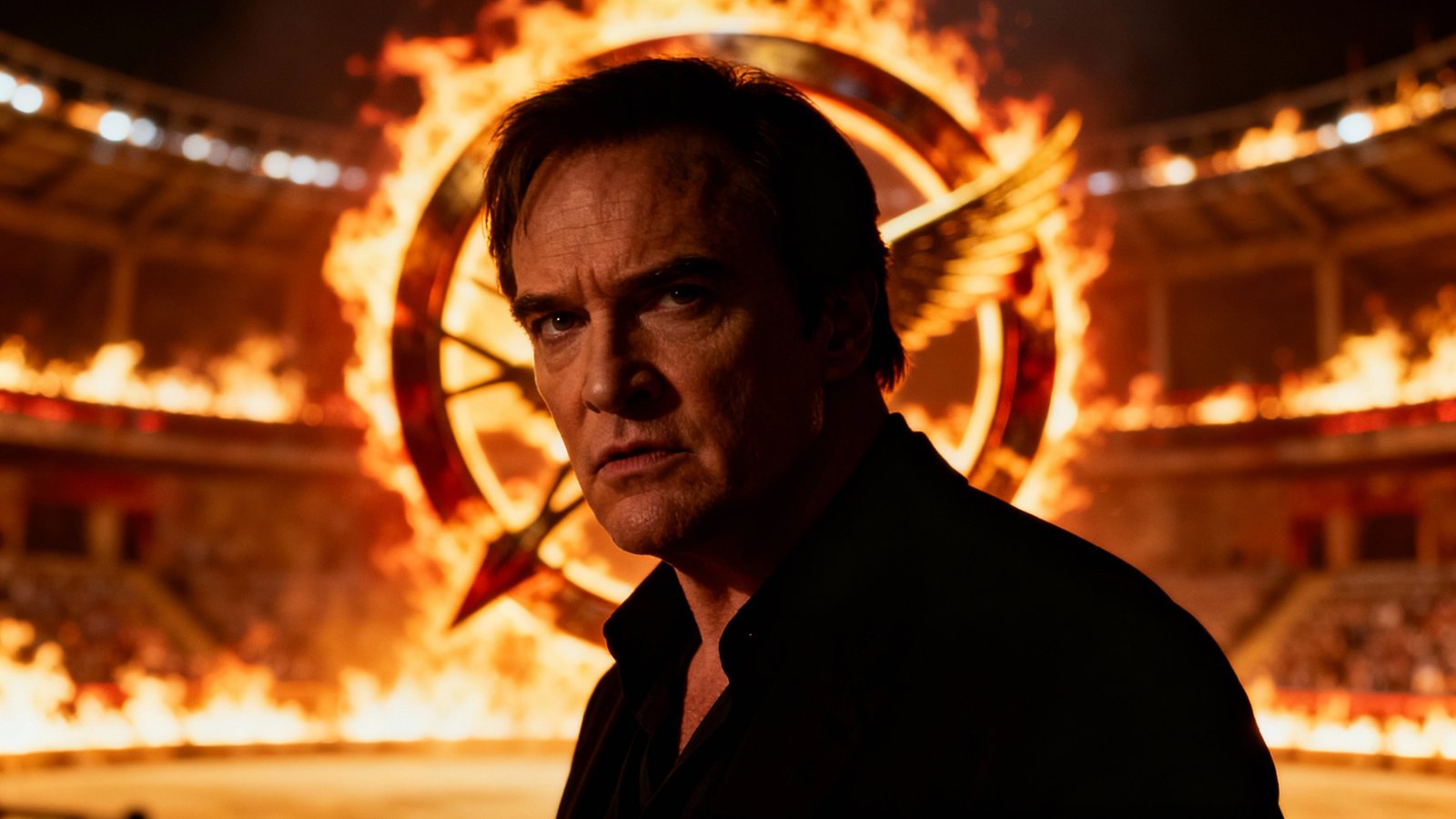
Alright, so imagine you’re sitting around, maybe having a drink, and the conversation turns to movies. Someone brings up The Hunger Games – you know, the one with Jennifer Lawrence and the dystopian kid-on-kid violence. Fairly popular, right? Made a gazillion dollars. Everyone’s seen it. Well, apparently, one of the most iconic, frankly unmistakable voices in modern cinema, Quentin Tarantino, has some thoughts. And when I say thoughts, I mean a complete, no-holds-barred, verbal smackdown. He essentially called The Hunger Games a blatant rip-off. A total copycat. And he’s not holding back. At all.
This isn’t just a casual observation, either. This is Tarantino talking, someone whose entire career is built on knowing film, deconstructing it, and yeah, admittedly, borrowing from it in his own unique, highly stylized way. So, when he points a finger and screams “plagiarism!” – especially at something as mainstream as The Hunger Games – people tend to listen. Or at least, I do. Because who doesn’t want to hear what Q.T. has to say, even if it’s kinda incendiary?
The whole thing blew up a bit recently while he was, of course, doing what he does best: talking about movies. Specifically, he was teasing his “20 Best Movies of the 21st Century” list – which, let’s be honest, is an event in itself. But amidst the cinematic praise, he veered hard into criticism, unleashing a brutal assessment of Suzanne Collins’ massively successful young adult series and its film adaptations. And his comparison? The infamous Japanese cult film, Battle Royale.
Q.T.’s “How Did She Not Get Sued for Every F-ing Thing She Owns?” Moment
So, the core of Tarantino’s argument, if you can call it that – because it’s more of a passionate rant – is that The Hunger Games just lifted its central premise straight from Kinji Fukasaku’s 2000 masterpiece, Battle Royale. And he phrased it in that classic, unfiltered Tarantino way, asking something along the lines of, “How did Suzanne Collins not get sued for every f-ing thing she owns?” Which, you know, is quite the statement. It’s not subtle. It’s not nuanced. It’s vintage Quentin, pure and simple.
For those unfamiliar – and if you are, go watch it immediately – Battle Royale is a Japanese film where, yearly, a class of junior high students is taken to a remote island, given a random weapon, and forced to fight to the death until only one survivor remains. All under the watchful eye of a totalitarian government. Sound familiar? Yeah. It absolutely should.
The “Similarities” That Are Anything But Subtle
Let’s break down why Tarantino (and honestly, a lot of other genre film fanatics who saw Battle Royale long before Katniss Everdeen picked up a bow) has such a strong reaction. The parallels are, shall we say, a bit more than coincidental.
- The Core Premise: Kids, chosen by a repressive government, forced into a kill-or-be-killed scenario in a contained environment for public consumption. This isn’t just a plot point; it’s the entire engine of both narratives.
- Government Control/Spectacle: Both stories feature a state-sanctioned event designed to control the populace through fear and entertainment. The Capitol in Hunger Games, the government in Battle Royale – same vibe.
- Special Arenas: Whether it’s an island or a technologically advanced arena that changes daily, the idea of a fabricated, deadly setting is key.
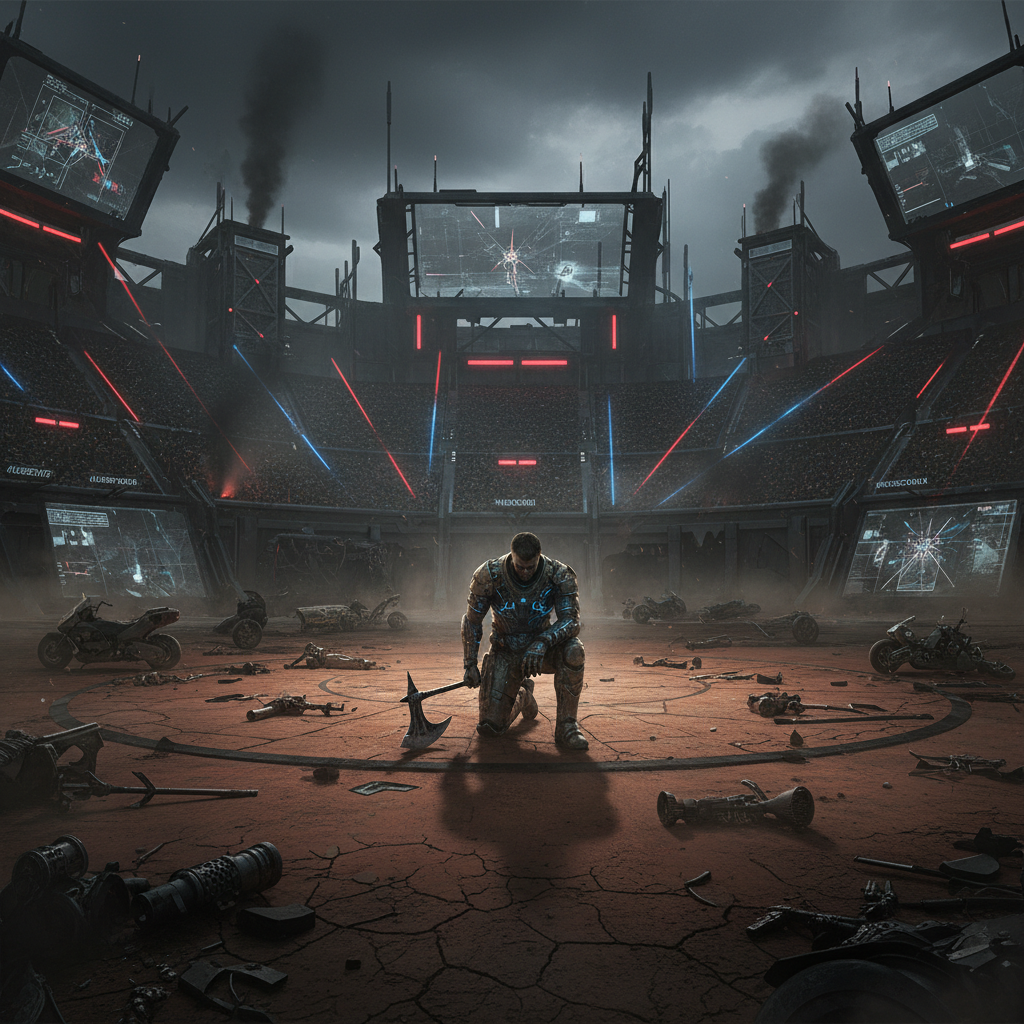
Now, you might think, “Well, there are only so many stories to tell, right? Tropes happen!” And you’d be kinda correct. But this isn’t just a shared trope; it feels, in many ways, like a near-identical blueprint reimagined for a different cultural audience. Tarantino’s point isn’t that Hunger Games is bad – though he probably thinks it is, in comparison – but that its originality is deeply, deeply suspect. It’s like seeing a photocopy of a masterpiece and calling it an original work. Which, as a creative person, would probably tick you off too, to be fair.
“It’s a testament to the power of a good story, I guess, that people can re-tell it in different ways and still find a massive audience. But there’s a difference between homage and, well, ‘borrowing’ so heavily a lawyer might raise an eyebrow.”
The Defense & The Dreaded “Independent Conception” Argument
Of course, Suzanne Collins and her publishers have always maintained that she never saw or read Battle Royale. Her inspiration, she’s stated, came from combining reality television and news coverage of the Iraq War. She allegedly got the idea while channel surfing and seeing images of young people competing on reality shows interspersed with reports from war zones. “Independent conception,” they call it in legal terms. It basically means, “Hey, we came up with this on our own, promise!”
Why Independent Conception Can Be a Bit Thin Sometimes
Here’s where it gets interesting, especially from a creative standpoint. The “independent creation” defense is crucial in copyright law. If you can prove you genuinely came up with something entirely on your own, even if it’s strikingly similar to another existing work, you’re usually in the clear. But with something like Battle Royale, which had a pretty substantial cult following globally (especially among film buffs and genre fans) years before The Hunger Games hit shelves in 2008, that independent claim becomes a lot harder for some to swallow.
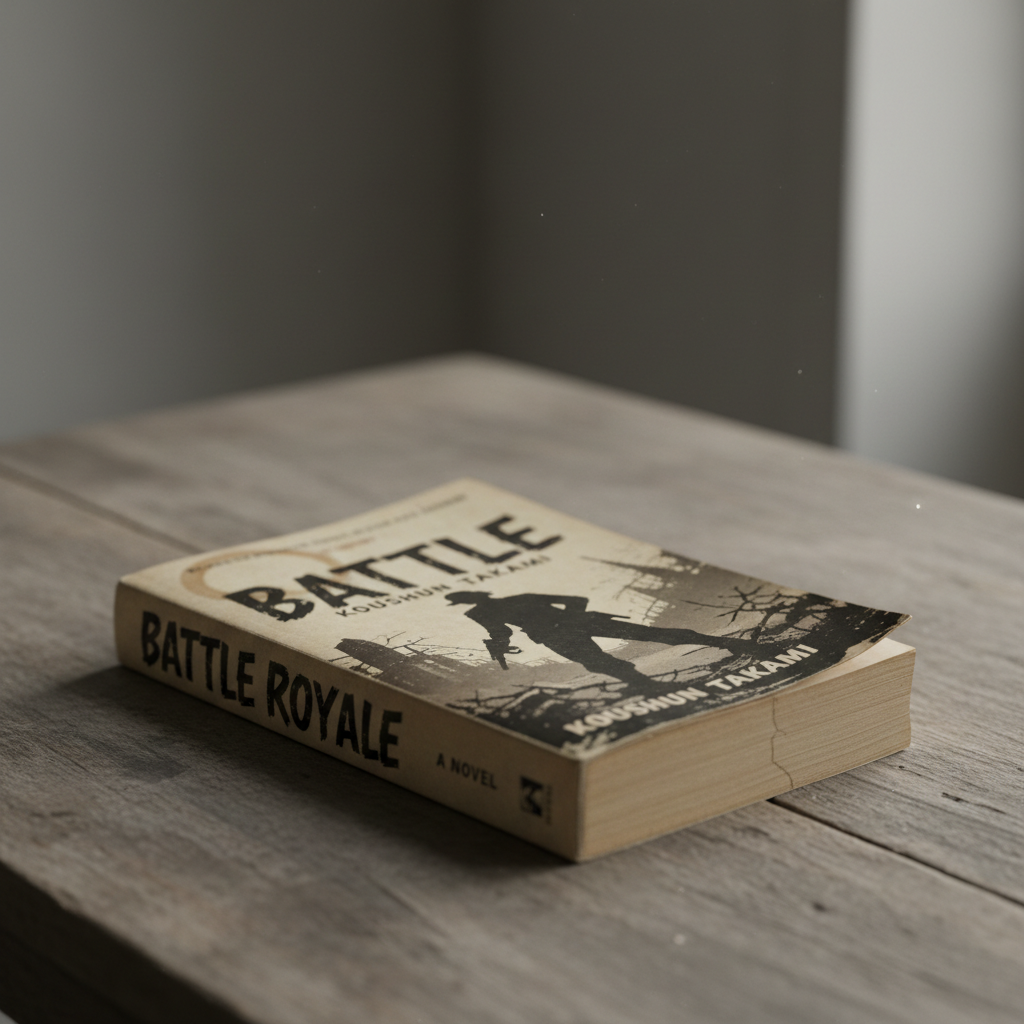
It’s not impossible, mind you. There have been plenty of instances in history where similar inventions or stories popped up around the same time, miles apart. But for Tarantino, a guy who eats, sleeps, and breathes film history, the idea that someone could craft that specific, elaborate premise without having at least some awareness of Battle Royale seems to be just beyond the pale. And I kinda get that. When you spend your life immersed in a particular field, you develop a radar, you know? Like a chef tasting a dish and immediately knowing the exact spices or techniques used.

So, Is One Better? Does It Even Matter?
This whole kerfuffle also brings up that age-old debate: does perceived originality (or lack thereof) diminish the impact of a work? For millions of Hunger Games fans, it probably doesn’t. They love the universe, they love Katniss, they love the themes of rebellion and hope. And that’s totally valid. Art, after all, is subjective. A great story can still deeply resonate, regardless of its origins. You could argue The Hunger Games brought these themes to a wider, younger, Western audience than Battle Royale ever could have, especially around 2008-2012.
But for a cinephile like Tarantino, and for many who appreciate the craft and intellectual property behind a story, it absolutely matters. It’s about giving credit where credit is due, even if it’s just in the court of public opinion. He’s not really trying to sue anyone; he’s more trying to spark a conversation – well, maybe more like light a fire – and get people to acknowledge the lineage.
Ultimately, this whole thing feels like a quintessential Tarantino moment: provocative, insightful, and designed to stir the pot. He’s not just a filmmaker; he’s a sort of keeper of film history, a passionate, albeit sometimes abrasive, educator. And in this case, he’s basically screaming from the rooftops, “Don’t forget your cinematic ancestors!” Whether The Hunger Games is a direct rip-off or an incredibly coincidental parallel, few can deny the striking similarities presented by these two cultural juggernauts. It certainly makes you think about where ideas truly come from, doesn’t it? And if nothing else, it’s probably convinced a few more people to finally check out Battle Royale, which, honestly, is never a bad thing.