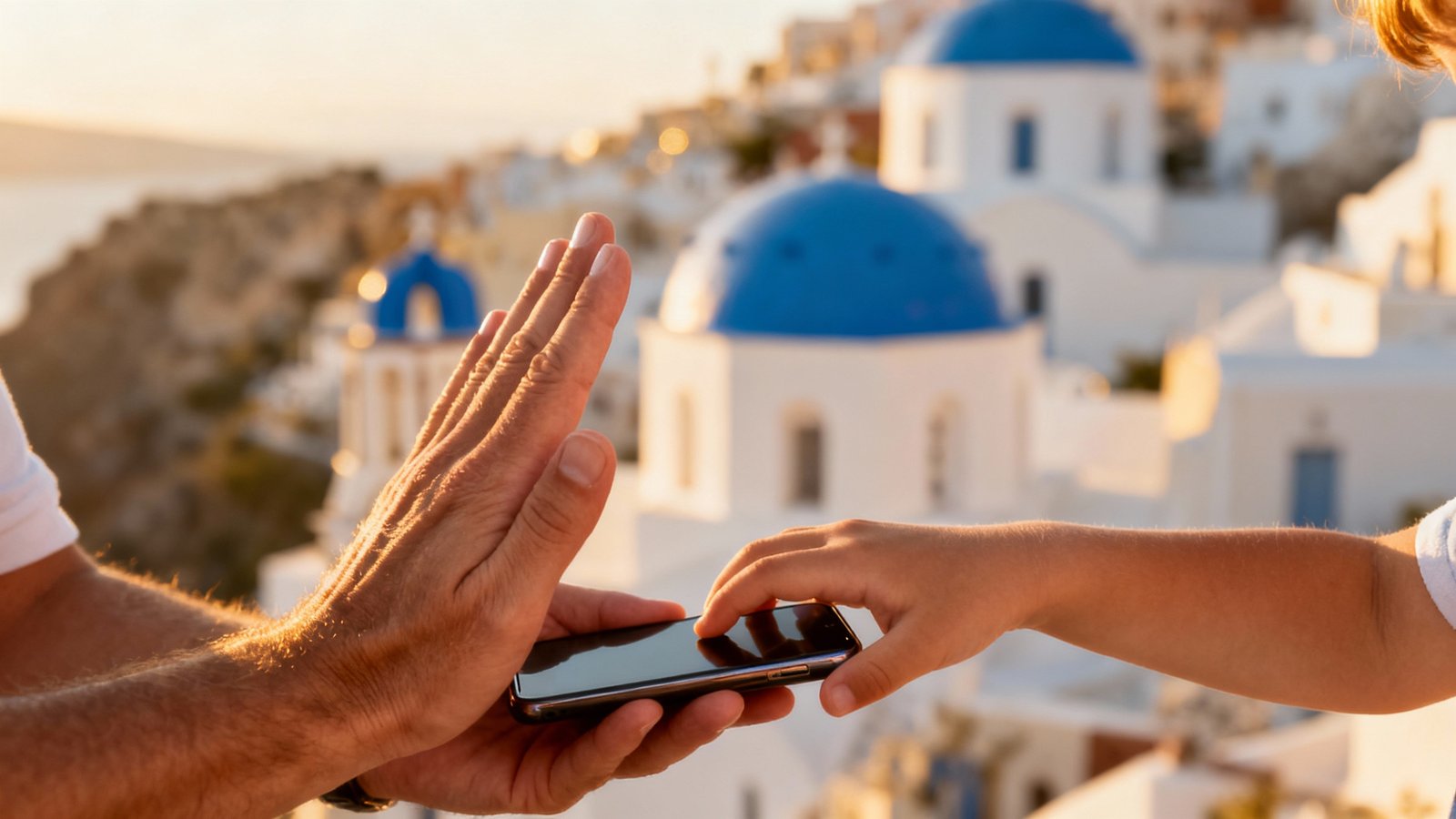
That’s right. Under. Fifteen.
You hear that? It’s the sound of a million tweenagers in Athens collectively losing their minds. And honestly, a lot of parents probably letting out a huge, silent sigh of relief. Or maybe a loud cheer. I’m leaning toward loud cheer.
Hold Up, They’re Seriously Doing This?
Yep, that’s what Reuters is reporting, straight from a senior government source in Greece. They’re not just thinking about it, they’re “very close” to announcing it. Which, in political speak, usually means the ink is practically dry.
Now, I’ve been doing this gig for fifteen years, and I’ve seen a lot of things come and go. Remember when everyone thought Second Life was the future? Good times. But this? This feels different. This isn’t some niche regulation. This is a fundamental, “hey, maybe we should stop letting algorithms raise our kids” kind of move. And I gotta tell ya, a part of me is yelling “FINALLY!” from the rooftops.
I mean, we’ve all seen it, right? You walk into any restaurant, any park, heck, even just your own living room, and what do you see? Kids, heads down, glued to screens. From the minute they can swipe, they’re on TikTok, Instagram, Snapchat, whatever the hell the new thing is this week. And it’s not like they’re reading Shakespeare or learning calculus. They’re doomscrolling, comparing themselves to impossible standards, getting sucked into rabbit holes of questionable content. And don’t even get me started on the mental health stuff. The anxiety, the depression, the body image issues. It’s not a coincidence, folks. It’s a direct line.
But How, Exactly?
That’s the million-dollar question, isn’t it? How do you actually enforce something like this in the age of VPNs and fake birthdays? My guess? It’s gonna be a bit of a cat-and-mouse game at first. But the government source specifically mentioned “strong authentication” being necessary for kids to open social media accounts. Which means they’re probably looking at some kind of national ID verification, maybe tied to a parent’s account, or something like that.
And yeah, kids are savvy. They’ll find workarounds. But here’s the thing: making it harder still makes a difference. It raises the bar. It sends a message. And it gives parents a real legal leg to stand on when they tell little Demetrius he can’t have an Instagram account until he’s old enough to vote. Or at least drive.
So, Are They Just Old-Fashioned, Or On To Something?
Look, I know the knee-jerk reaction for some folks is gonna be “Oh, Greece is just being backward. Can’t they embrace technology?” And yeah, sure, maybe a little. But is it backward to protect children from something that’s demonstrably harmful? I don’t think so. I think it’s called being responsible.
We regulate alcohol. We regulate cigarettes. We regulate driving ages. Why? Because we’ve collectively decided that certain things require a level of maturity and brain development that younger people just don’t have yet. And if you’ve spent five minutes on Twitter lately, you know that adults don’t even have that level of maturity sometimes. So why are we letting kids wade into that cesspool unsupervised?
“It’s not about being anti-tech. It’s about being pro-kid. It’s about recognizing that these platforms were not designed with a child’s well-being in mind, and the consequences are piling up.” – A very smart person (me, just now).
This isn’t just about Greece either. This is part of a larger conversation happening globally. We’ve seen states in the U.S. trying to pass similar legislation. Utah, Arkansas, Louisiana, they’ve all been kicking around ideas about age verification for social media. Europe, generally, is usually a step ahead on these kinds of privacy and child protection issues anyway. So Greece doing this? It feels less like an anomaly and more like a canary in the coal mine. A very sun-drenched, olive-tree-lined canary.
The Meat of It: What This Actually Means
First off, it means we’re probably gonna see a bunch of other countries watching Greece very closely. If they manage to implement this effectively, and if it starts showing any positive results – say, a decrease in youth anxiety or cyberbullying – then you bet your bottom dollar other nations are going to follow suit. Nobody wants to be the country where all the kids are miserable because they’re glued to TikTok.
Secondly, it’s a huge challenge to the social media giants. These companies thrive on engagement, on getting users hooked young. A ban like this cuts off a massive potential user base. It forces them to rethink their entire strategy around youth engagement. Will they fight it? Absolutely. They’ve got more lobbyists than you can shake a stick at. But public opinion, at least among parents, seems to be shifting. And when parents get mad, politicians listen. Eventually.
And thirdly, for parents, this is a game-changer. It takes some of the burden off them. Instead of being the “bad guy” constantly fighting the screen battle, they can point to the law. “Sorry, honey, it’s not me, it’s the Greek government.” And I mean, that’s kinda genius, right? It gives them ammunition.
Now, will it be perfect? No. Will kids still try to find ways around it? Of course. They’re kids. That’s what they do. But for the first time in a long time, a country is actually saying, “You know what? Maybe we need to hit the brakes on this whole ‘every kid needs a digital megaphone’ thing.” And if you ask me, that’s a conversation we’ve been needing to have for a while. It’s messy, it’s complicated, but it’s important. And frankly, it’s about damn time someone had the guts to do it.