
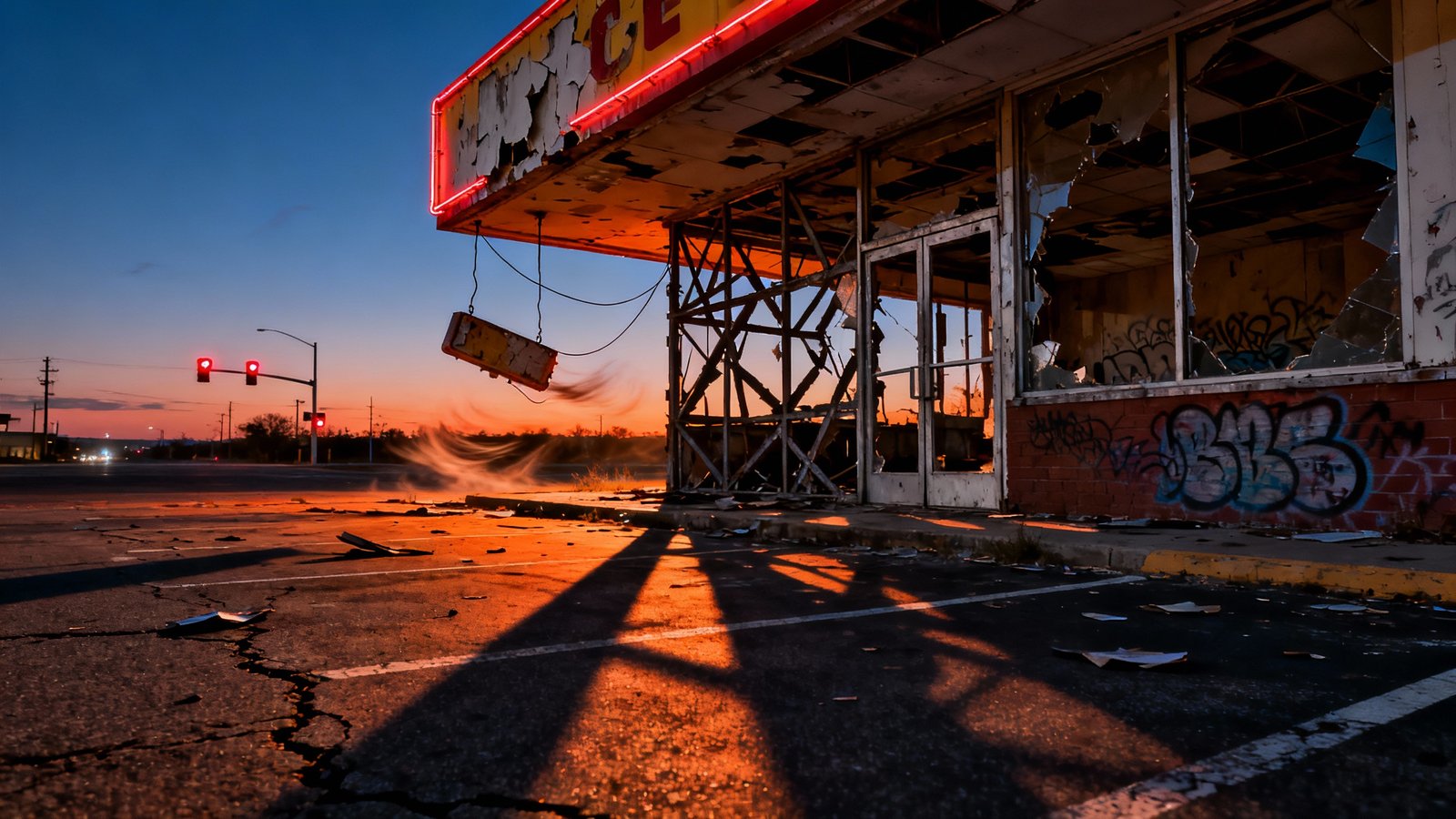
Okay, so here’s a thing. A McDonald’s. Not just any McDonald’s, but the one at 3rd and Pine in downtown Seattle, affectionately (or maybe not so affectionately) known as “McStabby’s.” They just… got rid of their door. The whole dining room? Gone. You walk up, you order through a hatch. Like a medieval castle, but for Big Macs. And honestly, if that doesn’t tell you everything you need to know about the state of things, I don’t know what will.
Welcome to the Future, I Guess
Yeah, you heard me. The door. It’s not there anymore. This isn’t some experimental drive-thru concept, you know? This is a McDonald’s, a global symbol of convenience and accessibility, literally boarding up its entire front-of-house operations because, well, because it had to. Because people kept getting attacked inside. Multiple times. To the point where a place that sells Happy Meals decided the safest option for everyone – staff, customers, whoever – was to remove the entire public-facing part of the building. And yeah, it’s wild. Truly wild.
I mean, think about that for a second. We’re talking about a McDonald’s, a chain famous for being everywhere, for being a reliably bland, brightly lit, kinda-sorta-safe spot to grab a cheap meal. And this one, this particular branch, it’s basically become a fortress. A hatch-only operation. You can practically hear the corporate lawyers whispering, “Just get rid of the source of the problem, people.” And the source, apparently, was the physical space where humans were supposed to, you know, eat their food.
It’s Not Just a Door, Is It?
This isn’t just about a fast-food joint making a business decision. It’s a flashing neon sign, really, pointing to a much bigger problem. This McDonald’s, for years now, has been a sort of ground zero for a lot of Seattle’s downtown issues – drug use, violence, homelessness, mental health crises. It’s always been a rough corner, but this? This feels like throwing in the towel. It’s like saying, “We can’t fix the street, so we’re just going to make our building impenetrable.”
So, What Does This Say About Seattle?
That’s the real question, isn’t it? What does it say when one of the most visible businesses in a major American city – a city that prides itself on progress and innovation and, you know, livability – literally has to remove its main entrance to stay operational? It says we’ve got a serious, serious problem that isn’t being addressed. And frankly, it’s embarrassing. Like, profoundly embarrassing.
“It’s like a dystopian movie where the fast-food joints are the last bastions, and even they’re giving up on the idea of a safe public space.”
I’ve lived here for a long time, seen a lot of changes. But this… this is a new low. It’s not just a blip. It’s a symptom. And it’s not just McStabby’s. You see other businesses downtown pulling out, or scaling back hours, or hiring more security. People aren’t coming downtown like they used to, and who can blame them? When a McDonald’s, the epitome of a no-frills, every-person establishment, can’t keep its doors open without becoming a target, what hope is there for the smaller shops, the independent restaurants?
The Ugly Truth Behind the Hatch
The thing is, this isn’t some grand experiment in efficiency. It’s a surrender. It’s a pragmatic, cold, hard business decision born out of sheer necessity and probably a whole lot of fear. Fear for their employees, fear for their customers, fear of lawsuits, fear of the next incident. And it makes you wonder: if McDonald’s, with all its corporate might and resources, can’t make 3rd and Pine work as a traditional restaurant, what exactly are city leaders doing to make it safe for anyone else?
It’s a stark reminder that urban decay isn’t some abstract concept. It’s real. It’s tangible. And sometimes, it looks exactly like a boarded-up McDonald’s with a service hatch where a door used to be. It’s easy to point fingers, to blame homelessness, or drug addiction, or the police, or politicians. And yeah, all those things play a part. But the result is this. A McDonald’s that’s basically admitting defeat.
What This Actually Means
Look, I’m not gonna lie. This McStabby’s situation, it drives me nuts. Because it’s not just about one McDonald’s. It’s about a city that feels like it’s losing its grip on basic public order in certain areas. It’s about a failure to address systemic issues that are now spilling over into the most mundane parts of our lives, like grabbing a burger. When you can’t even safely go inside a McDonald’s, it changes your perception of an entire neighborhood, an entire city, doesn’t it?
It means we’re allowing parts of our city to become no-go zones, or at least, “approach with extreme caution” zones. And it’s not sustainable. This isn’t just a quirky local story; it’s a warning. A bright, garish, Golden Arches warning. Because if a McDonald’s has to become a bunker, then what’s next? And honestly, I don’t have a good feeling about the answer to that one…