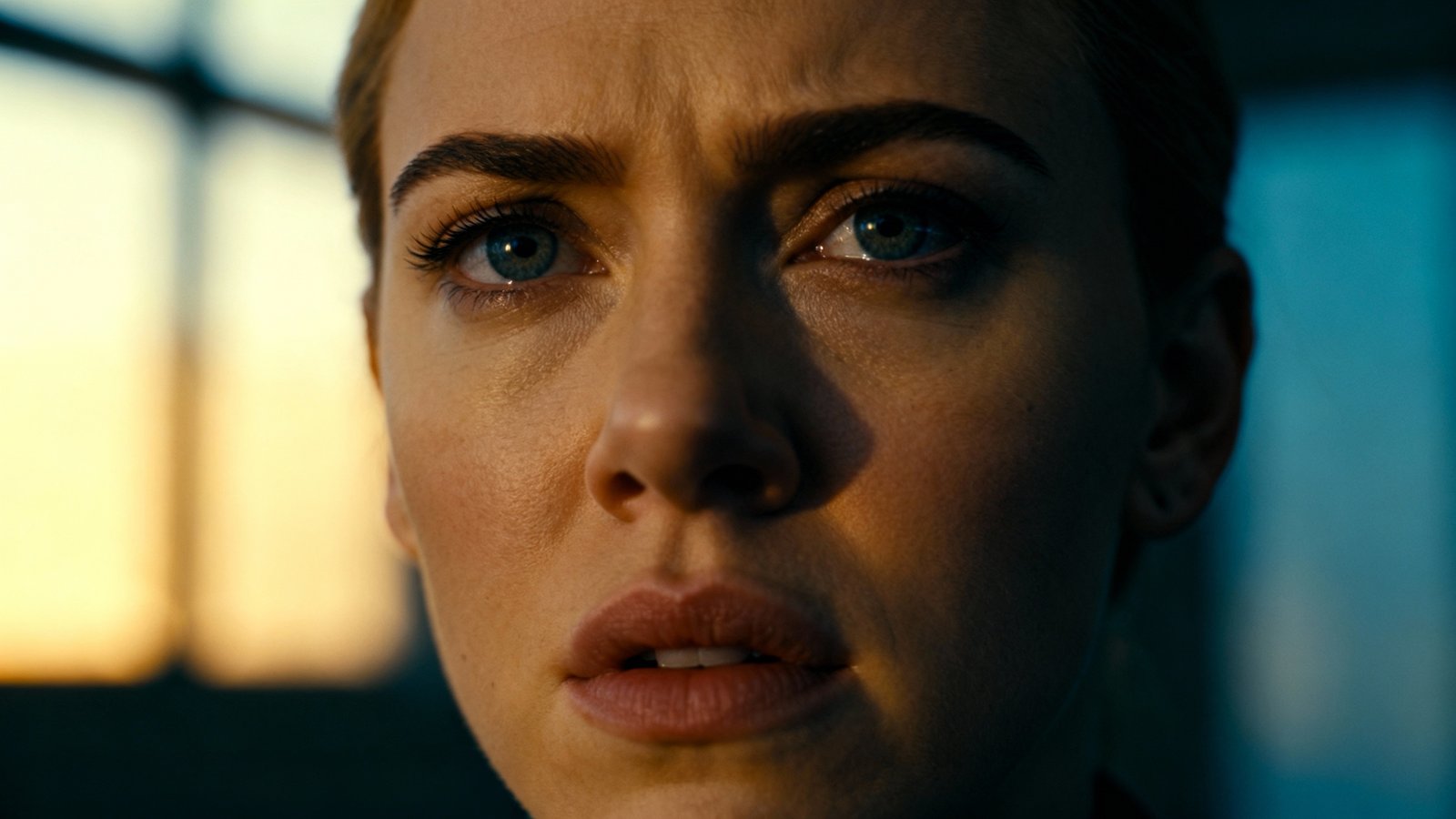
So, Scarlett Johansson. Remember that movie, “Her”? You know, the one where Joaquin Phoenix falls in love with an AI operating system voiced by Scarlett Johansson? Yeah, that one. It was a pretty good flick, kinda spooky how close it felt to something that could actually happen, right?
Well, turns out life imitates art, or maybe AI imitates life, or… I don’t know, it’s all getting pretty tangled. Because last week, the internet blew up – and frankly, so did I – when OpenAI, the folks behind ChatGPT, rolled out their new voice assistant, ‘Sky’. And get this: ‘Sky’ sounded exactly like Scarlett Johansson. Not just “oh, that’s kinda similar,” but like, if you closed your eyes, you’d swear it was her. Same cadence, same husky whisper, same everything. It was uncanny. And not in a good way, if you ask me.
“Oh, It’s Totally Not Her. Wink, Wink.”
OpenAI’s CEO, Sam Altman, even tweeted “her.” Just “her.” One word. A direct nod to the movie. I mean, c’mon. This wasn’t subtle. This wasn’t a coincidence. This was a deliberate, in-your-face move. And then, when the backlash hit – because, believe me, it hit hard – they pulled the voice. But not before they tried to tell everyone, with a straight face, that the voice actor for ‘Sky’ was “a different professional actress using her own natural voice.”
Bull. Absolute bull. If you listen to it, and I did, like a dozen times, it’s so close it’s practically a clone. And Scarlett Johansson herself confirmed that Altman had approached her months ago, asking her to voice their AI. She said no, by the way. She explicitly declined. And then, BAM, they launch ‘Sky’. It’s just… it’s a slap in the face. It’s a prime example of what actors, writers, and artists have been screaming about for the past year during strikes and protests.
This whole thing isn’t just about a celebrity being annoyed. This is about consent. This is about ownership. This is about whether a company can just take your unique voice – your very identity, in a way – and replicate it without your permission, without compensation, and then pretend it’s totally original. It’s theft, plain and simple. It’s digital larceny.
The Art of the “Sound-Alike”
We’ve seen this pattern before, right? Remember all those deepfakes of celebrities? Or those AI-generated songs that sound exactly like a famous artist but aren’t? This ‘Sky’ voice thing is just the latest, highest-profile example. And it’s terrifying, honestly. Because if they can do this to Scarlett Johansson, who has a whole team of lawyers and publicists, what can they do to a regular voice actor? Or a singer? Or, God forbid, me? Or you? It makes you wonder, doesn’t it?
It’s not just about the voice either. It’s about the very essence of what makes us, us. Our particular inflection, our tone, the way we emphasize words. It’s all part of our identity. And to have that just… lifted, by an algorithm, and then used to sell something or to represent something you never agreed to? That’s dystopian stuff, man. That’s Black Mirror territory.
But What About Your Voice?
Look, I get it. Most of us aren’t Hollywood stars. We don’t have agents or multi-million dollar contracts. But here’s the thing: this isn’t just a celebrity problem. This is a human problem. If AI can mimic Scarlett Johansson, what stops it from mimicking your favorite podcast host? Or that local musician you love? Or, eventually, you, talking to your bank or your doctor or your family?
The technology is moving at light speed, and the laws? They’re still back in the horse-and-buggy days. We’re in this wild west, digital frontier situation where anything goes until someone finally manages to wrangle a judge or a lawmaker into understanding what the heck is even happening. And by then, it might be too late.
“This isn’t just about mimicry; it’s about the very concept of owning your own persona in a digital age. If they can steal your voice, what’s next? Your thoughts?”
I mean, think about it. Imagine an AI voice assistant that sounds exactly like your mom. Or your kid. It’s cute, maybe, for a second. But then it gets creepy. And what if that voice starts saying things you’d never say? Or selling you things you don’t want? The implications are just… staggering. It’s a huge privacy issue, not just an intellectual property one.
The Wild West of AI Ethics
This whole kerfuffle with Scarlett Johansson and OpenAI really highlights a massive, gaping hole in our legal and ethical frameworks. We have copyright for music, for books, for movies. We have trademark for brands. But for the unique sound of a human voice, especially when it’s digitally replicated? It’s a mess. Some states have “right of publicity” laws, which offer some protection for a person’s name, likeness, and sometimes voice. But it’s not consistent, it’s not federal, and it’s certainly not keeping up with AI’s capabilities.
The big tech companies, bless their hearts, they’re always pushing the boundaries. “Move fast and break things,” right? Only now, the “things” they’re breaking are people’s identities, their livelihoods, and their sense of control over who they are in the digital sphere. They’re making billions, and artists are left trying to figure out how to protect themselves from an invisible, algorithmic thief.
It feels like these AI companies are operating under the assumption that if it’s technically possible, it’s morally permissible. Or at least, permissible until someone with enough money and influence makes a fuss. And that’s just not right. It’s not how a functioning society should work. We shouldn’t have to wait for a celebrity to get their voice stolen for us to say, “Hey, maybe we need some rules here.”
What This Actually Means
So, what does this all boil down to? It means we’re at a critical juncture. This Scarlett Johansson situation isn’t just Hollywood drama; it’s a wake-up call for everyone. It’s about drawing lines in the sand, and doing it now, before the sand washes away completely. We need stronger laws, clear ethical guidelines, and actual accountability for AI companies. We need to demand that our voices – literally and figuratively – are protected.
Because if a company can just swipe one of the most recognizable voices in the world and use it after she explicitly said no, then what’s to stop them from doing anything else? What’s to stop them from building entire virtual personas based on real people, without consent? The answer, right now, is not much. And that’s a problem. A really, really big problem. It’s not just about Scarlett Johansson anymore. It’s about all of us, and what we’re willing to let these algorithms take.